

GoPro Mission 1 Pro ILS
Pros & Cons
- Excellent image quality
- Incredibly small and light design
- Huge flexibility of interchangeable lenses
- Impressive in-camera stabilization
- Manual focus only
- Small screen can be tricky to nail focus
- No ability to preview final color grade in camera
I used the new GoPro Mission 1 Pro ILS to go big on the cinematic vibes on my YouTube video, and the results look amazing. This is a truly powerful little camera, but there’s a lot you should know about it before you buy one.
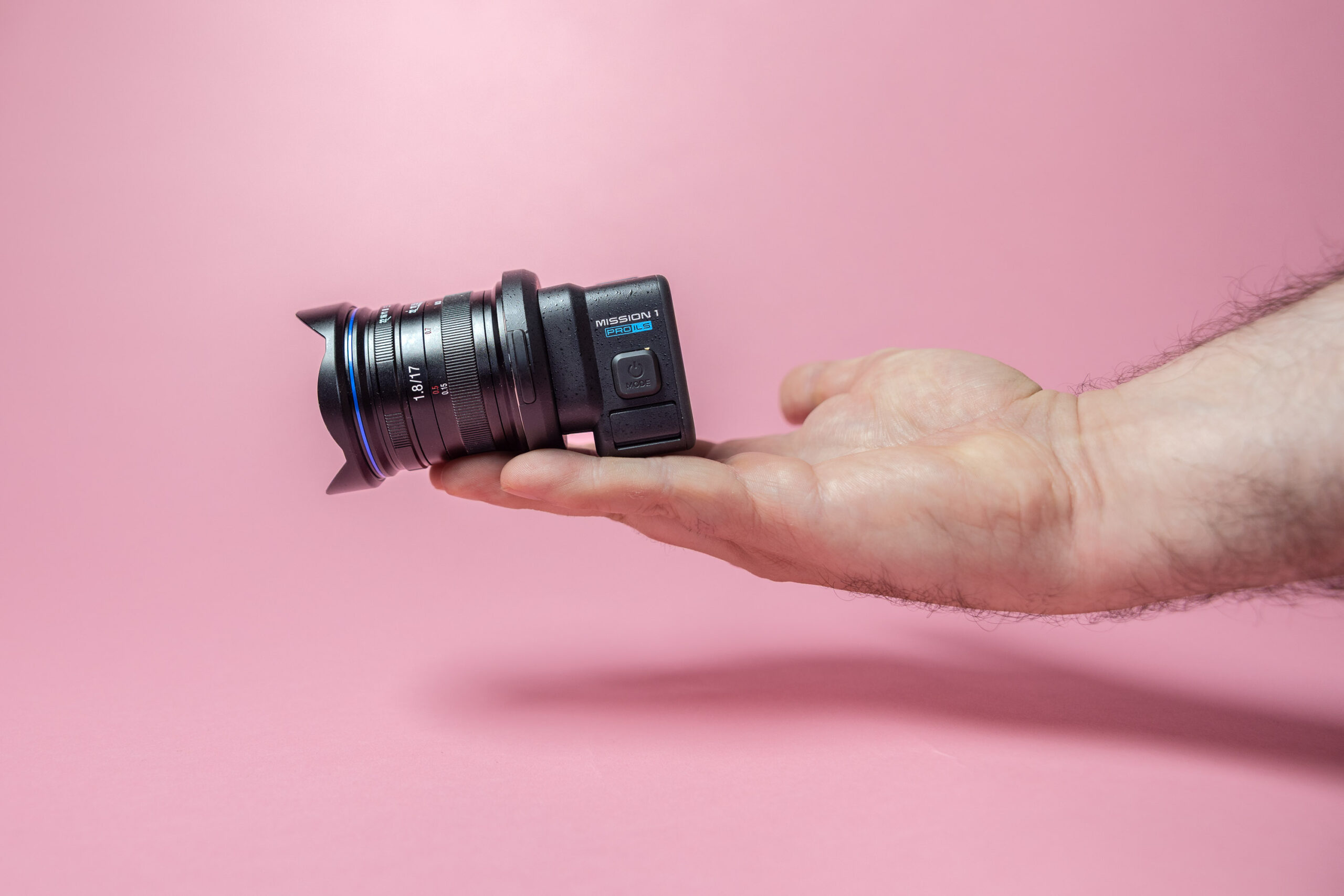
The Mission 1 Pro ILS is GoPro’s ultimate action camera. It shares the same body, dual displays and image sensor as the more traditional Mission 1 Pro, but strips out that model’s ultrawide-angle lens for a Micro Four Thirds lens mount. That means you can choose from a wide variety of native lenses and use adapters to put almost any lens on it. I even shot footage using an actual M-mount Leica lens. A Leica lens. On a GoPro.
So let’s start with why I love it. Well, it’s small. Micro Four Thirds lenses tend to be tiny, too, so even with the little 17mm Laowa lens on it that GoPro sent for testing, it’s still miniature and weighs very little. Yet the image sensor inside possesses some serious stats: 8K open gate recording at 60p, 4K at up to 240 frames per second and even up to almost 1,000fps at full HD.
GoPro’s new GPLog2 color profile captures a wide dynamic range, too, and provides a lot of flexibility for editing color in post-production software such as Adobe Premiere or DaVinci Resolve.
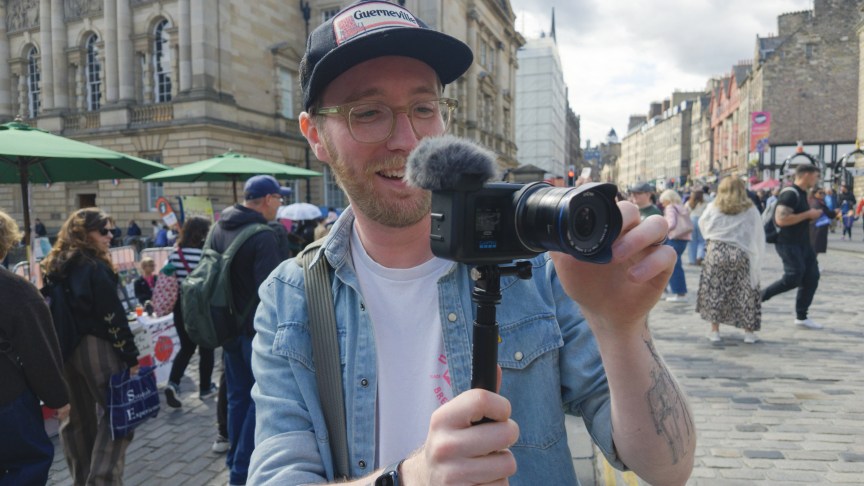
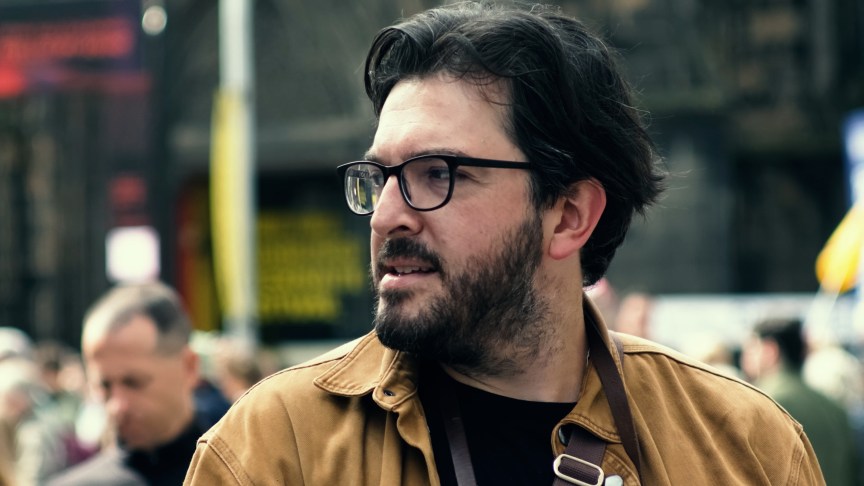
I put it to the test by shooting a video for my photography YouTube channel. And roped in my friend and cinematographer Cal Hallows because I wanted to push the production beyond what I’d normally do for one of my typical YouTube camera walks. And honestly, the camera was superb.
The footage looks great after I gave it its color grade, the slow motion shots look slick and, despite shooting hand-held the entire day, GoPro’s HyperSmooth stabilization is so good that I didn’t need to apply a single bit of digital stabilizing in post, even on clips shot at effectively 150mm.
That meant we kept the setup extremely light. Just the GoPro and that tiny lens. It kept us nimble, allowing Cal to follow me as I hopped around Edinburgh’s Royal Mile snapping away with my Leica film camera. Cal was able to shoot quickly, finding creative angles and getting his shots without having to set up a heavy tripod each time. That small filming setup also meant we never got in anyone’s way, despite us shooting in the busiest part of the city at its busiest time of year.
Being able to use actual camera lenses on a GoPro completely changes the game. While the company’s action cameras are great for an ultrawide view from your helmet as you’re careening down a mountain, the fixed view and fixed focus mean you’re limited to digital lenses or lens mods for more opportunities to get creative. All that’s changed. Now you can achieve a proper shallow depth of field, you can focus close up on tiny details and you can get telephoto zoom shots, none of which were possible before.
Telephoto shots are actually very easy to achieve, as the small 1-inch sensor means that there’s a roughly 3x crop factor, so even the 17mm Laowa lens is actually more like a 50mm. The 50mm Leica Summicron lens I borrowed? That’s now a 150mm focal length and a huge departure from the roughly 15mm equivalent that the standard Mission 1 Pro’s lens offers.
That’s bad news if you want it for handheld vlogging, as you’ll need to look toward niche options such as Laowa’s 6mm lens, which equates to about 18mm and should be wide enough for most vlogging. On the other hand, if you’re into your wildlife filmmaking, then you’re in luck as you can slap on a 200mm telephoto and it’ll magically transform into a 600mm. Nice.
Personally, though, I loved the look of the clips we got using focal lengths of 50mm and longer. It gives everything a more professional look than you’d ever achieve with a regular GoPro, while the shallow depth of field provides great subject isolation. Many of the shots were with my M-mount lenses for my Leica camera, which worked well adapted to the GoPro because they have manual aperture and focus rings.
But they’re also tiny, like my little 35mm Voigtlander lens or collapsible 50mm Thypoch Eureka lens, both of which worked great on the GoPro, despite the focal length limitations.
GoPro Mission 1 Pro ILS: What I don’t like
The camera only supports manual focus lenses, which immediately made it more difficult to use for fast-paced shooting. And you can forget about face tracking for solo vlogging. It’s also not waterproof like almost every other GoPro, so don’t even think about taking it cliff diving without a waterproof housing.
I also think that GoPro could have pushed its tech a bit further and either used an actual Micro Four Thirds sensor to match its lens mount or opted for a more cutting-edge lateral overflow integration capacitor — or LOFIC — image sensor. This new sensor tech boasts even greater dynamic range, and we’ve already seen it deployed in camera phones such as the Leica Leitzphone and DJI’s most recent Osmo Pocket 4P.
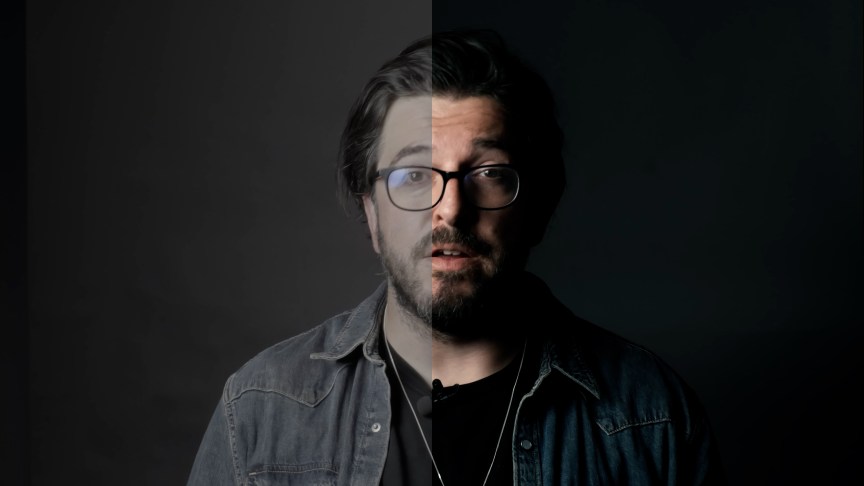
That said, GoPro’s sensor isn’t lacking at all, and no doubt helped keep prices in check. I squeezed a lot of dynamic range out of it for many of the outdoor shots, while the studio footage didn’t require deep dynamic range because of the controlled lighting I used. GoPro reckons you’ll get about 14 stops of dynamic range from it, which should still give plenty of latitude even in high-contrast situations.
There are a bunch of other smaller quality of life issues, too, like how you have to manually change the lens focal length for the stabilization to be able to do its thing because it can’t just recognize the lens. Or how, when you shoot in GPLog 2, there’s no way to preview your final color, so you instead have to just put up with the very flat gray tones the rear screen provides and just imagine how it’ll look later.
Did any of these problems get in the way while we were shooting? A little, sure. Cal certainly found composing the shot and getting focus on the small rear screen a challenge. After all, he’s normally found operating a pro-standard Sony FX6, which can weigh easily upwards of 10 kilos when fully rigged up with monitors and cinema lenses.
The Mission 1 Pro ILS is a fraction of the size and weight of that setup. I suppose if you really needed to, you could rig this up, too. Put it on a shoulder mount, with a V-lock battery, adapted cinema lens with follow focus system, matte box and, yes, a field monitor to nail your focus with ease. But then you’ve got something massive, heavy and unwieldy, which completely defeats the purpose of having a tiny camera.
The only time I really struggled was when I was recording my piece to camera in my studio at home. I had to have the camera on a tripod at the other side of my room to give me enough space in the frame, which meant that achieving focus was really tricky. In the end, I asked my partner to stand in my place while I adjusted my lighting and focus, then marked the position on the floor where I’d need to stand.
GoPro Mission 1 Pro ILS: Who is it really for?
I’ve spent the last couple of weeks with this versatile little box, trying to work out where it fits in the current world of cameras. Using it with Cal to shoot my YouTube video gave me a lot of opportunity to understand it. What I realized is that it doesn’t fit in anywhere. GoPro has essentially created its own niche of a micro cinema camera, and so far, it’s the only company playing in that space.
To compare the GoPro ILS to something like the mirrorless Sony FX3 or BlackMagic Pocket Cinema Camera misses the point of it, as does comparing it to handheld vlogging cameras such as the DJI Osmo Pocket 4P. This GoPro offers the sort of cinematic quality, along with the flexibility and depth of field of interchangeable lenses, that the Osmo simply can’t approach. But it’s also at a size and weight that is completely out of reach for any other typical mirrorless camera.
The Mission 1 Pro ILS also won’t be replacing either of those categories. Instead, it’s best seen as a complementary product that you’d have as an addition to your other kit. Professional film productions use GoPros all the time for attaching to cars, bikes or people to get shots in hard-to-reach places. Now they can do that, but with the “cinematic” look offered by real lenses. Cinematographers won’t be replacing their $100,000 Arri Alexas with GoPros, but this can fit in tight spaces where a true cinema camera can’t — and at a price that means it doesn’t matter if it gets destroyed while filming an action sequence. One with explosions.
And don’t think that “real” cinematographers only use the biggest, best cameras. Keep in mind that the recent 28 Years Later zombie flick was filmed on iPhone 15 Pros. And I reckon director Danny Boyle would have loved to have tried out one of these for his movie if he’d had the opportunity.
Meanwhile, YouTubers and other solo video creators can continue to use their Osmo Pocket 4P as their run-around vlogging camera but switch to the GoPro ILS when they want to shoot far more pro-level footage of whatever it is that they’re up to. As a YouTube creator myself — and frequent video producer for CNET — I’m already considering adding one of these to my permanent shooting setup.
It’ll level up the quality of footage I’m able to achieve and will barely take up any extra room in my backpack. It won’t always be easy to work with — if I want to rig it up in my car, as I frequently do with other action cameras, it’ll be tricky to get focus when I’m by myself. Plus, I’ll need to buy a superwide lens. So some shots will be out of the question for me.
But the benefits in size, weight and nimble operation will make it an extremely potent weapon not just in my filmmaking arsenal, but a real boon for anyone wanting pro-quality footage in an unbelievably small and light package.
