


- News
- entertainment
- Screen test, but with a twist: bengali cinema has a national problem
Trending
Clint Eastwood
Ranbir Kapoor
Shefali Shah
Aaron Paul
Screen test, but with a twist: bengali cinema has a national problem

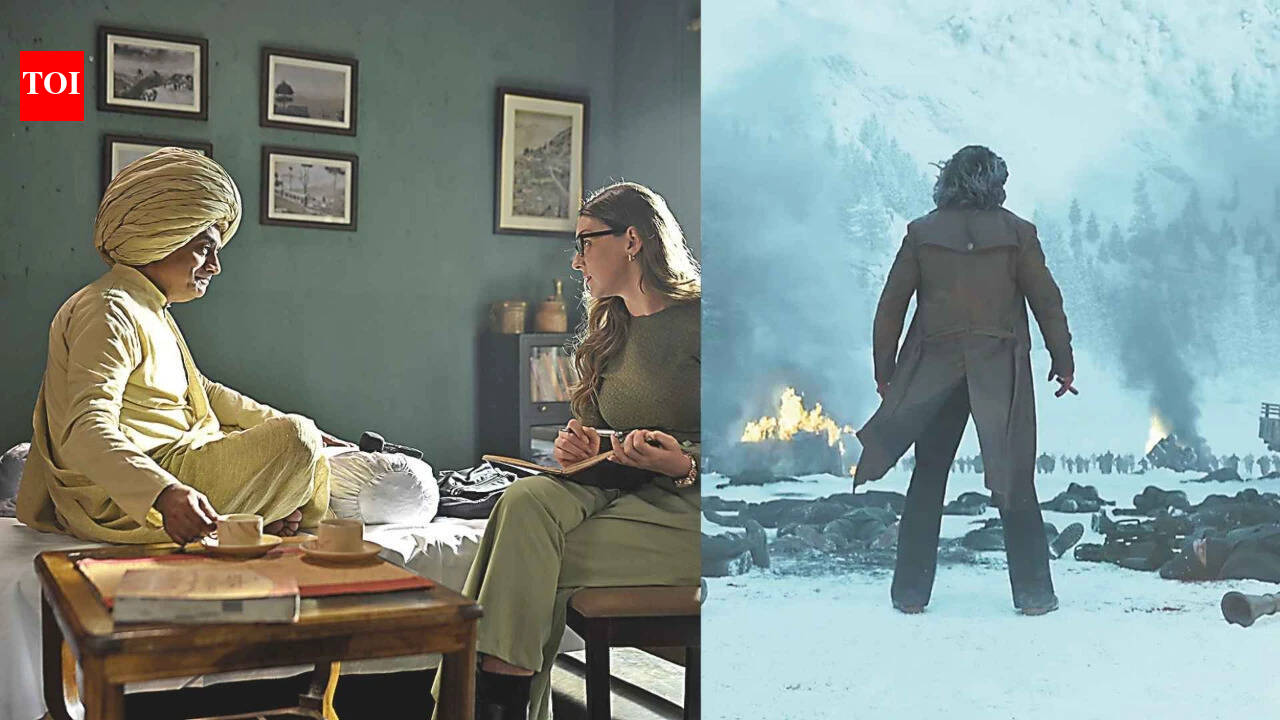
(From left to right) Film stills from Maya Satya Bhram and Toxic
The release-week screen crunch has once again brought the longstanding issue of inadequate theatrical space for Bengali cinema into focus. With big-budget pan-India release Toxic starring Yash, Tara Sutaria and Kiara Advani hitting screens earlier this week, Samik Roy Choudhury’s Maya Satya Bhram, releasing today, is facing a shortage of shows across West Bengal. The latest clash has also raised a larger question: does it matter if a Bengali film has a big star attached, or is the real deciding factor the scale of the release it is up against? Voices from across the industry – actors, directors, distributors and exhibitors – weigh in on the commercial realities of theatre exhibition, the need for greater accommodation and whether Bengal needs a definitive film policy to protect its regional cinema.
If it is not absolutely necessary, it is advisable for regional films to release on other dates. They can perform far better at the box office by avoiding a clash with a movie that has the audience’s full attention
Navin Choukhani, exhibitor
Directors ask for support for BengaliDirectors Kaushik Ganguly, whose Dhumketu clashed with War 2 and Coolie, and Dhrubo Banerjee, who directed Raghu Dakat, said the screen struggle is longstanding. “Talks about Bengali cinema not getting enough screens have been going on for years now,” said Kaushik, adding that he hopes films releasing now “run successfully in the minimum number of shows they are getting.” Dhrubo called the situation a “double-edged sword.” Acknowledging exhibitors’ commercial realities, he stressed, “As a filmmaker, I know what it takes to make even one film. It is insanely difficult for an independent filmmaker.” He called for a “written, approved policy” for Bengal, saying the industry needs “that shield and that protection” until it can compete.Watch
Bollywood actor Raghubir Yadav is in town to shoot for Kaushik Ganguly’s debut Hindi directorial, Manohar Pandey. Watch what he says about the city and the experience of being here after many years…
Past box-office clashes:
- Bohurupi (October 8, 2024) –Jigra (October 11, 2024)
- Dhumketu (August 14, 2025) – War 2,Coolie (August 14, 2025)
- Kaberi Antardhan(January 20, 2023) – Pathaan (January 25, 2023)
- Projapati (December 23, 2022) –Cirkus(December 23, 2022)
We need to balance the economics, say distributorsDistributor and exhibitor Satadeep Saha said the screen allocation issue needs to be viewed alongside exhibition economics. “Exhibitors are not giving Bengali films space because fewer people are coming to watch them. They are also here to do business, but we need to balance the economics a little” he said. He acknowledged that distributors would naturally prioritise their own films, but argued that some accommodation is possible. “If today, I were to be releasing a big-budget film and someone else were to be releasing a comparatively small-budget film, I would have to give up some space somewhere, and I would,” he said. He questioned the need for a major release to take almost every show. While he believes the government notification needs formal validation, he said he would prefer “mutual understanding” between distributors and exhibitors over formal intervention.
My first film, Beline (2024), also suffered in the same way. I’m really sad that even my second film is facing the same problem. I hope this experience helps me understand the system better and be better prepared the next time I face a situation like this
Samik Roy Choudhury, director
‘We have to fight all the time’For director Samik Roy Choudhury and actor Soham Majumder, the screen crunch reflects the struggle faced by independent Bengali films. “It is nothing new. This has been a practice in the Bengali film industry for a long time. It‘s unfortunate that we have to fight every time, especially when it comes to an independent film,” said Samik. After the team went live online, a multiplex chain reached out. “I’m glad that they have responded to our live promptly,” he said. “But this is my first time as a producer. If I’m not guided properly, even by the distributor, how would I know that I have to speak up directly and fight to get screens?” Samik , however, said it remains unclear “who is actually to blame”. Soham said the MSB team was prepared for fewer shows. “We accepted that we would stand second in terms of the number of shows, but we wanted to showcase our film because we made something good,” he said. Discovering three days before the release that they were “barely getting any shows”, he called it “insulting”. He also clarified that they have nothing against the big release, but a Bengali film shouldn’t have to fight like this in West Bengal.
Just as government policies offer protection to economically backward or marginalised sections until they find their footing, Bengal’s film industry also needs that kind of shield. Until we are able to compete with the big players, some protection is necessary. That is precisely why we need a clear policy
Dhrubo Banerjee, director
Until you challenge it, you have to abide by it, say exhibitorsExhibitor Navin Choukhani said there is resistance whenever a Bengali film releases alongside a major film, noting that regional films elsewhere in India do not usually face similar clashes with big Hindi releases. He said the previous government’s notification mandating at least one prime-time show for Bengali films had made the situation “smoother” by giving exhibitors a framework to follow. “There is a mandate to exhibit Bengali cinema at least once during prime time. It doesn’t matter if there has been a change in state governance. If somebody doesn’t want to abide by it, they can challenge it in court. But until then, they have to abide by it,” he said. However, Choukhani said that sometimes, the crew should approach exhibitors early. “They should inform the exhibitors in advance about the release of the film,” he said. He added that when a big release commands significant audience attention, it may sometimes be commercially wiser for a smaller film to choose another date with better box-office prospects.
Give your child the gift of confidence! Claim your exclusive TOI Masterclass spot today!
End of Article
Follow Us On Social Media
Photostories

