


Published 1:30 am Saturday, August 29, 2026
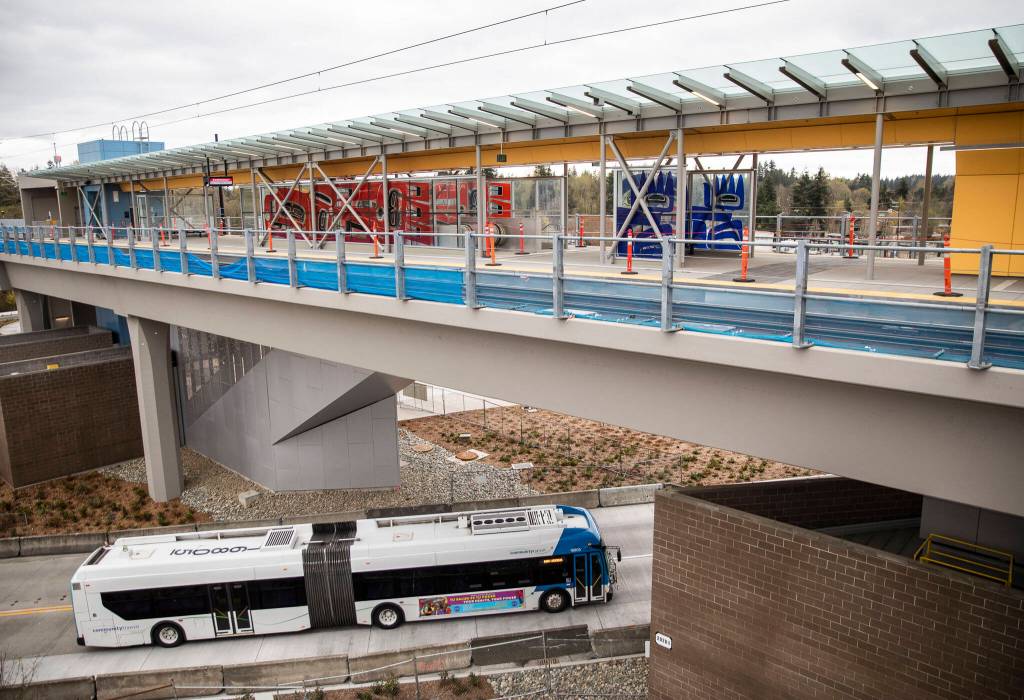
A Community Transit bus drives underneath the Lynnwood Light Rail station on April 4, 2024, in Lynnwood.
EVERETT — Sound Transit board members voted on Thursday to design and plan fare gates at 14 Link light rail stations, including Lynnwood City Center, that could be installed within the next few years.
If the gates are eventually built, they will likely be installed at the busiest stations along the light rail network as part of a pilot program, including most stops in north Seattle and at transfer hubs like Lynnwood, Bellevue, Redmond, Federal Way and the SeaTac/Airport station
Currently, Sound Transit enforces fares through fare ambassadors, staff members who go on trains throughout the day and check that users have paid for their ride, as well as providing customer service support. There are no physical barriers from people boarding the light rail without paying, although getting caught for fare evasion three times in a single year will result in a $50 fine. Five times, and it’s a civil infraction.
The pilot plan put forward by the board on Thursday would introduce gates at light rail stations and require riders to tap their ORCA card or credit card when both walking into and out of the stations. (It won’t charge you twice). That would be because not all stations will have gates installed, said Margaret Cederoth, the deputy chief planning officer at Sound Transit, during Thursday’s board meeting.
“Our system has expanded to the point where fare gates make sense,” Cederoth said.
Sound Transit plans to budget about $6 million for design and procurement work on the fare gates, which would be ADA accessible and include enough space for people bringing bikes or carrying luggage, Cederoth said.
The fare gates are expected to cost around $87 million in total. The agency hopes to make that money back within two to three years thanks to higher revenue — over $30 million per year — from a reduction in fare evasion.
That estimate is preliminary because Sound Transit could save more money from reduced security or maintenance costs after the gates are installed, Cederoth said.
The agency planned to put the gates into place largely because fewer people riding the light rail have been paying their fare since the pandemic In 2019, about 85% of riders paid their fare; in 2025, a preliminary estimate found that about 63% of riders paid a fare
Fare revenue is only a small part of the funding Sound Transit receives to operate its service. In 2025, Link light rail fares covered about 12% of the service’s operating costs.
Sound Transit touted the successes of other transit agencies’ fare gate programs as a reason for trying it out in the Puget Sound. Bay Area Rapid Transit, known as BART, built new fare gates across some of its stations and saw revenue grow by about $10 million per year because of reduced fare evasion. Maintenance requirements in its stations also fell significantly over a six-month period, according to the transit agency.
It’s still early in the process of installing the fare gates — Sound Transit doesn’t expect any to go into service until at least 2029. Officials plan to use that time to work through possible issues that could arise from implementing them.
One challenge board members raised was making sure the agency did proper outreach to young people to get more people 18 and under signed up for youth ORCA cards. Climate Commitment Act funding allows all youth 18 and under to ride public transit in Washington for free, without requiring any fare media like an ORCA card or a ticket. But fare gates would mean people 18 and under would likely need to use a free youth ORCA card to access the light rail system.
Brian de Place, who oversees security and fare engagement at Sound Transit, said Thursday the agency will spend the next year developing plans on how to enroll more young people in the youth ORCA card program, as well as get more individuals with lower incomes signed up for subsidized and reduced-fare passes.
Everett’s light rail extension remains on track for a planned 2037 opening in south Everett, according to Sound Transit. The agency has cleared a regulatory hurdle for the extension after the Federal Transit Administration gave the go-ahead to release the extension’s draft environmental impact statement, a crucial planning document outlining the impacts of different route alignments and station locations. That document is set to be released to the public on Sept. 18 and include a comment period to gather public feedback before it is finalized, officials said Thursday.
Will Geschke: 425-339-3443; william.geschke@heraldnet.com; X: @willgeschke.
