


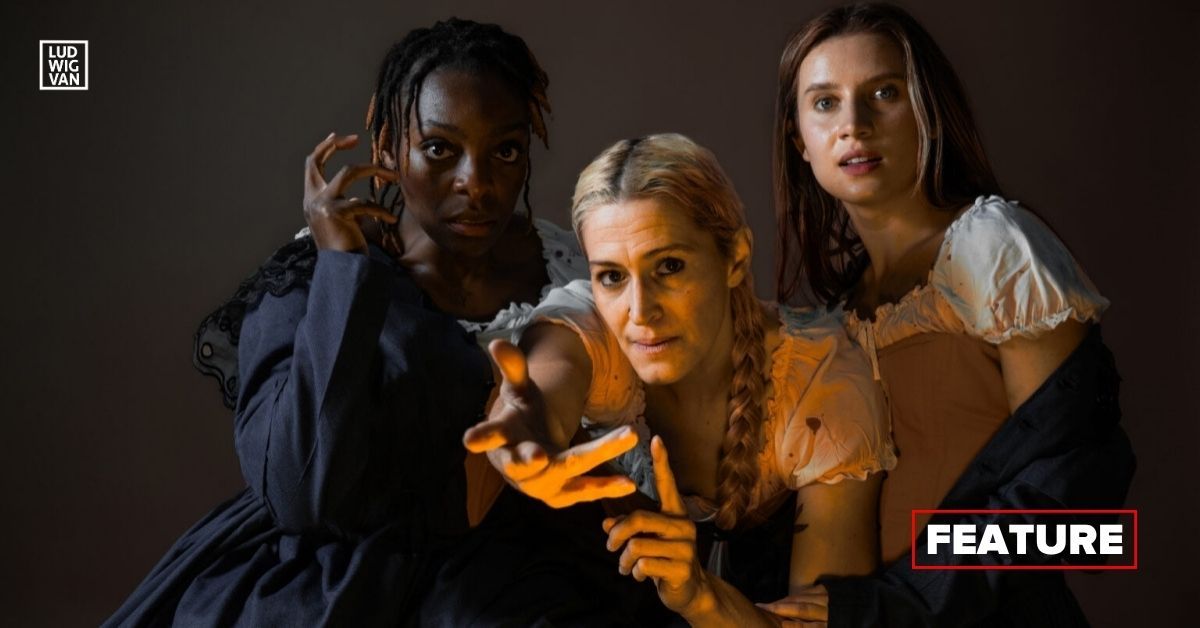
Nightwood Theatre, Canada’s preeminent feminist theatre company, is opening its 47th season as with the world premiere of To a Flame by Governor General’s Award-winning playwright Erin Shields. The play is a 1s1 Theatre and Nightwood Theatre co-production, in association with Modern Times Stage Company and Why Not Theatre.
The production is led by internationally-renowned director Josette Bushell-Mingo, and runs from September 22 to October 4, 2026 at the Nancy & Ed Jackman Performance Centre. To A Flame stars Dawn Jani Birley, Nickeshia Garrick, and Juliana Monk.
“A project this ambitious takes years to foment and actualize. And as an enormous fan of Dawn Jani Birley, Erin Shields and Josette Bushell-Mingo, I have been following the piece’s development for over ten years. To a Flame is so stunning, intersectional and vividly theatrical that it has the power to actually create a cultural shift. I am so honoured that 1s1 entrusted Nightwood Theatre to act as lead partner on this unparalleled production,”says Nightwood Artistic Director Andrea Donaldson in a statement.
The Play
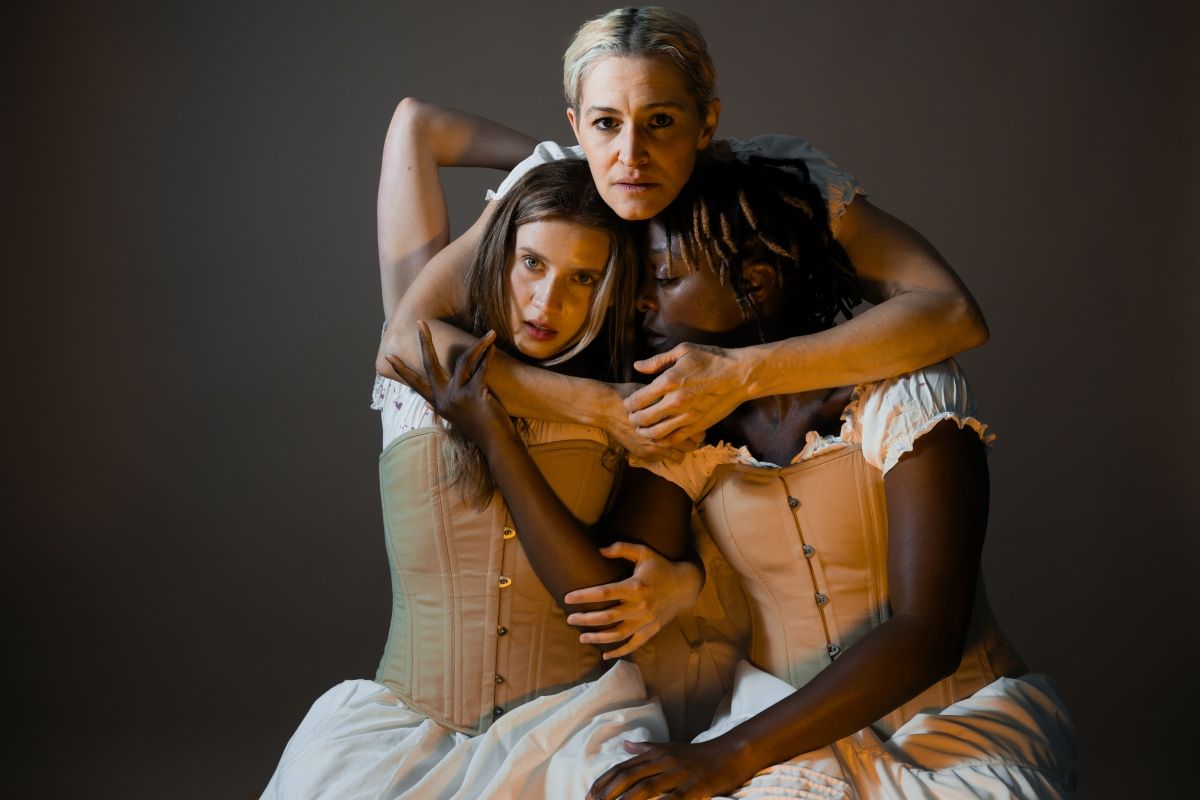
To A Flame is a groundbreaking work that was years in the making. It combines American Sign Language and English dialogue with movement and live music for a performance that Deaf and hearing audiences can share.
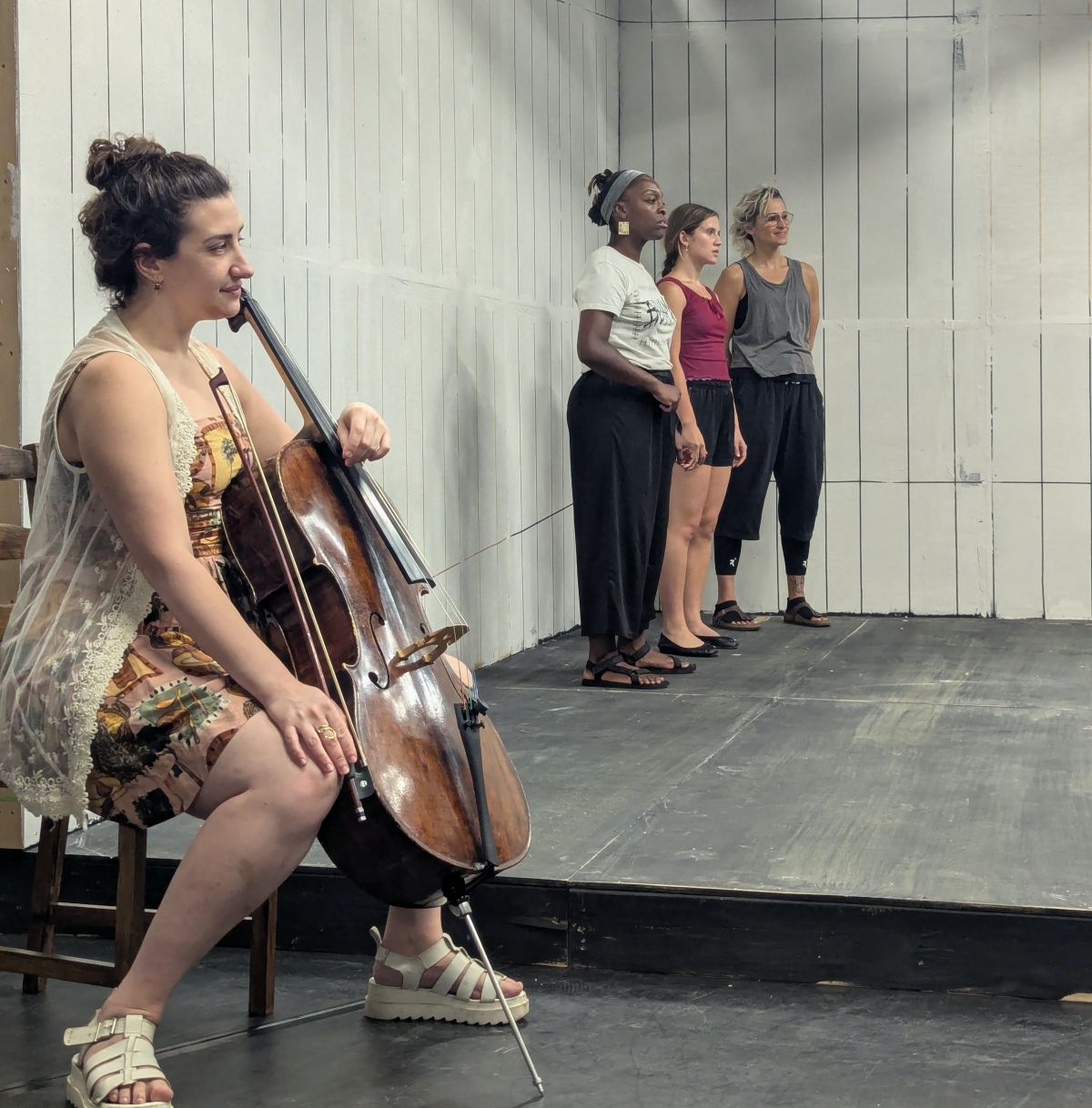
The ensemble cast features Deaf performer and cultural leader Dawn Jani Birley, with Nickeshia Garrick, and Juliana Monk, and live accompaniment by cellist Beth Silver.
The story takes a plunge into the world of Victorian Gothic Horror. Three women are confined in their ancestral home by a man they call Father. They wait for the end of their stories to take shape while secrets simmer below the surface, echoes of the past that refuse to stay buried.
The house itself vibrates with a burning desire for revenge.
“Social justice conversations must include audism. When a form of discrimination remains unacknowledged in society, so too are the experiences and barriers it creates — we cannot challenge what we do not recognise,” says Dawn Jani Birley in a statement.
“To a Flame offers a rare opportunity to witness multiple systems of oppression converge on stage, as three women from different backgrounds and lived experiences come together in a shared space to recognise one another’s realities and struggles. The production invites audiences to question what true solidarity requires of us.”
With a piece where sound and perception are key components, LV caught up with composer & co-sound designer Deanna H. Choi (DHC) and co-sound designer Jenna Geen (JG) to ask a few questions about their approach.
Deanna H. Choi & Jenna Geen: Q&A
LV: What kind of overall effects do you have in mind in terms of sound design for the play?
JG: I have felt called to explore grotesque, sharp, gritty sonic textures in my process so far. The creaking of floorboards, the scratching of fingernails on wood, multi-sensory thunderstorms, and human hearts beating.
I specifically want to see how far each of these sonic elements can be abstracted into more surreal and perhaps unsettling soundscapes. I am interested in designing soundscapes where the audience (both Deaf and hearing) may not even realize that the sound and vibrations of cascading percussion came from a sample of a human heart beat, or a sample of nails on wood. Additionally, I plan to explore the ways in which we can manipulate the sounds of the live cello, pitching the strings low, distorting the beauty of the instrument into something grotesque and bone-chilling.
LV: Does the soundscape respond to characters primarily or to the story — or both?
JG: I feel that the sound is always responding to the characters and to the story, but at times I also believe there is room for the sound to incite reactions from the characters. I am thinking about the sonic elements as their own character. A physical character that can be both heard and felt. The sound can serve as the physical embodiment of the house itself (drawing inspiration from the source material: The Fall of the House of Usher). The story definitely informs my choices when it comes to being specific about how the house sounds, the materials of the house, the setting and weather, the scene changes, etc.
LV: It’s a bilingual English/ASL piece — how does that affect the sounds you use in the performance? I’m imagining it involves tight coordination with the other elements of the play.
JG: Absolutely, and the bilingual storytelling is one of the main elements that I have been thinking about when making creative and technical choices regarding sound. It is an incredible gift actually, as a sound designer, to get to create art with both Deaf and hearing audiences in mind. Thinking about sound not only as a sonic element, but a physical entity in the space, and how that intersects with the house being its own complex physical entity as well.
Optimizing the physicality of sound not only benefits Deaf audiences, but hearing audiences too, and since we are creating a show with both audiences in mind, I have been enjoying working in this multi-sensorial way. Crafting the ideal balance between the sound that we hear, and the physical vibrations is one of my utmost goals.
DHC: It might seem counterintuitive to emphasize sound for Deaf/deaf audiences, but the sub-bass vibrations are key in this piece. They serve a dual purpose, not only to add dramatic tension but also as cues for our actor, Dawn Jani Birley. The bass rhythms of the piece are meant to be felt rather than heard. There’s a lot of physical movement within the piece as well, so these musical/sound-driven sequences underscore the choreography. In a way, there are a multitude of languages in this play: English, ASL, and also the vocabulary of movement, sound, light, and video.
LV: How is live music incorporated into the performance?
DHC: Last year we started workshopping the piece with cellist Beth Silver, who underscores the show live with solo cello. This year, our director was very interested in incorporating her much more into the storytelling itself rather than as an accompanist. The cello/cellist is the embodiment of the house, of the dreams and nightmares that inhabit it, and seeing the cellist on stage is a striking part of the visuals of the piece.
The score isn’t a traditional one in the sense where every note is notated on the page; there’s a lot of extended technique, aleatoric sounds where the cello is a replacement for the human voice. It’s been a very fun challenge to explore how a cello can represent moths, fire, horses’ hooves, the house crumbling, and other auditory images.
LV: What other sounds do you use — organic, electronic, both?
DHC: The sound design is an integral element to building the world of this play. While the tropes of Victorian Gothic stories are present (a foreboding old house, ghosts, family secrets), it is also framed by a contemporary lens of feminist, queer, racial, and Deaf politics.
How do we bridge the clichés of “a dark and stormy night” and use it to reflect modern issues that still face our society today? The cello is an instrument that lives in the organic world and is associated with the three sisters and the house, but the electronics are the world of the Father, representing industrial and patriarchal violence. The cello then bleeds into the electronic world as we add amps and effects to make it feel almost like an electric guitar, a Victorian Gothic metal genre of music, if you will.
Show Details
To A Flame is on stage at 877 Yonge Street from September 22 to October 4, 2026. Opening night is September 24.
The creative team for To a Flame includes: Birgit Schreyer Duarte (dramaturg and associate director); Jung-Hye Kim (set and costume design); Deanna H. Choi (composer and co-sound designer); Jenna Geen (co-sound designer); André du Toit (lighting design); Laura Warren (projection design); Sally Roberts (stage manager); Michelle Soicher (assistant stage manager); Maya Royer (production manager); and Micah Champagne (technical director).
- Find show details and tickets [HERE].
Are you looking to promote an event? Have a news tip? Send us anote.
Get the daily arts news straight to your inbox.
