


Traditional Pakistani cinema relies on commercial Eid releases, celebrity-led projects, and box-office numbers, implying a risk-averse industry culture. However, there’s another kind of cinema that is quietly in the making: Pakistani indie cinema.
I have talked about films that we need but haven’t been made yet, which include unconventional stories. What if these unconventional stories require minimal budget without the intervention of major television networks and commercial production houses, as in the case of Zombeid (2026)? These unconventional stories aren’t anything like mainstream commercial blockbusters and studio-backed feature films, like The Legend of Maula Jatt (2022) and Jawani Phir Nahin Aani (2015), which pretty much encapsulate what Pakistani independent cinema looks like.
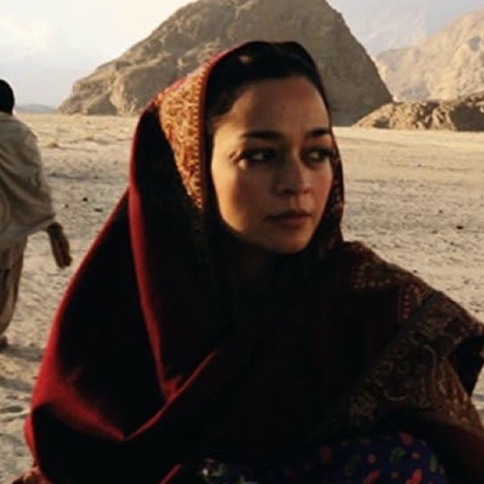
Some of the notable examples of Pakistani indie films include Sarmad Sultan Khoosat’s Zindagi Tamasha (Circus of Life, 2019), Lali (2026), and Kamli (2022). His films are produced and directed through his company Khoosat Films, his own production house that operates as an independent Pakistani banner, focusing on artistic and non-mainstream storytelling. Others include Afia Nathaniel’s Dukhtar (2014), pictured above, Shoaib Mansoor’s Khuda Ke Liye (2007), and Asim Abbasi’s Cake (2018).
Where are these films discovered, and how many of them receive theatrical releases? Only a tiny fraction are lucky enough to hit the big screens, and audiences only get to know about them through local as well as international film festivals, word-of-mouth, and limited digital or streaming availability.
Indeed, an indie film would immediately get attention if a renowned director or a respected actor were attached to the project. Sarmad Sultan Khoosat is my personal favorite, and as soon as his eccentric stories start getting the spotlight, it gets me hooked. And there is a reason that Lali, even before its release in the homeland, is getting the limelight in the international arena, with its recent screening at the Berlin Film Festival in February 2026 and now entering the BFI London Film Festival in October 2026. Its cast includes Mehr Bano, who was brilliant in Taxali Gate (2024), and Mamya Shajaffar, who delivered a standout performance in Contractors (2024).
Knowing that a few indie films get local distributors, and obviously, big names like Sarmad Sultan Khoosat, who is already getting international reception, would clearly get a clean chit for local theatrical openings. It otherwise leaves us thinking that commercial cinema prioritizes mainstream blockbusters, which have big-star faces, such as Humayun Saeed, Fawad Khan, Hamza Ali Abbasi, and Mahira Khan, included in the projects, to minimize industrial risks.
Pakistani indie films must struggle for their place among imported films that are always on cinema schedules. For instance, the “now showing” section of Pakistani cinemas currently has eight international films, with only one Pakistani commercial film playing. This translates to limited screens, indicating fewer showtimes, fewer audiences, and weaker box-office returns, creating immense challenges for local indie cinema success.
How would this affect other independent filmmakers who either belong to the younger generation or are still operating on a smaller scale? Beyond established names like Sarmad Sultan Khoosat, directors like Hamza Bangash have continued to explore filmmaking through short films, his eminent ones being Dia (2018), which won the Audience Award at Locarno Shorts Week 2020, 1978 (2020), and Stray Dogs Come Out at Night (2020).
While talking to Youlin Magazine, the Pakistani-Canadian director said that he is “passionate about telling stories from communities that do not have the benefit of seeing themselves reflected in the media landscape,” but agrees that the “biggest challenge in making cinema in Pakistan is the lack of trained crew and technical facilities. We have very few crew members in Pakistan who are trained in making films, and those that are, tend to work in narrative commercials/films, due to the greater fees they can command. We don’t really have any established film schools, so many of our best filmmakers are trained from abroad.”
This takes us back to the starting point of my conversation here: Unconventional stories. These are the indie films that prove something is happening. They are making a difference by unshackling themselves from romance and comedy storylines.
Why are they special? Because of emerging directors who mostly now come out of film schools and film training or are theater performers. Indie cinema permits these filmmakers to build careers even before they become famous. They don’t even need Mahira Khan to tell a great Pakistani story.
Festivals are an alternative distribution network, giving these filmmakers visibility and opportunities, notably including Pakistan International Film Festival, Karachi International Film Festival, Lahore International Film Festival, as well as local short-film festivals, university film festivals, and international festivals. When Pakistani films premiere at festivals, those festivals provide a launching point that doesn’t fit the commercial formula.
Naturally, festival audiences are actively seeking out the film, while the domestic market has to be convinced to leave home and pay for a film that lacks the conventional commercial ingredients of Pakistani cinema. Dukhtar could be a useful case study in this regard; its journey from international festival recognition to domestic theatrical screening isn’t a smooth road. It was Afia Nathaniel’s debut feature, which premiered in the Discovery section of the Toronto Film Festival in 2014 before its Pakistani release. She won Best Director and the Audience Award for Best Feature at the South Asian International Film Festival, and the film went on to become Pakistan’s official submission for the 87th Academy Awards.
Nathaniel mentioned that the film’s opening-night screening sold out within an hour at Toronto, while at home, the film had to compete for attention where expectations are different. This is precisely why Dukhtar remains such an important film, as its significance cannot be measured solely by how many people bought tickets. Such an acclaimed Pakistani indie film is worth celebrating, as the country’s presence is marked at international festivals and awards but fails to spot in an ongoing independent film movement.
Films like Dukhtar prove that Pakistan does not lack talent or ambition for independent cinema, despite an unmistakable lack of infrastructure. But for an indie film movement to truly take shape, the challenge goes past financing, distribution, and theatrical screens. If the Pakistani audience is accustomed to watching serious content coming from every corner of the world, can the audience develop a taste for Pakistani indie cinema?
The audience may not necessarily be the problem, as they could develop the same appetite for the stories made by their own filmmakers. The bigger issue is the absence of enough opportunities to reach that audience. Despite the existence of Pakistan’s emerging indie movement, the ecosystem that could facilitate its visibility is missing.
Echoes is an opinion column on film and television from the perspective of a writer based in Pakistan.
