


Near the turn of the century, “Can you hear me now?” was a popular Verizon advertising campaign. So, who would have ever thought two decades later that it would be the catch phrase for a movie about searching for a prophet?
<a href="https://canyouhearmenowfilm.com/” rel=”nofollow noopener” target=”_blank”>An upcoming film by Matthew Thayer is more of a quest for an answer than a person: Does God still speak through prophets?
In the film’s synopsis, Thayer poses that question in more of an observational nature:
Why do you believe what you believe? Belief starts with information. But what if God wanted a voice in the conversation? Throughout history, He’s used a prophet—people who claim to hear and transmit divine messages. Today, these voices speak into elections, national crises, and the future of America.
But are they legitimate? Are they accurate? And if God is speaking… are we listening?
Is Thayer a cessationist? Is he running for office? Does he want to pummel a charismatic with his dynamic cerebellum? Or is this a life’s journey wrapped up in 90 minutes of documentary focus? As it turns out, in motion pictures, nothing is ever as it seems.
Thayer faces an intersection of decisions. Again, from the film’s synopsis: One of Charlie Kirk’s final interviews. One of history’s oldest questions.
Wait…what?!
This isn’t about the Gifts of the Holy Spirit? Is he directing a movie about Charlie Kirk? Well, not really. To answer if this film hits close to home, ask yourself as Thayer did: Does God indeed still speak through a prophet? The answer may surprise you.
BUT FIRST: Headlines hit the Body of Christ every week, and somebody has to dissect them with a real understanding of faith, instead of only a hot take from a news talk show. Subscribe to our free newsletter for a straight biblical answer to why each story actually matters to your faith. That’s what hits close to home!
Is Can You Hear Me Now? Really Searching for a Prophet?
Not exactly.
Thayer already knows his answer to the film’s marquee question. Asked whether God still speaks through prophets, he answered, “Absolutely.” He believes prophecy remains active today, so that rules out cessationism. That makes Can You Hear Me Now? less a search for whether prophets exist and more an investigation into what Christians should do when someone claims to be one.
That’s an important distinction because the film heavily promotes one of Charlie Kirk’s final interviews.
Kirk discusses prophecy, says he believes the gift remains active and tells Thayer he has seen it affect people’s lives. Yet Kirk isn’t presented as a prophet. He’s a witness to the phenomenon the documentary claims to investigate.
That distinction gets muddy elsewhere. One Christian reviewer argues the film eventually shifts from examining prophecy toward conservative American politics. That’s the reviewer’s assessment, not proof of Thayer’s motive. Still, it raises a fair question.
If Thayer wants to investigate whether the prophet still exists, then let’s investigate.
Because Christian conviction isn’t prophecy. Neither are political influence, cultural courage or an ability to draw a crowd. Kirk certainly challenged people to consider what God was saying. That may sound prophetic in the adjective’s popular sense.
Scripture sets a higher bar before handing somebody the noun.
What Does the Bible Actually Call a Prophet?

Paul doesn’t describe prophecy as a personality trait or a knack for saying uncomfortable things. He explicitly includes “the ability to prophesy” among gifts distributed by the Holy Spirit (1 Corinthians 12:4–11, NLT). Then he identifies prophets among Christ’s gifts for equipping and building the Church (Ephesians 4:11–13).
That gives us an important distinction. Scripture can describe someone exercising the gift of prophecy without necessarily identifying that person as a prophet (1 Corinthians 14:1, 31).
And prophecy isn’t exclusively predicting tomorrow.
- Paul says prophecy strengthens, encourages and comforts believers (1 Corinthians 14:3).
- It can expose something hidden and cause an unbeliever to recognize God’s presence (1 Corinthians 14:24–25).
- Agabus also demonstrates its predictive function when he foretells a famine and later Paul’s arrest (Acts 11:27–30; 21:10–11).
- Then Paul gets downright inconvenient for anyone ready to bury the gift: “Pursue love, and desire spiritual gifts, but especially that you may prophesy” (1 Corinthians 14:1, NKJV).
He doesn’t give prophets a blank check.
- Other believers must judge what they say (1 Corinthians 14:29).
- John commands Christians to “test the spirits” (1 John 4:1).
- Jesus warns repeatedly about false prophets (Matthew 7:15–20; 24:24).
Paul puts both sides together beautifully: Don’t despise prophecies. Test everything. Keep what is good (1 Thessalonians 5:19–21).
Scripture doesn’t tell Christians to swallow prophecy. It doesn’t tell them to spit it out, either. It tells them to chew.
If Prophets Disappeared, Somebody Forgot to Tell Them
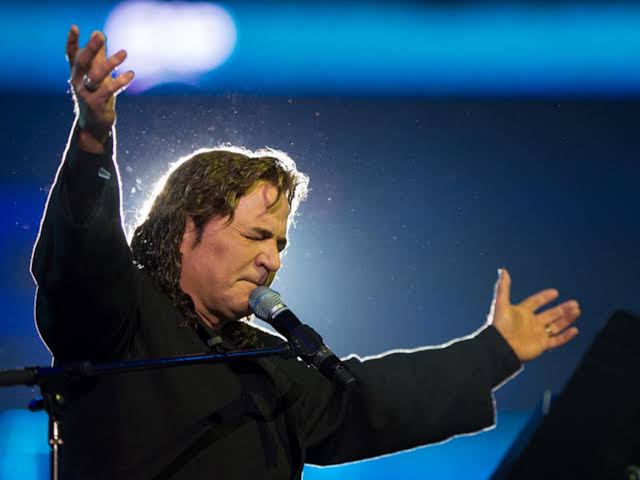
That brings us to the uncomfortable part: people have continued claiming the gift.
Consider William Wadé Harris. While imprisoned in Liberia around 1910, Harris said he received a supernatural commission to become a prophet and preach Christ. What followed wasn’t merely a prediction someone could conveniently reinterpret years later. Harris traveled through West Africa preaching repentance, baptism and Jesus Christ. Historical accounts credit his ministry with baptizing more than 100,000 people and leaving Christian communities that missionaries later encountered. African Christian Biography
Then there’s Kim Clement(pictured above), whom Thayer specifically credits with challenging his skepticism. Thayer says he heard Clement speak prophetically about Donald Trump in 2007, eight years before Trump launched his 2015 presidential campaign. If you have ever doubted whether the gift of prophecy still flows today, that was the guy the world sought after to prove it.
More recently, Brandon Biggs described an attempted assassination of Trump months before Butler, Pennsylvania. In the recorded statement, Biggs said he saw a bullet fly near Trump’s ear. Some other details he described did not occur as stated. That’s not an inconvenient fact to hide. It’s precisely why Scripture tells Christians to test prophecy rather than become impressed by it.
None of these examples proves the doctrine by itself. But neither should Christians dismiss them simply because their theology holds that God stopped speaking that way.
The Bible gives us a test for that.
Does the Church Still Need a Prophet?
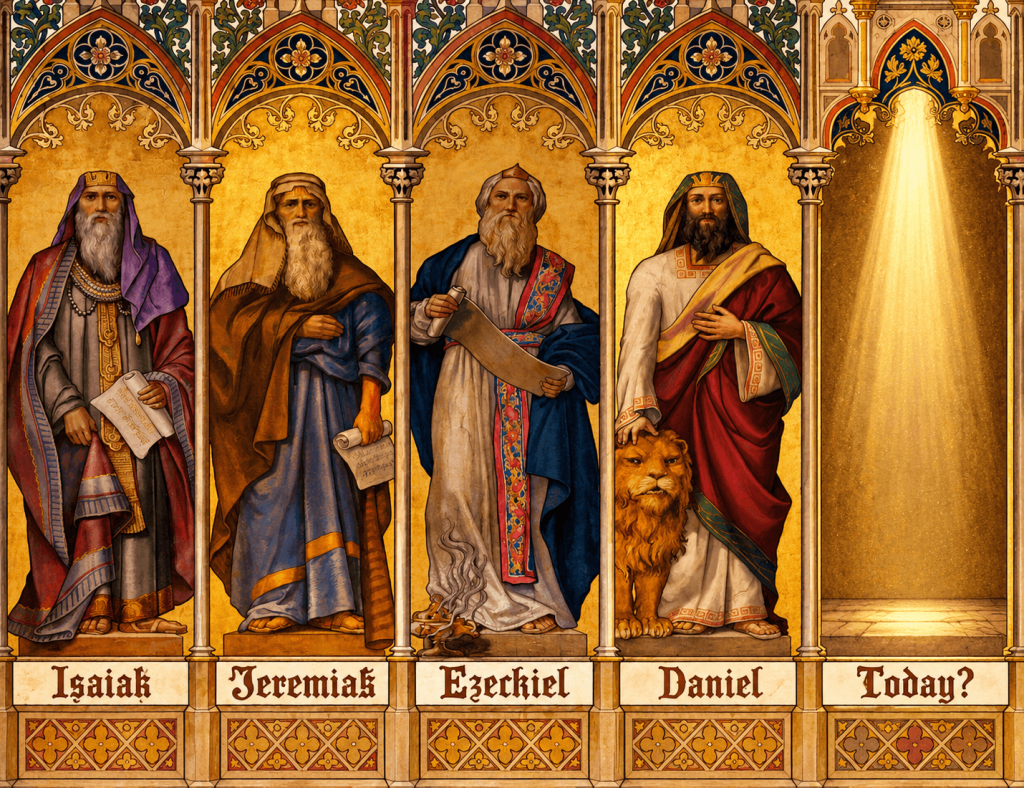
Cessationists raise a serious argument. Paul describes apostles and prophets as part of the Church’s foundation (Ephesians 2:20), and cessationists generally understand revelatory gifts as serving a foundational apostolic age rather than continuing throughout Church history.
But Scripture also describes prophecy’s ending.
Paul says prophecies will cease when what is partial gives way to completeness, and we see “face to face” (1 Corinthians 13:8–12). Continuationists understand that as Christ’s return. Ephesians likewise says Christ gave apostles, prophets, evangelists, pastors and teachers to equip His people until believers reach unity, maturity and the fullness of Christ (Ephesians 4:11–13).
Looks around.We have some work to do.
That’s where Thayer’s question finally hits close to home. Christians don’t need Charlie Kirk to prove prophecy exists. We don’t need Donald Trump. And we certainly shouldn’t declare Clement, Harris, Biggs or the guy livestreaming from his basement infallible because something he predicted happened.
We need Scripture, but we also need to hear from the ultimate author.
If prophecy remains a gift of the Holy Spirit, Christians shouldn’t manufacture it, politicize it or fear it. They should do precisely what the Bible commands.
Don’t quench the Spirit. Don’t despise prophecy. Test everything. Hold on to what is good (1 Thessalonians 5:19–21).
Maybe the question isn’t whether God can still speak through a prophet.
Maybe it’s whether we’re still willing to listen.
