


Interviews
Interview With Director Rhys Marc Jones (Black Church Bay)
Playing at this year’s London Film Festival, as well as closing out the 20th anniversary edition of Cardiff’s Iris Prize.
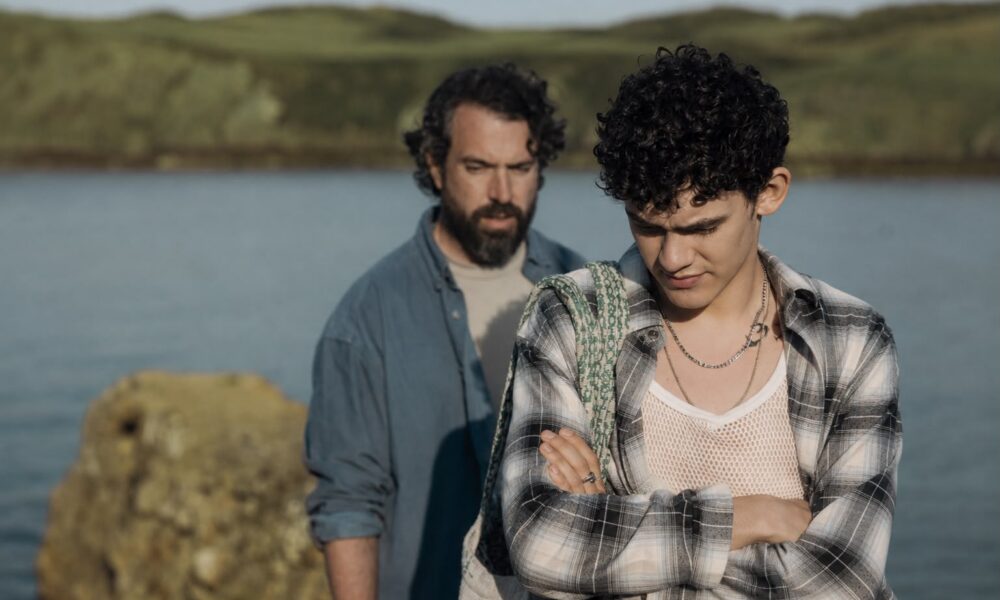
Black Church Bay is a tense drama set in a small Welsh village, centred on school teacher Barry (Tom Cullen), who is leading a double life. When an intimate encounter with a younger man, Jasper (Joe Locke), threatens to expose his secrets, Barry must decide how far he is willing to go to protect them. We spoke with director Rhys Marc Jones about genre, casting, and the generational divides at the heart of the film.
Black Church Bay blends elements of mystery, thriller, and drama. What were the challenges of balancing those genres in the writing and directing?
The biggest challenge was working out how much of it should be a thriller and how much should be a character-driven drama, while making sure it still had a heart and that almost survivalist engine to it. That was present at every stage. In both the writing and directing, I was always trying to make sure the scenes were doing a little bit of both. Even structurally, you don’t really know what’s happening for a while, or exactly how these characters relate to one other. Even though it plays as a drama, I liked the idea of withholding information and allowing the audience to discover things later. I think we struck a good balance in the end. The script was probably a little more thriller-y, but then Tom’s performance naturally drew us further into Barry’s psychological space. The challenge is always pacing: are you keeping the tension ratcheted up? Are you moving the story forward enough? Does it get more thrilling as the character development deepens, or does that slow the story down?
You worked with two actors who already have a strong following among queer audiences: Tom Cullen through Weekend and Joe Locke through Heartstopper. What did each of them bring to the film?
It was a dream working with both of them. We shot the first section of the film during the first two weeks, almost as its own self-contained narrative. That was interesting because, when Joe left, everyone genuinely felt his absence – including Tom. In a way, that helped the film. We actually cast Joe first. Lucy Pardee, my casting director, is renowned for street casting – she worked on Aftersun and Andrea Arnold’s films and has an incredible ability to discover people. But she felt, and I agreed with her, that because of the nature of this film and its adult sexual content, it wouldn’t have been prudent to cast a complete unknown. It needed someone who already understood the industry and could handle that kind of pressure. When I started thinking about young actors, Joe felt like the obvious choice. I watched the first season of Heartstopper when it came out and remember thinking, ‘By the time my film goes through financing, maybe he’ll be the right age.’ He also grew up on the Isle of Man, which felt relevant. It’s an island not unlike Anglesey – you can even see it from there – and I thought he would make a great Jasper. When we got Joe and Tom in a room together, the chemistry was just great. Tom is such a generous actor, and there was something magnetic about their on-screen pairing. So it was quite obvious to cast them. I think they both really deliver.
What drew you to this particular part of Wales, and how much did the setting shape the story?
It was written for those locations. The port they go to at the beginning was always written as that port. My parents live in the town, so I’d been to that school many times, and those scenes were written specifically for those classrooms. That area informed the whole thing. At that time, no one was really shooting there. Now there have been three queer films shot there in the space of a year, which is crazy. It’s such a beautiful place – quite isolated. When the financing came together, there was a moment when we could potentially have received more money if we moved the film to Scotland. But I said no. I’d written everything for this place. It was integral to the film, and I think it paid off. The initial idea actually came to me while I was walking the coastal path there. I did a six-hour walk, and that was where the genesis of the film came from. I’m a big believer in staying true to your initial intention as much as possible. I’m half Welsh, too, so it just felt very important to me to make my debut feature there.
The film brings together two generations of gay men. What did you want to explore through their contrasting experiences, and what do they reveal about how much things have – or haven’t – changed?
The film really began with my own anxieties – and, in a way, my envy – about a younger generation having freedoms than I didn’t have. The possibility of being openlyqueer as a teenager, and of discovering yourself more freely than I was able to. At the same time, I was conscious things could have been worse. The generation above mine had a very different experience. So the whole idea grew out of that intergenerational shift. Interestingly, when I began writing the film, I was closer to Jasper’s age. Now I’m closer to Barry’s. The film explores – or at least interrogates – the question of whether things are actually better. Sadly, in some ways things are regressing, especially in this country, and the pressures created by social media are incredibly intense. Some of the advancements can feel superficial. People are still struggling, and they don’t necessarily have the resources or support they need. I didn’t want the film to offer easy answers. You can see that in Barry’s inability to recognize Jasper’s insecurity. There’s almost a blind spot when he projects a kind of idealized image onto him. Jasper does something similar in return. There’s a lack of understanding between the generations, and I find that tension really interesting.
Interview With Director Oscar Boyson (Our Hero, Balthazar)


Featured Review2 weeks ago- News2 weeks ago
Shane Meadows Headlines + Joe Lycett Named First Patron As 2026 Forward Film + TV Festival Opens In Birmingham


News3 weeks ago70th BFI London Film Festival Announces ‘LFF For Free’ Programme


Featured Review2 days ago

Featured Review3 weeks agoSense And Sensibility ★★★★


Featured Review4 weeks ago

Movie Reviews2 weeks ago

Featured Review3 weeks ago
