


Tom Jenkins is a sound man. He’s worked on Black Mirror, Guillermo del Toro’s The Cabinet of Curiosities, True Detective, and produced the sound design for Baby Reindeer. For the new seaside horror miniseries, Below, Jenkins was the sound effects editor.
He not only got to work on sinking houses and the big creature, the Mudder, but helped tell creator Jesse McKeown’s story of community. “What was so cool about Below is that Jesse had written a show that, ostensibly, on the face of it, is a creature feature, right?” Jenkins told What’s On Netflix. “But it’s so much more. It’s about grief, and it’s about displaced communities. It’s about our relationships. It’s about being a parent. It’s about the love of our families. It’s about generational trauma. There’s so much wrapped up in what, again, on face value, could seem quite a simple creature feature, but Mudder specifically is used as this symbol and this vehicle to tell these stories.”
Recently, Jenkins told What’s On Netflix about telling these stories of Below through sound.
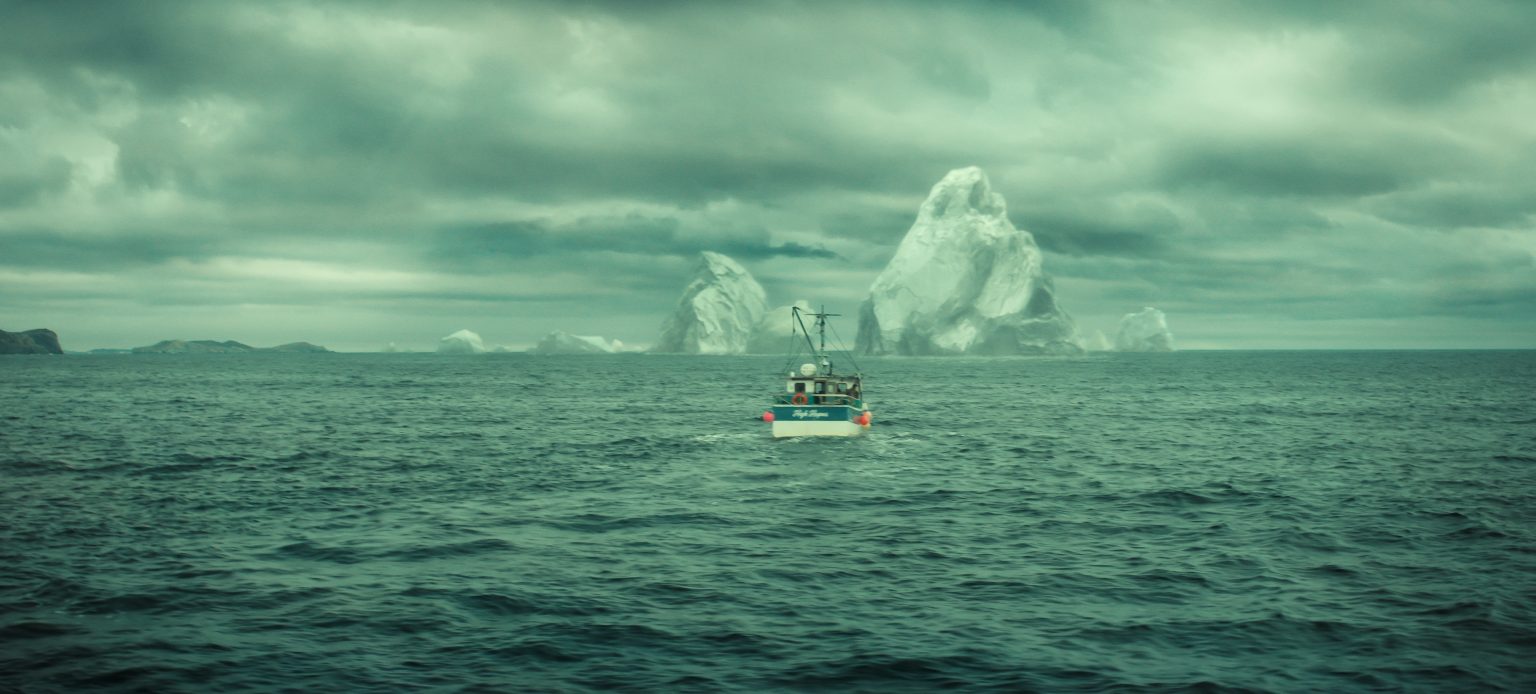
As someone who really respects the beauty of Newfoundland, when you’re handling sound for that location, what do you really want to preserve or accentuate?
There was a huge team of people involved. It was a team that started in Canada and migrated to London, and you had Paula Fairfield, who was our brilliant sound designer on it. David McCallum was our supervising sound editor, and there was a whole team at SoundDogs all putting in amazing work.
And one of the important things that having this big team brings is different perspectives. When you’re trying to do justice to a location like Newfoundland and a location that not many people have seen before, having different perspectives on this is really useful. Paula’s was a huge one because she owned a house there at one point. She lived there for a long time, and she knew exactly the little things that we needed to bring out.
Obviously, one of the main ones was the accent, ensuring that we represented that community correctly and it was authentic, and that we had a sense of place and a sense of community there. I’d like to think we managed to pull it off. David McCallum, our supervising sound editor, worked tirelessly to make sure that we were being as authentic as we could be.
BELOW. Episode 106 of Below. Cr. Courtesy of Netflix
What does week one at work look like onBelowfor you?
On Below, it was a more unusual project because I didn’t start at the very beginning. I was brought on board as part of the London team towards, I guess, three-quarters of the way through. So the mixing process was all meant to start in Toronto, and it got brought to London, and I got called to come on board by a mixer, James Ridgway, who I’d worked with a lot. We’d done Baby Reindeer together and Black Mirror and various other things.
It was a big show, and it had huge effects that were coming in. My job coming onto it was to work with the team, wrangle everything, then just help get it across the line, and help add to these brilliant VFX pieces. I helped by adding little sprinkles of sound where we could.
What were someBelowsounds that would keep you up at night in terms of getting them just right?
I think every sound, every show, and this in particular, what makes us quite good as sound designers is we get weirdly obsessive over things, over the recording of sounds. At this point in particular, my daughter was seven weeks old, so a lot of it was done with not much sleep and with the sounds of crying babies in my head.
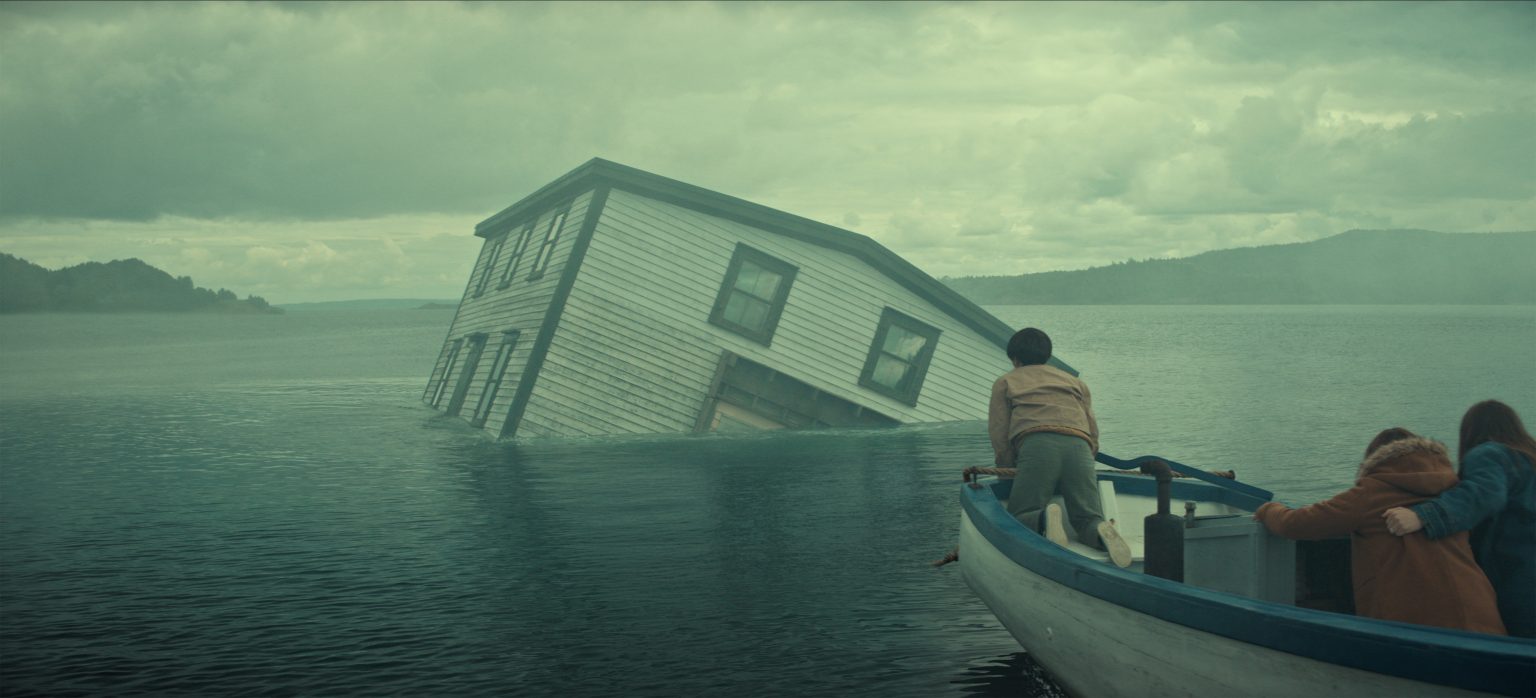
Actually, in episode one, there’s that brilliant opening with young Calvin when the house gets pulled down. A lot of those creaky house sounds, those are the sounds of my daughter that were pitched and modulated and had weird stuff done to them, and they were put in there to help just add this visceral, emotive quality to things.
It’s a good example of how you become obsessed with how to accurately convey emotion through sound. Because what we do is, it’s easy to think of it sometimes as: see an image, put a sound on; see a dog, put a dog bark on.
Actually, the fun of the job is the sort of emotional metanarrative of sound and being able to weave these emotional narratives through sound design to make audiences feel certain things or just to slightly subvert images in certain ways. It’s something else Paula, our sound designer, did a brilliant job with when she was tackling the Mudder sound design elements as well.
BELOW. (L to R) Alexander Karim as Hugo, Josh Hartnett as Calvin, and David Wenham as Steve in episode 104 of Below. Cr. Courtesy of Netflix
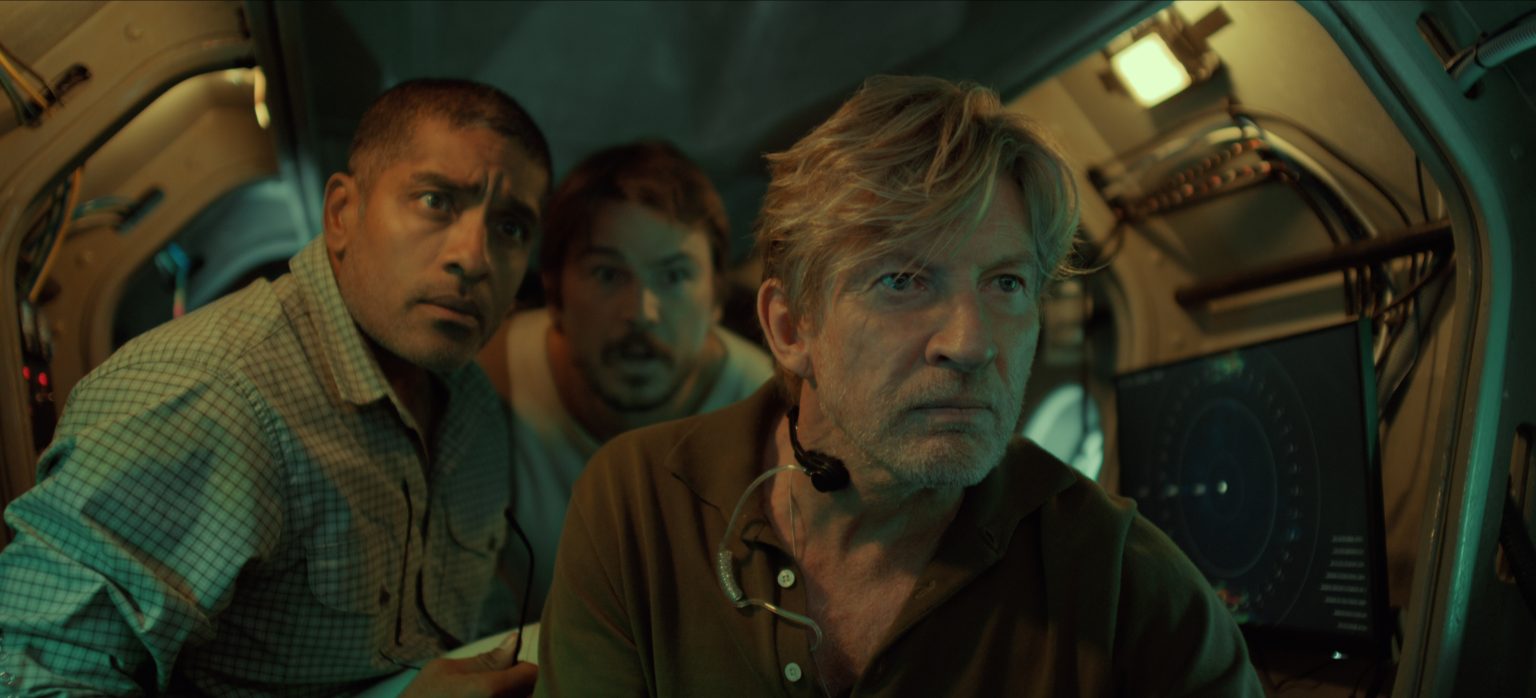
A fantastic moment with the Mudder that screams20,000 Leagues Under the Seais when Calvin goes undersea in a sub. Can you break down your work there? It came together so well.
Oh, thank you. I’m really pleased. Again, a lot of fun to work on and a real team effort with that. So, my timeline on the sequence was quicker. It was probably three weeks in total. But obviously, the team before I came on board had been working alongside VFX for a bit longer.
But with sound, often we will, most of the time, have to do temp work to temporary VFX. The actual crunch time comes much closer to the mix for us because these VFX artists, they’re incredibly creative, and these teams conjure something from nothing.
When you finally see these visuals, it’s always so exhilarating from the sound department side of things because you can start attaching sound to them. But that process for us is often really truncated because these VFX teams need as much time as they can to work on it.
And then once those visuals are finally released, we can then attack it. And that most of the time now happens very close to the mix, sometimes when we’re final mixing. So for this, we were getting visual effects updates right through to delivery. Every stage we were sort of adding, tweaking.
What about building suspense through sound on a big sequence like that one with so much sound VFX? How do you want to create an atmosphere without telegraphing danger ahead?
For any scene, the way I always look at it is: what’s the point of view? That always helps you develop a little bit of a path through to how you’re going to tackle the scene because a lot of our job as sound designers and mixers is taking things away.
You have a big palette of stuff to work with, but actually what becomes effective in these tense sequences is often the removal of things and the concentrating on certain things. So in the submarine sequence, we’d all added these creaks and these groans and the technology that was there and Mudder at the end. You have to take all that work and then clear your mind and remove as much as you can so you can really have a clear path as to what is actually bringing our attention to that scene.
And be that concentrating on breaths and Foley and really bringing the sound down to get you into the submarine, and then having the contrast and the juxtaposition from your quiet moments to your big, loud groans and croaks. It was a really satisfying scene to work on. Our mixers, James Ridgway and Will Stanton, did a brilliant job of crafting it with the sound, but also ensuring that the score works seamlessly along with it as well.
BELOW. (L to R) Azriel Dalman as Young Calvin, Kamryn Pliva as Young Ruth, and Rhiannon Morgan as Brenda Penney in episode 101 of Below. Cr. Courtesy of Netflix
There is an arc to the sound of the series. When we first get the creature in action, we get a Danzig needle drop. Then at the end, our last glimpse of the Mudder, it’s quiet and introspective. Do you want the sound to have a beginning, middle, and end?
It’s a really useful way of doing it. You can look at it from a micro, macro perspective. So be it in a scene or be it across an episode or a whole series, it’s a really helpful way of looking at things to try and plot a bit of a path and to be able to have an objective overview of what you’re doing.
Because sometimes it’s really easy to get bogged down in specific moments and episodes, but actually having an emotional narrative for the whole series and knowing where you’re going to end up, it always informs how you treat certain moments before.
It’s one of the challenging things of anyone’s job working in episodic TV in 2026, because these TV series, if you compare them to what we were all doing, what we were all watching in the mid-’90s, they’re completely different beasts. These are full theatrical films that we’re all able to stream and watch. And the turnaround is quicker, but the quality is the highest it’s ever been.
The challenge with that is always compartmentalizing the ways in which you work and having a big overview of the series as a whole and how you’re going to treat each episode and each scene within the episodes to ensure that you have valleys and peaks and troughs, but you can take your audience on a journey.
Given that the show was about a creature and a man both fighting for their families and someone literally working on it with a newborn, did you find it connecting with you in a way while you were working on it?
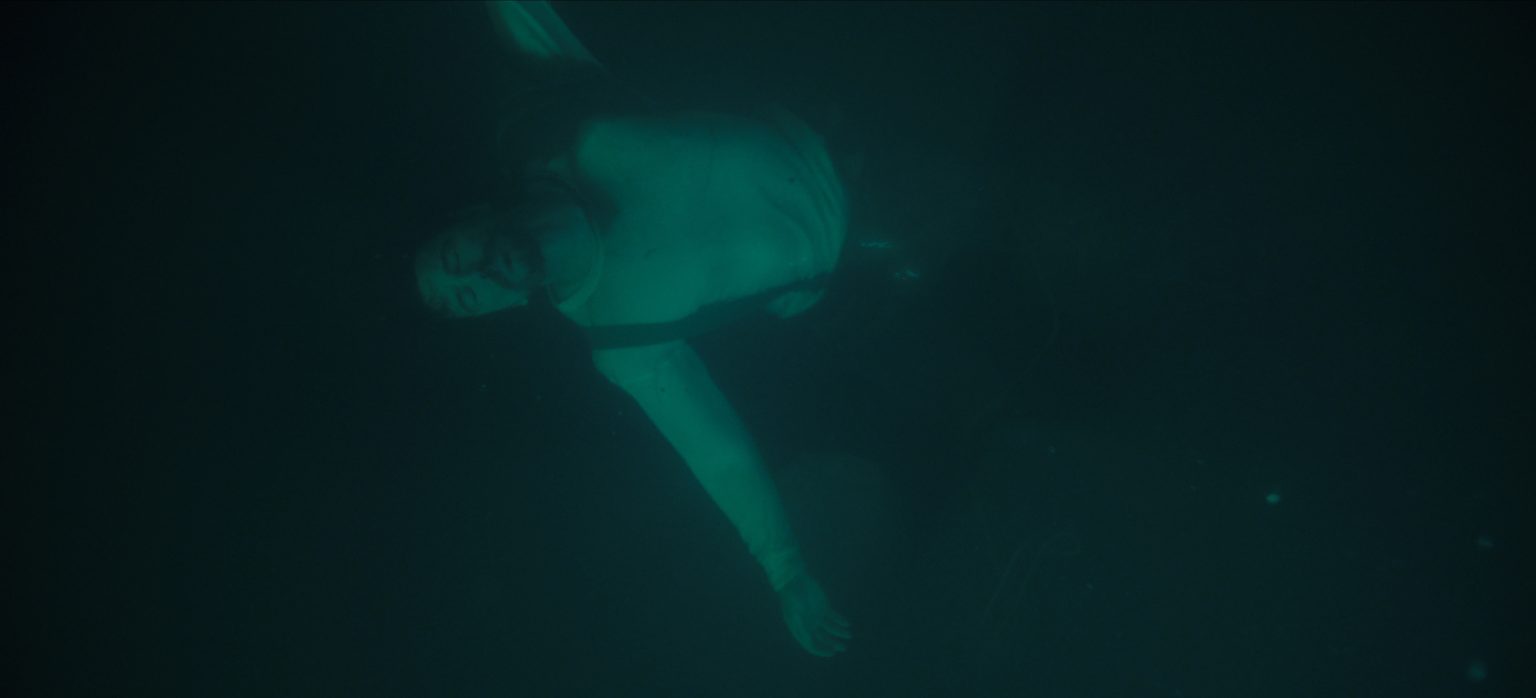
Yeah, no, a hundred percent. I’ll be honest, I did a lot of crying during the sound designing of Below because A, lack of sleep, but B, you do these things when you become… When you have kids, your heart, it’s like looking at. My dad always said this to me, he’s like, “You have a child and suddenly a piece of your heart is just living outside of your body.” And that’s kind of how it feels.
Watching the show, it’s almost that weird connection with Mudder and Calvin where it’s kind of like they’re looking at each other [at the end], it’s like, “That’s a piece of me outside my body.” And there’s that kind of connection between them. It was a really fun, intense, but rewarding experience.
BELOW. Josh Hartnett as Calvin in episode 104 of Below. Cr. Courtesy of Netflix
You were also the sound designer forBaby Reindeer, among other Netflix projects. When you were sound designing that series, how did point-of-view drive your choices there?
With that one, we felt an immense amount of responsibility to really accurately bring Richard’s vision to life and make sure that we were just being as sympathetic and as vulnerable as he was. The level of vulnerability and bravery he showed in making the show and putting that out to everyone was inspiring when you work on it.
And that was the sort of mindset and the point of view we brought to the sound work, is let’s be as vulnerable as Richard was. Let’s support him as much as we can, but let’s really try and put as much of ourselves into this.
It was amazing to see how well it did, and it was a real pleasure to work on. Unlike Below, which was big sounds, this was about nuance. This was about, again, taking away, and it had the tonal shift where this, at first, it was funny, it’s a comedy, and as you get into it, the rug gets pulled from under you and this emotional twist and turn happens. And that was a challenge sound design and mix-wise. A lot of the moments we’re probably most proud of in the series is being able to help track that emotional journey.
