

Close Menu
CinemaMix360

    Subscribe to Updates

    Get the latest creative news from FooBar about art, design and business.

    What's Hot

    Jesper Kyd on scoring Warhammer 40,000: Darktide and Samson

    November 19, 2026

    LA Film Industry Faces Crisis: Production Down 52% Since 2019

    November 19, 2026

    Al Pacino & Charlie Heaton Look for Scripts in ‘Billy Knight’ Film Trailer

    November 19, 2026
    Facebook X (Twitter) Instagram
    CinemaMix360
    Facebook X (Twitter)
    • Home
    • Movies
    • TV
    • Film School
    • Festivals
    • Indie
    • Trailers
    • Videos
    • Careers
    • AI & Tech
    • More
      • Cinematography
      • Directing & Producing
      • Editing & Post Production
      • Screenwriting
      • Sound & Music
    CinemaMix360
    Home»Cinematography»Schneider-Kreuznach Lens Supports Optical Navigation for NASA’s Artemis Missions
    Cinematography

    Schneider-Kreuznach Lens Supports Optical Navigation for NASA’s Artemis Missions

    By November 19, 2026No Comments3 Mins Read
    Facebook Twitter Pinterest LinkedIn Reddit WhatsApp Email
    Share
    Facebook Twitter Pinterest Reddit WhatsApp Email
    Key points

    NASA’s Orion spacecraft uses custom Schneider-Kreuznach lenses for its optical navigation system.

    The OpNav camera system processes images to determine the spacecraft’s position and trajectory.

    NASA selected these ruggedized lenses for their optical performance, stability, and focus-locking features.

    Multiple ruggedized lenses from Schneider-Kreuznach are integrated into the Optical Navigation (OpNav) camera system aboard NASA’s Orion spacecraft. The lenses support navigation and imaging functions for the Artemis lunar exploration program and have successfully performed during Artemis I and Artemis II. They will continue to be used in the OpNav system for upcoming missions, including Artemis III.

    The Orion Camera System, developed by Redwire in cooperation with Lockheed Martin, supports spacecraft operations through monitoring, public imaging, and optical navigation. Mounted on the exterior of the Orion crew module, the system captures images of the Earth and star field during flight.

    These images are processed to determine the spacecraft’s position and trajectory during its journey to and from the moon. For this purpose, the camera system uses a monochrome 5.3-megapixel sensor combined with a customized Schneider-Kreuznach TOURMALINE 2.0/35 C lens, formerly known as APO-Xenoplan 35.

    The Tourmaline 35mm lens was selected for numerous reasons by NASA. Its 1.3-inch image format met NASA’s imaging requirements, while its ultra-high-resolution optical performance provided the required image quality. In addition, the lens’ exceptionally robust mechanical design satisfied all environmental specifications associated with the mission.

    The optical design minimizes image sensor shading due to its low Critical Ray Angle (CRA), approaching that of a true image-side telecentric lens. This characteristic allows maximum light transmission through the microlenses commonly used on modern image sensors.

    NASA also required assurance that the lens focus setting could not shift during operation. To meet this requirement, we developed a custom focus-locking mount that satisfied all applicable specifications.
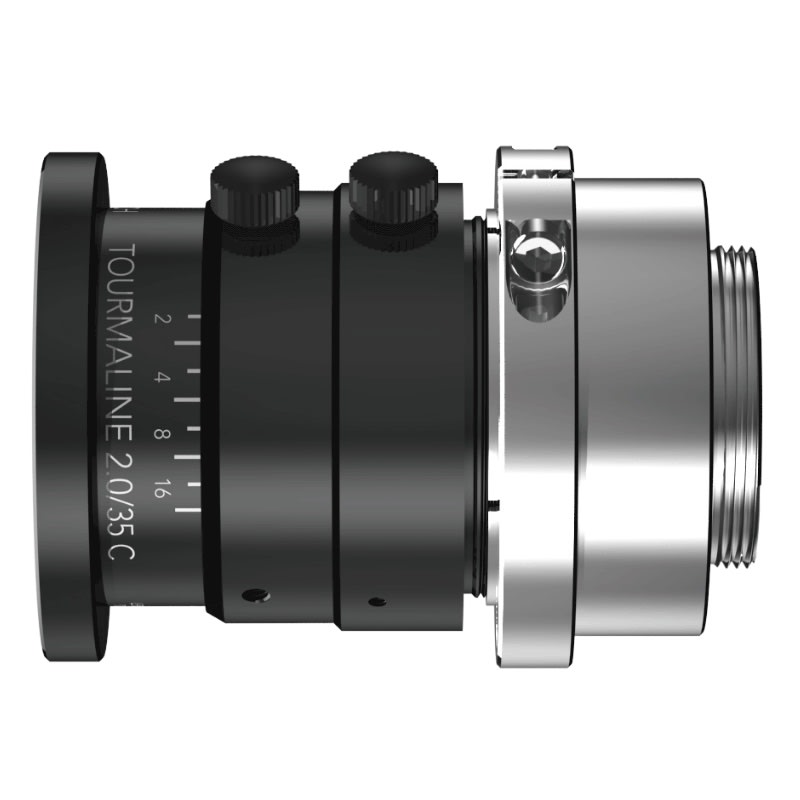
    The camera system uses a monochrome 5.3-megapixel sensor combined with a customized Schneider-Kreuznach TOURMALINE 2.0/35 C lens, formerly known as APO-Xenoplan 35. (Image: Schneider-Kreuznach)

    Finally, the lens incorporates no materials or compounds that could potentially outgas. The only compound used to secure the lens components is a NASA-approved material specifically selected to meet the mission’s stringent outgassing requirements.

    The lens was originally qualified for space conditions during Artemis I, where it supported the validation of Orion’s optical navigation capability. Based on this performance, the system has been retained for continued use in subsequent Artemis missions, including Artemis II.

    Spaceflight places specific requirements on optical systems. Components must maintain alignment and imaging performance under launch vibration, mechanical stress, thermal variation, and vacuum conditions. The lens design was adapted to ensure mechanical stability of the optical elements across these environments.

    Beyond its navigation function, the OpNav camera has captured detailed images of Earth and the Moon, including rarely seen views of the Moon’s far side. These images support system validation and provide additional mission data for analysis.

    The Schneider Group is specialized in the development, production, and manufacturing of high-performance lenses as well as optical filters for the industrial, film, and photo sectors.

    This article was contributed by Jos. Schneider Optische Werke GmbH (Bad Kreuznach, Germany). For more information, visit here  .

    Lens Navigation Optical SchneiderKreuznach supports
    Share. Facebook Twitter Pinterest LinkedIn WhatsApp Reddit Email
    Previous ArticleLive on TV: A Behind-the-Scenes Look Into the Schoellkopf Field Press Box
    Next Article Nawazuddin Siddiqui eyes Osho role, rules out directing

    Related Posts

    SKYPAC in Bowling Green is hosting five free events through Dec. 20, including two concerts, a tree lighting, an art exhibit and a film.

    November 19, 2026

    Silver and Black and White: Week 10 vs. Seahawks

    November 18, 2026

    Cynthia Erivo to host NYC Christmas tree lighting ceremony

    November 18, 2026

    Meet the Speakers at El Gouna Photo Week 2026

    November 17, 2026

    Paris Photo covers two centuries of history and transformation of photography

    November 17, 2026

    Paris Photo’s 29th edition coincides with the bicentenary of photography

    November 16, 2026
    Add A Comment
    Leave A Reply Cancel Reply

    Editors Picks

    Guild Wars 2 Art Shows Upcoming Projects

    January 12, 2021

    Scary Movie 6: Release Date, Plot, Cast & Preview

    January 12, 2021

    Where is Pearl in the Mist Filmed?

    January 12, 2021

    How Conspiracy Inspired ‘Scary of Sixty-First’

    January 12, 2021
    Top Reviews

    Jesper Kyd on scoring Warhammer 40,000: Darktide and Samson

    By

    LA Film Industry Faces Crisis: Production Down 52% Since 2019

    By

    Al Pacino & Charlie Heaton Look for Scripts in ‘Billy Knight’ Film Trailer

    By
    • Facebook
    • Twitter
    • Pinterest
    • Instagram
    • YouTube
    • Vimeo

    Subscribe to Updates

    Get the latest creative news from SmartMag about art & design.

    About Us
    About Us

    CinemaMix360 is your trusted destination for the latest movie news, TV updates, official trailers, and filmmaking resources. We bring together entertainment industry coverage and educational content to inspire film lovers, creators, and aspiring filmmakers around the world.

    Our Picks

    10 Best Vlogging Cameras in 2026: Top Picks for Creators

    September 28, 2026

    AI Tools for Film Production: 15 Best Picks

    September 9, 2026

    Young Cinema-Goer Picks Up the Tab for Mum in National Cinema Weekend Campaign

    September 1, 2026

    Subscribe to Updates

    Stay tuned for more movie news, TV updates, trailers, and filmmaking insights.

    Facebook X (Twitter) Instagram Pinterest
    • About Us
    • Get In Touch
    • Disclaimer
    • Privacy Policy
    • Terms & Conditions
    © 2026 CinemaMix360. All Rights Reserved.

    Type above and press Enter to search. Press Esc to cancel.