


Opening his remarks with “shukran”, the Arabic word for thank you, Goldblum expressed his gratitude to King Mohammed VI and Prince Moulay Rachid.
Sunday 22/11/2026
A career spanning nearly six decades, moving between major Hollywood productions and independent films
MARRAKECH – American actor Jeff Goldblum turned a career tribute into a celebration of the people and stories that have shaped his life in cinema, thanking Morocco’s King Mohammed VI and the Moroccan people after receiving the festival’s Golden Star, “Étoile d’Or”, award on Saturday.
Goldblum was visibly moved as he accepted the distinction at the Palais des Congrès during the 23rd Marrakech International Film Festival. He described Morocco as a wonderful country and praised the warmth and generosity of its people.
Opening his remarks with “shukran”, the Arabic word for thank you, he expressed his gratitude to King Mohammed VI and Prince Moulay Rachid, whose support has helped sustain the festival as an international meeting point for the film industry.
He also thanked the festival organisers and those who had brought him to Marrakech, saying he felt humbled to receive an award on a stage where so many distinguished artists had been honoured before him.
But Goldblum was keen to make clear that the tribute was not his alone. He dedicated the Golden Star to the directors, screenwriters, actors and technical teams who had contributed to his work over the decades, as well as the colleagues whose trust had opened new creative possibilities for him.
“This award makes me look back,” he said. “And when I do, I don’t see a list of achievements. I see the faces of people who gave me a chance before I had earned it. Clearly, I didn’t get here on my own.”
His speech placed the emphasis on the collective effort behind filmmaking, rather than on individual achievement. He also turned to the wider purpose of cinema, arguing that the stories filmmakers tell can help audiences understand lives and experiences beyond their own.
“I believe that the stories that we tell matter,” he said. At their best, films allow people to sit beside strangers and see the world through someone else’s eyes. They reveal the common ground between people and challenge the divisions that separate them.
“Movies also help us imagine something better, a world that works for everyone,” he said, adding that he wanted to keep working towards that possibility for as long as he could.
Goldblum also used the occasion to pay tribute to fellow festival honourees John Turturro and Moroccan artist Younes Megri. Praising their humanity and artistic contributions, he told them: “Your work has touched me deeply and pushed me to challenge myself. It is truly a great honour to be in your company.”
The ceremony brought together two distinctive figures in international cinema when British actress and filmmaker Tilda Swinton presented Goldblum with the award. The pair previously worked together on Wes Anderson’s “The Grand Budapest Hotel.” Introducing her former co-star, Swinton described him as a rare talent whose presence on screen went beyond the conventional boundaries of acting.
She recalled the many different figures he had brought to life over the years, from scientists and wizards to aliens and musicians, arguing that his performances had always retained something recognisably his own. His warmth, humour and openness, she said, remained visible beneath the characters he portrayed.
“Open, warm, playful, sincere, kind, careful, understanding, interested,” she said, summing up the qualities she associated with him. “Half a century of Jeff. Hallelujah!”
Swinton also expressed her gratitude to King Mohammed VI and Prince Moulay Rachid for their support of the festival, which continues to strengthen Marrakech’s place on the international film calendar.
A specially assembled film montage offered the audience a journey through Goldblum’s screen career, bringing together scenes from productions that helped establish his reputation, including “Invasion of the Body Snatchers,” “The Fly,” “Jurassic Park” and “Independence Day.” The selection highlighted the range of characters he has played, from unsettling and unconventional figures to leading roles in major Hollywood productions.
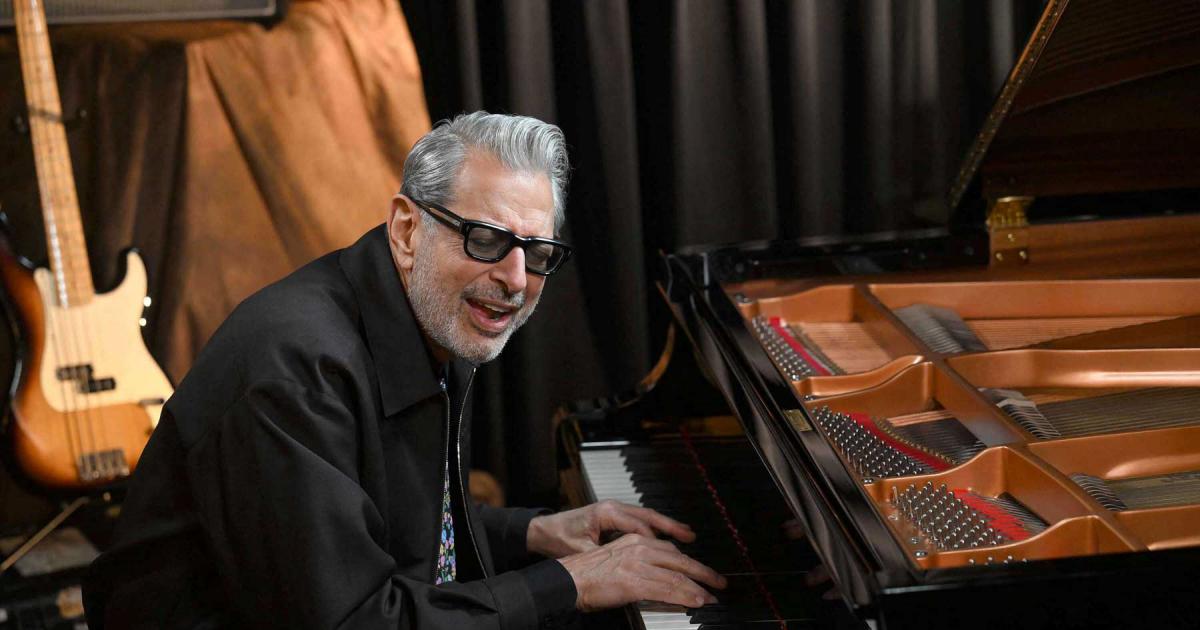
The evening then took an unexpected musical turn. Goldblum, who is also an accomplished jazz pianist, took his place at a grand piano and performed a medley for the audience. The performance brought another dimension of his artistic life into a ceremony otherwise devoted to his achievements on screen.
His relationship with music has developed alongside his acting career. He regularly performs with the Mildred Snitzer Orchestra, exploring jazz through live performance and improvisation.
Born in the United States in 1952, Goldblum has built a career spanning nearly six decades, moving between major Hollywood productions and independent films. His distinctive screen presence and willingness to explore different genres have helped him avoid being defined by a single type of role.
Goldblum’s honour forms part of a wider programme celebrating established and emerging figures in world cinema. Megri and Turturro are also receiving tributes this year. Turturro’s latest film, “The Only Living Pickpocket in New York,” is among the festival screenings, while both he and Goldblum are taking part in discussions with audiences.
The festival’s Conversation series also features filmmakers and performers including Rian Johnson, Luca Guadagnino, Cristian Mungiu and Monica Bellucci. The event opened on Friday with a gala screening of Jesse Eisenberg’s “The Debut,” starring Julianne Moore.
French actress Marion Cotillard is presiding over this year’s jury, whose members include Emma Mackey, Vicky Krieps, filmmaker Andrew Haigh and Tunisian director Kaouther Ben Hania. The festival runs until November 28.
For Goldblum, Saturday’s ceremony was less about looking back at a list of films than recognising the people and shared experiences behind them. His Golden Star marked a long career, but his acceptance speech returned repeatedly to the idea that cinema is a collective art, and that its greatest value lies in the stories it allows people to share.
