


Added on February 25, 2026 Staff Writer period pieces , screenwriting tips , wrting
Period Pieces: How Screenwriters Reimagine, Modernize, and Remake The Past

Decrease Font SizeIncrease Font SizeText SizePrint This PageSend by Email
Period pieces have long graced our screens and audiences continue to love them. They offer a portal into the days of yore and a voyeuristic snapshot of life during those times. They transport audiences into other worlds and immerse them with characters who may or may not be too different from those in life today.
They are set in a historical era to illustrate the social codes, morality, and language of the times as a distinct contrast from the present day. They educate as well as entertain.
Remaking classic texts requires a number of considerations relating to the fidelity of accurately recreating the past to modern audiences.
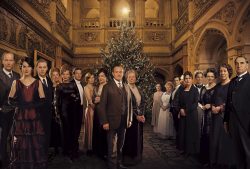
Do screenwriters want to recreate the past as accurately as possible, distill and translate the essence of the social issues of the day like Julian Fellowes’ Downton Abbey for modern audiences, or use the Luhrmann’s Romeo+Juliet or Emerald Fennell’s Wuthering Heights? Each approach has its creative merit
Period pieces are designed to depict what some aspects of life were like in the past. Some tell grand, important stories about war time or the political climate during a certain time. Others simply track every day life and personal struggles that may resonate today.
They show how characters dealt with the rules and social structures of the time to help contemporary audiences visualize and understand how societies worked in the past.
Popular series like Bridgerton aren’t based on any specificf romance with a modern twist
Period pieces can capture historical accuracy, offer a thematic update or deliberate reinvention
When a screenwriter opts for a complete reimagining, the original text becomes a springboard rather than a blueprint. The canvas is wiped clean and a new era begins. Baz Luhrmann’s Romeo + Juliet (1996) is the archetype: Shakespeare’s language remains intact, but the cinematic grammar recontextualizes the classic play as a modern urban tragedy of forbidden love.

Romeo + Juliet (1996) Photo courtesy of 20th Century Fox
This blatant anachronism must be creatively justified. The modern sets, costumes and soundtracks are jarring against the Shakespearean language. Luhrmann’s gambit paid off by retaining the emotional logic of the play and offering audiences a modern audiovisual collage to experience and appreciate Shakespeare in a new light.
Such a bold creative departure will surely raise a few eyebrows – especially among literary puritanicals who decry such reinventions as sacrilege. These daring choices may attract younger or non-traditional audiences and cement an auteur’s filmmaker’s style, or they can be dismissed as a blasphemous gimmick if the initial emotional and thematic vertebrae are broken and the original creator’s intention is ignored.
Andrea Arnold’s Wuthering Heights (2011) demonstrates a thematic re-emphasis of Emily Brontë’s novel. Arnold compresses the novel’s timeline and focuses on the elemental physicality earth, wind, and fire rather than expansive dialogue of the novel.
This approach allows audiences to experience an alternative sensory pathway to the novel’s emotional intensity as it examines themes of class and race of the class.
David Copperfield (Dev Patel) Photo courtesy of Searchlight Pictures
Contemporizing tone, cast, and language helped Armando Iannucci’s The Personal History of David Copperfield (2019) preserves Dickens’s 1850 novelistic structure about an orphan’s triumph despite pernicious obstacles.
It retains Dicken’s intent while deploying a modern comic rhythm that translates Victorian social critique for today’s viewers. Its revisionist time-shifted approach invites current debate about persistent social issues that haven’t been left behind in our history books.
Little Women. Photo courtesy of Sony Pictures
Greta Gerwig’s Little Women (2019) made Louisa May Alcott’s two-part novel (1868/9) accessible to modern viewers while preserving the original spirit of Jo, Beth, Meg and Amy March’s passage into womanhood. It forged a non-linear narrative structure as it jumped between the folly of youthful aspiration and the adult consequences of those choices through Gerwig’s feminist lens. A middle ground approach feels less of a shock to Alcott purists.
Choose your reason for writing a particular project – are you raising awareness of classic period piece or are you updating it for modern audiences with your personal flair?
Maintain the spiritual core – no matter how far you drift away from there so that it remains recognizable to that audience. It’s not your job to question the original writer’s intention for their story even if you radically reinvent it
Balance Interiority with Exteriority – Many period pieces contain expansive monologues to describe feelings and motivations to conserve filming days and capture the theatricality of the day. With the advent of modern technology, filming costs have plummeted so writers can now show more and tell less.
Alter with purpose – many period pieces span generations and contain too many characters, events, and locations to be practically adapted into a single film. If you’re changing social class, race, or gender, do so with intention. Be consistent with your creative choices. For instance, if you use period dialogue, do so throughout the script.
Honor historical social norms – Social and cultural norms have changed dramatically over the last century and beyond. Avoid dismissing customs that were highly-regarded at the time such as finding a suitable spouse and marrying well. Similarly, be mindful that what was socially acceptable back then, might not be the case today.
