


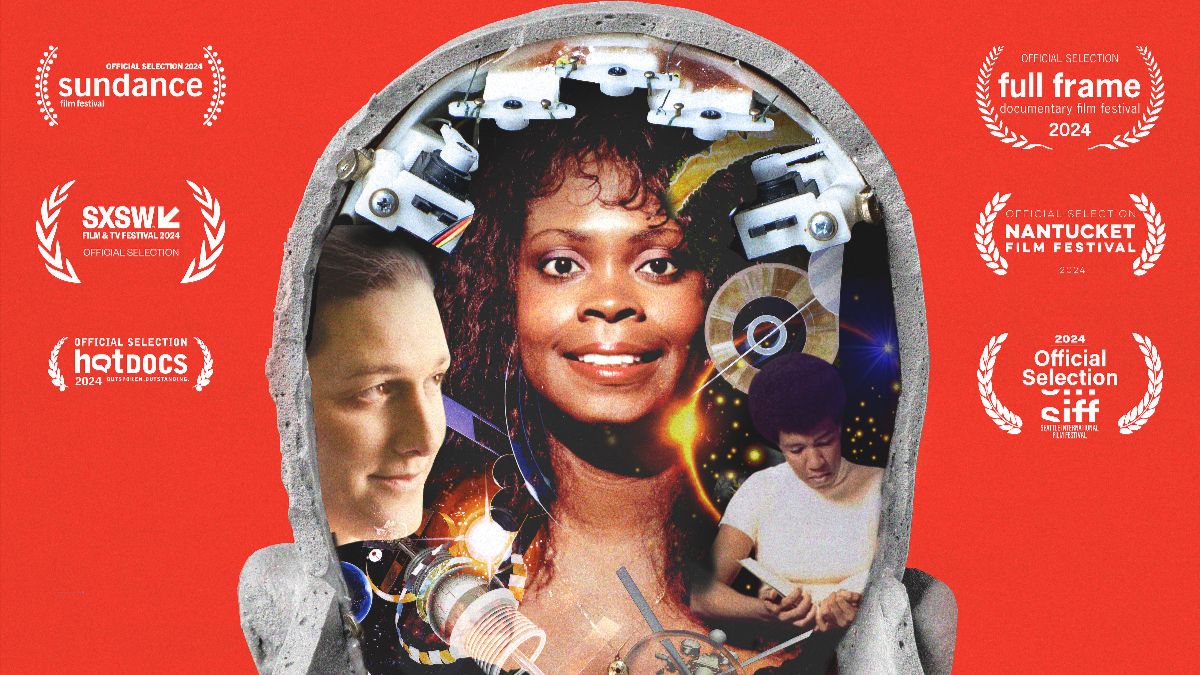
On the surface, Love Machina appears to be another discussion about the intersection between technology and humanity. With terms like “mindfile” and “digital consciousness,” the movie might turn off people who don’t see themselves as techno-savvy. But underneath all the jargon, the documentary does a very good job of humanizing AI—by focusing on the love story behind it.
Love Machina spans decades as it explores the creation of BINA48, the robotic entity created by Martine Rothblatt’s Terasem Movement and modeled after Rothblatt’s wife Bina. The movie’s biggest challenge is obvious: it can never escape the clunkiness of high-concept terminology, whether it’s experts detailing the technology or philosophical discussions of transhumanism. This is not a film that can be watched passively. The viewer has to keep up with what everything means, and where it fits in an exhaustive timeline going back decades.
That’s because Love Machina is only partly about the making of BINA48, which in itself spans so many years. It also delves into Martine’s career as one of Forbes‘ top ten greatest innovators, explaining the influence of science fiction (particularly the writing of Octavia E. Butler) not only on Bina and Martine but society as a whole, and discussion about transgender rights, Black representation and interracial families. There are a wide variety of issues within the film, some more explored than others. But all of them point back toward the core of the documentary: the love story between Bina and Martine.
Whether or not you agree with or even fully understand their point of view, the documentary ultimately centers on this hopeful idea of if the human mind can outlast the human body. Everyone can relate to the desire of wanting to hold onto a loved one. What BINA48 is doing, in a very technical way, is essentially archiving the human mind. Can technology, by taking interviews and press appearances and whatever other kind of records are out there, preserve Bina’s mind and spirit—making tangible what we believe to be intangible?
As the film notes, Bina and Martine’s incredible resources make it possible for them to pursue these ideas and others in a way that normal audience members could not. The person watching in the movie theater isn’t going to go back to school and get their Ph.D. or get their helicopter license. But Love Machina beautifully keeps Martine and Bina from feeling like they’re above the audience. Even as it rattles off their various accomplishments, the film finds moments to come back to their relationship and their family.
There are some very human moments in the movie, some serious and some even kind of funny. There’s something amusing about David Hanson noting that part of the build process took place in his house, with his mom working on the project. This great, sophisticated technological advancement is being assembled in someone’s house with their mom, and Bina speaks her first words at the dinner table. There’s Bina and Martine’s daughter talking about how her friends told her, “Your mom is a robot!” For all of the techno-speak, the film comes down to a human journey of loving someone so much that you’re willing to change the world to hold onto them.
The film offers no proverbial answers. It doesn’t take a position on the use of artificial intelligence, beyond appreciating how much effort has gone into making BINA48. Love Machina is willing to be critical of her and of AI as a whole, and director Peter Sillen does a remarkable job sifting through a ton of talk show clips and public appearances to find a sampling that works in the context of the documentary. There could easily be a huge information dump in this movie, and Sillen for the most part keeps the movie on a clear track.
From a production standpoint, Love Machina has taken the long route to the finish line; the documentary began shooting almost a decade ago, and was initially released in 2024. Then Sillen and his team took the extraordinary step of going back and taking a second look at the film, based on the initial audience response. It, like the technology it profiles, is an evolving work. And with the continuing conversations around AI, it could easily continue to grow. But it’s obvious how much care the filmmakers have taken to tell a charming, complex and even possibly controversial story. The best thing one can say about this film is that there’s obviously a lot of love in it, both on and off-screen.
For more on Love Machina, visit the film’s IMDb page. Photo Credit: Courtesy of C41 Media.
Article content is (c)2020-2026 Brittany Frederick and may not be excerpted or reproduced without express written permission by the author. Follow me on Twitter at @BFTVTwtrandon Instagram at @BFTVGram.For story pitches, contact me at tvbrittanyf@yahoo.com.
