


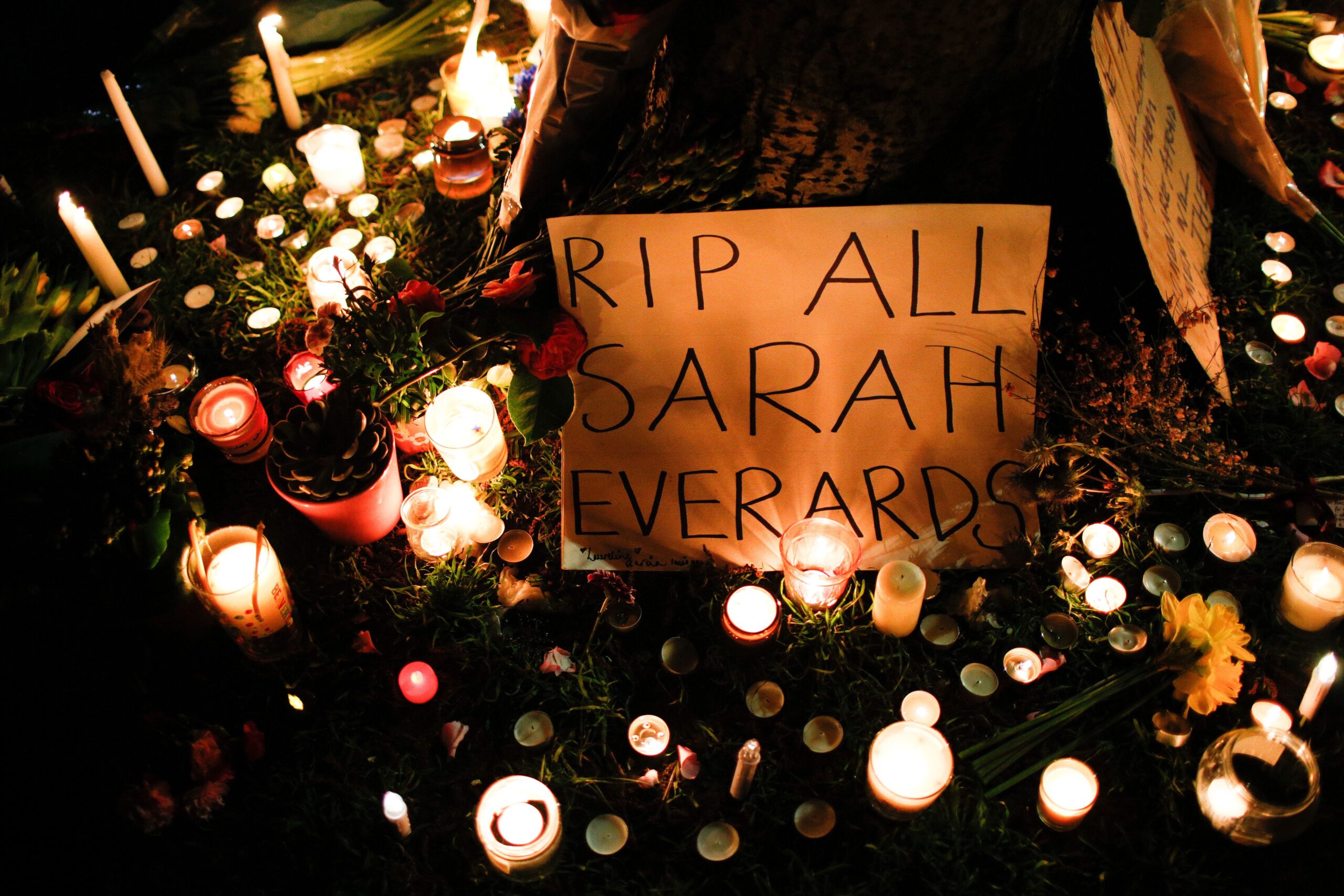
<img src="https://cinemamix360.com/wp-content/uploads/2026/08/GettyImages-1231694902-scaled.jpg” alt=””>
Protesters gather on Clapham Common in London after a vigil in memory of Sarah Everard is cancelled in March 2021. Photo: Victoria Jones / Getty
Sky News’sCathy Newman Showreported this week that a letter, which had been signed by 400 female screenwriters in the space of 24 hours, has been sent to the BBC objecting to the fact that the writer appointed to create a new drama about the murder of Sarah Everard was a man.
The signatories, who include many household names in the industry, say that “the announcement of this particular commission brought a great deal of anger to the surface among women writers – anger that has been building for some time”.
They write: “We are not saying men cannot write about women’s experiences. But we are saying that in a case this specific, this raw, and this rooted in the dynamics of power and gender, the question of who tells the story is inseparable from the story itself. To commission a male writer is not a neutral creative decision.”
The letter goes on to say: “Every woman writing in this industry carries with her a lifetime of lived experience – of navigating misogyny in its everyday forms, from the subtle to the overt. That knowledge is not incidental to writing this story. It is the story. The particular awareness that comes from moving through the world as a woman – the calculations made, the fears managed, the incidents absorbed and rarely reported – cannot be fully accessed by someone who has never had to live it, however gifted, however diligent their research.”
Upgrade to membership to fund the Nerve
And it calls on the BBC “for a meaningful conversation about writer selection – specifically, how the BBC commissions dramas about violence against women and girls, and about misogyny as a structural force, not just a backdrop”.
A BBC spokesperson said: “The BBC Drama Commissioning team has met with representatives from the group to discuss the issues raised about opportunities for women screenwriters and we are fully committed to working together to create meaningful change across the industry. It is disappointing that a letter which was shared in confidence, out of respect to the Everard family, has been made public in this way.
“We take the responsibility and trust involved in making factual drama extremely seriously, and the focus of this drama is to raise important questions about the failings from within the Met Police which led up to Sarah Everard’s horrific murder. Written by BAFTA-winning Jeff Pope and produced by Etta Pictures and BAFTA-winning Kirsty Cunningham, who also worked on the BBC documentary, it will be made with the utmost care, sensitivity and respect.
“The issue of representation and diversity in this industry goes beyond looking at an individual commission in isolation, which will always have its own unique context and complexities. The industry as a whole has more progress to make. The BBC Charter asks us to reflect the diversity of the whole of the UK and serve all audiences and supporting women writers and the next generation of writing talent is something we care deeply about. We are proud to be working with so many brilliant women writers whose work on the BBC spans many genres.”
Following the leak of the private letter earlier this week, and given that it is in the public domain on social media, we spoke to some of the signatories about publishing it. You can read it in full below.
“We write as a group of women screenwriters who have dedicated our careers to storytelling across every genre and form. We are also people who care deeply about the BBC – its values, its independence, and its future. We are writing to open a conversation: one we believe is in the interests of the BBC and its audiences as much as it is in ours.
The announcement that Jeff Pope has been commissioned to write a drama about Sarah Everard was the catalyst for this letter – but it is not the whole of it. The questions it raises about writer selection, opportunity and authorship are ones we have been grappling with for a long time, and this felt like a critical moment to raise them directly and constructively. We want to be clear that we understand the complexity of decisions like this one. We do not know the full context – including what conversations took place with Sarah Everard’s family – and we would not presume to speak to those. We also recognise that this commission is not something that is likely to be reversed.
We are writing because this moment offers a useful frame for some very specific and urgent questions – about how the BBC approaches the decision of who tells certain stories, and about how we, as women screenwriters, might actively work with you to ensure those decisions reflect and reinforce the values set out in the BBC’s Royal Charter.
Clapham Common, March 2021. Photo: David Cliff/Anadolu Agency
Upholding the Charter
The Charter asks the BBC to reflect the diversity of the United Kingdom, to represent underrepresented groups, and to serve all audiences. These are not box-ticking obligations – they are at the heart of what makes the BBC different from its commercial rivals, and they are increasingly what gives the BBC its most compelling argument for public support at a time when that support is being actively contested.
We are acutely aware of the pressures the BBC is under – commercially, politically, and reputationally. We believe that a more visible and consistent commitment to women writers – particularly on stories that are, at their core, about women’s lives or about the systems that harm them – is not just the right thing to do. It is strategically important for the BBC’s long-term credibility and distinctiveness.
This is an industry-wide issue – and we are working on it
The question of who is trusted to tell which stories is not unique to the BBC. It runs across our industry, and we are actively working with industry partners to address it at a structural level. The BBC is our focus here, not because we single it out for criticism, but because the announcement of this particular commission brought a great deal of anger to the surface among women writers – anger that has been building for some time. We are trying to understand that anger and turn it into something more constructive. This letter is part of that effort. The BBC’s Charter obligations, its public funding, and its historic relationship with audiences create both an expectation and an opportunity that commercial streamers do not have.
The broader structural issue is one of opportunity. Writers like Jeff Pope carry significant commercial weight – understandably so, given the trust they have built over long careers. But that trust was built through being given opportunity. With the exception of Sally Wainwright, Abi Morgan and perhaps one or two others, women writers are routinely denied equivalent opportunity – precisely because they haven’t yet been given it. The pattern is self-reinforcing, and it is one the BBC is uniquely positioned to help break, not by sidelining established writers, but by actively creating pathways for others to build comparable profiles.
This matters across all stories and genres, but it is most acutely felt when the project in question is one where female authorship is not just desirable but intrinsic to the integrity of the work.
Why writer selection is especially critical for stories like this one
Sarah Everard was killed because she was a woman. The case did not simply expose the actions of one individual – it cracked open a national conversation about systemic misogyny, about the safety of women in public spaces, about institutional failure and the silencing of women within structures meant to protect them. That conversation is not over. The Independent Office for Police Conduct investigation, the Angiolini Inquiry, and the ongoing trauma experienced by women across this country – and internationally, as brought into terrifying focus by the Epstein Files, Gisèle Pelicot’s brave advocacy, and many more – are testament to the fact that we are still, collectively, living inside this story.
Given all of that – and given that this misogyny is specifically (and quite rightly) what the drama will set out to examine – we are genuinely shocked that the BBC has commissioned a man to write it. It is this dimension of the drama – the exploration of structural misogyny – that makes writer selection so important, and where we believe the BBC risks falling into the very patterns the drama sets out to examine.
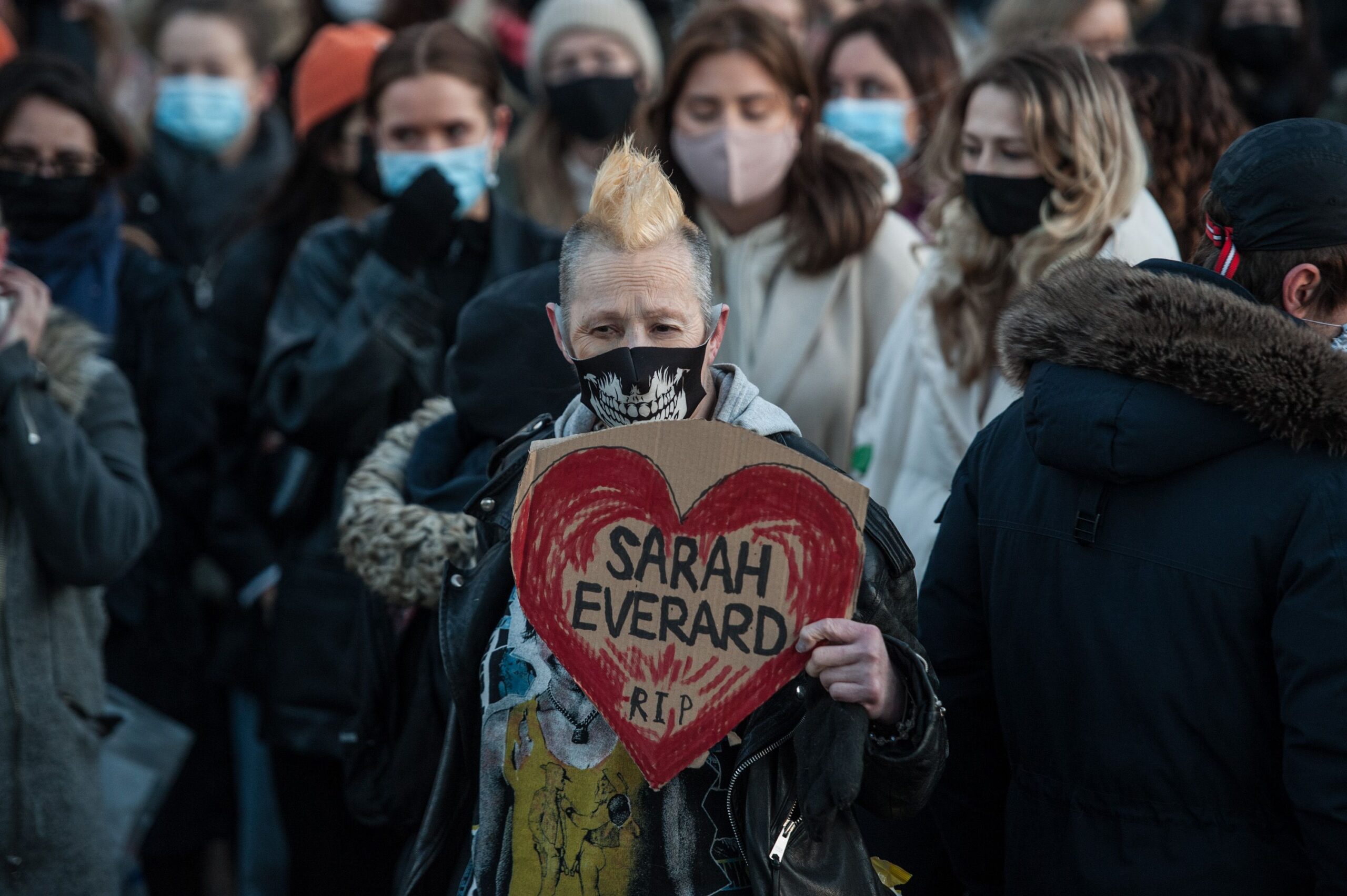
Mourners at Clapham Common. Photo by Guy Smallman/
We are not saying men cannot write about women’s experiences. But we are saying that in a case this specific, this raw, and this rooted in the dynamics of power and gender, the question of who tells the story is inseparable from the story itself. To commission a male writer is not a neutral creative decision.
There is something more fundamental here too. Every woman writing in this industry carries with her a lifetime of lived experience – of navigating misogyny in its everyday forms, from the subtle to the overt. That knowledge is not incidental to writing this story. It is the story. The particular awareness that comes from moving through the world as a woman – the calculations made, the fears managed, the incidents absorbed and rarely reported – cannot be fully accessed by someone who has never had to live it, however gifted, however diligent their research.
There are compelling stories to be told about how misogyny affects men and boys too.Adolescencedid this successfully and was explored by Jack Thorne, another very trusted, successful male writer. Stories about how misogyny impacts women are essential and consideration surely must be given to who is best placed to tell those. The story about how female victims of John Worboys were systematically ignored and mistreated by a police force steeped in misogyny, leading to the perpetrator remaining at liberty to rape more and more women, is an urgent one. The fact that this story has also been told by a male writer – Jeff Pope again – amplifies the questions around the latest announcement. Women writers’ voices must not be kept silent in stories about the silencing of women as a tool in systems of misogyny and gender-based violence.
We are also conscious of a tendency for this argument to be misread: as a claim that women writers should be confined to stories about misogyny and violence, or that these are the only stories they are equipped to tell. We want to name that misreading clearly and categorically reject it. Women writers bring the full range of human experience to their work. The point is not that these stories belong to women by default. The point is that when they are given consistently to men, it signals something about who is trusted to handle complexity, consequence, and power – and that signal compounds over time.
A note on what good looks like
The BBC has shown it can get this right.Three Girlsremains a landmark – not just as drama, but as a demonstration of what happens when the right writer is placed at the centre of the right story.I May Destroy Youis another outstanding example of a female-authored story of sexual assault. But they are now some years ago. Outside the BBC,She Saidstands as a benchmark for how stories of institutional misogyny and violence against women can be told with rigour, compassion and intentionality. These shows are still widely referenced by screenwriters and audiences as examples of what this kind of work can and should be. We would love to work with you to make that approach the rule rather than the exception.
What we are asking for
We are not asking for an apology, and we are not asking for this commission to be unwound, particularly if Sarah Everard’s family have already agreed on the writer they are placing their trust in. We are asking for a meaningful conversation about writer selection – specifically, how the BBC commissions dramas about violence against women and girls, and about misogyny as a structural force, not just a backdrop. And we are asking to work with you to develop concrete approaches that meet your Charter commitments while investing in a pool of writers whose talent is not in question – only their opportunity. Authorial imbalance in all its forms is a loss for the BBC, and it is a loss for audiences.
We would welcome the chance to meet with senior commissioners to begin that conversation. We come to this in good faith, and with a conviction that the BBC has the creative firepower, the mandate, and the moment to set a new standard for what this industry looks like – and who gets to shape it.
This article was updated on 30 May 2026 to include the BBC’s statement in full.
