


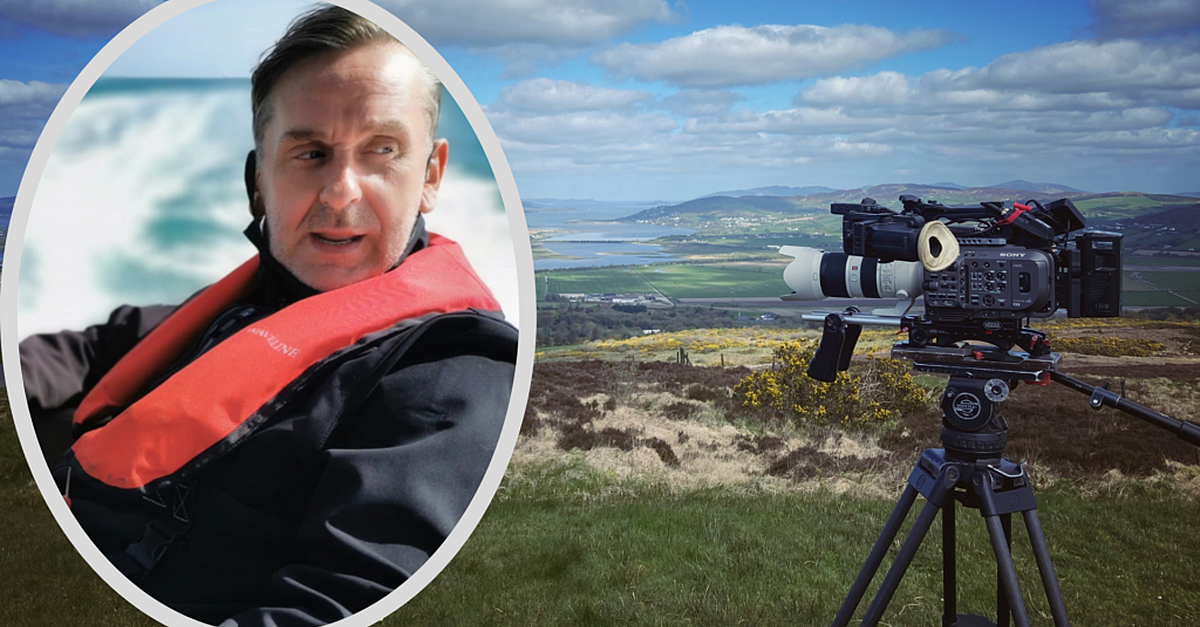
Award-winning filmmaker and Director of Photography Emmet Harte is launching a new education and training initiative in Donegal aimed at giving young people practical, hands-on experience in filmmaking, documentary production, cinematography and visual storytelling.
The Raphoe native has returned home after more than three decades working in film and television around the world and is now planning to use that experience to help inspire and train a new generation of filmmakers and creative professionals.
The initiative comes at a particularly significant moment for film education in Ireland following the introduction of Drama, Film and Theatre Studies as a new Leaving Certificate subject. The subject gives students opportunities to develop creative and critical thinking while learning how to bring creative concepts to life, both individually and collaboratively.
Harte says he has already been approached by people interested in how his professional experience could be made available to schools, teachers and students as interest in film and filmmaking within education grows.
That response has encouraged him to develop a dedicated programme offering practical workshops, masterclasses and creative learning experiences for young people, schools and community organisations.
“With film now forming an important part of the new Leaving Certificate Drama, Film and Theatre Studies subject, it feels like the right time to do something practical. There is a real opportunity to give students access to people who have spent their careers actually making films and television programmes and to show them what happens behind the camera.”
For Harte, the development represents an important opportunity to connect classroom learning with practical experience of the film and television industry.
“I’ve spent a huge part of my life travelling the world and working on some incredible productions. But I’ve never forgotten where it started, I picked up a guitar at 15 that began a journey to what I do now.
“This has always stayed with me and although I’m not playing music as a career I can pinpoint that guitar as the beginning. I remember writing a song and thinking, that song never existed anywhere in the world until I started to write it, that’s a very powerful feeling for a teenager to have. Encouraging that creativity is something very close to my heart and like my own journey, you may end up somewhere you could never have dreamt of as a teenager”
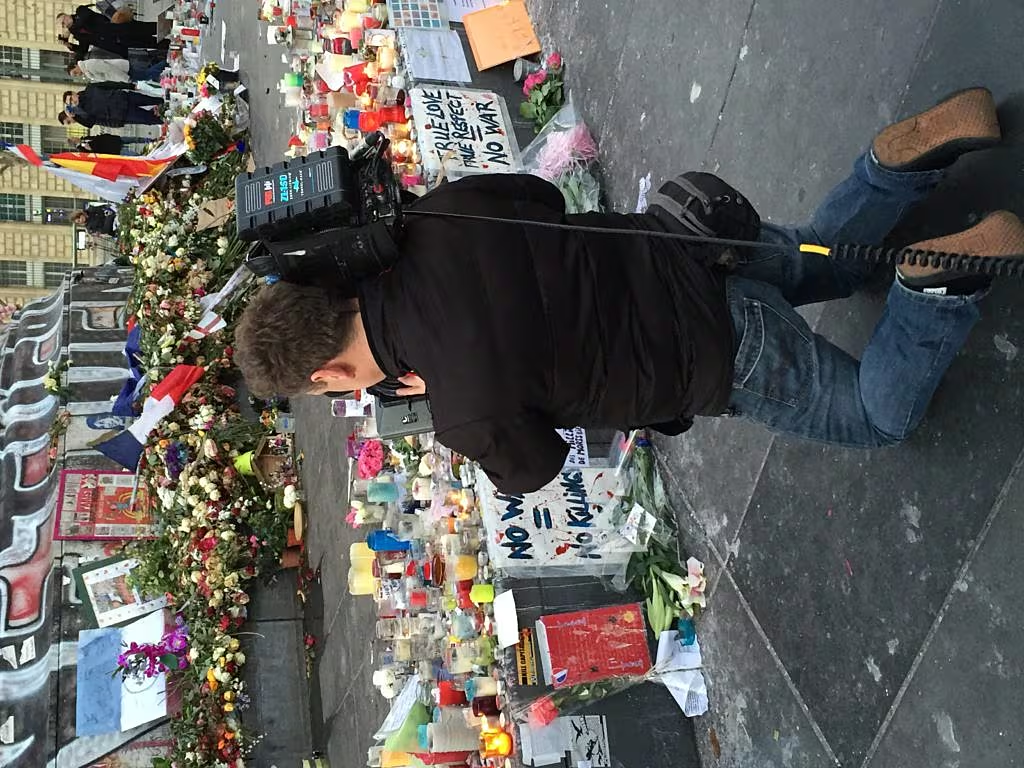
During a career spanning more than 30 years, Harte has worked as a Director of Photography and filmmaker on documentaries, factual television, current affairs, travel programming and other productions in Ireland and internationally.
His work has involved broadcasters and platforms including RTÉ, BBC, ITV, Channel 4, SKY, Paramount/CBS, most recently Netflix, as well as award-winning productions and IFTA-nominated work.
His new programme will focus on practical skills including filmmaking, cinematography, documentary production, interviewing, photography, editing, visual storytelling and media production.
It will also introduce students to the realities of working in the creative industries – from developing an idea and planning a shoot to working as part of a production team and turning raw footage into a finished story.
“Making films isn’t just about operating a camera,” Harte said. “It’s about learning to observe, to listen, to communicate, to solve problems, to work with other people and ultimately to tell a story. Those are skills that go far beyond film. They are skills young people can take into almost any career.”
Harte believes changes in technology have dramatically lowered the barriers for young people interested in filmmaking.
“Today’s students have cameras in their pockets that are more powerful than equipment many professionals were using twenty years ago,” he said.
“The biggest barrier isn’t necessarily equipment anymore. It’s knowing what to do with it. Young people need guidance, encouragement, practical skills and the confidence to realise that their ideas and their stories are worth putting on screen.”
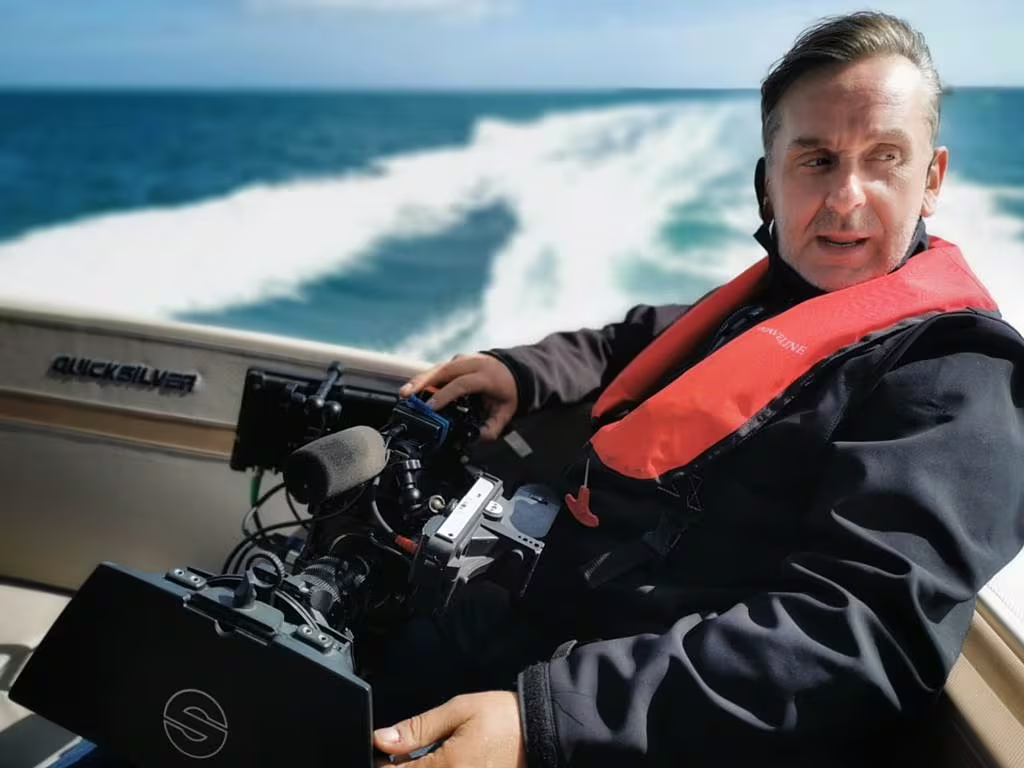
Ireland’s expanding screen and digital media industries also mean that filmmaking skills can increasingly open doors across television, documentary, commercial production, online content and digital communications.
Harte plans to also explore partnerships with community organisations, heritage groups and local initiatives.
One ambition is to use documentary filmmaking to connect generations — enabling young people to record the memories, experiences and stories of older people in their communities while simultaneously learning professional filmmaking and interviewing techniques.
“Film is one of the most powerful ways we have of preserving people’s stories,” he said. “Imagine young people across Donegal learning how to interview their grandparents or people in their communities, recording stories that might otherwise disappear while learning filmmaking skills at the same time. That’s where education, creativity and heritage can come together in a really meaningful way.”
The education and training initiative will begin rolling out over the coming months, with further announcements planned on school programmes, filmmaking workshops, documentary projects, masterclasses and community collaborations.
Harte is inviting schools, teachers, youth organisations, community groups and young people interested in filmmaking to make contact to discuss potential programmes and collaborations.
