


Bozeman, Mont. —Montana continues to attract film and television productions, but building a lasting industry also depends on developing people who know how to work behind the camera.
This week, a sold-out program at Montana State University is giving young Montanans an early look at those skills and the careers connected to them.
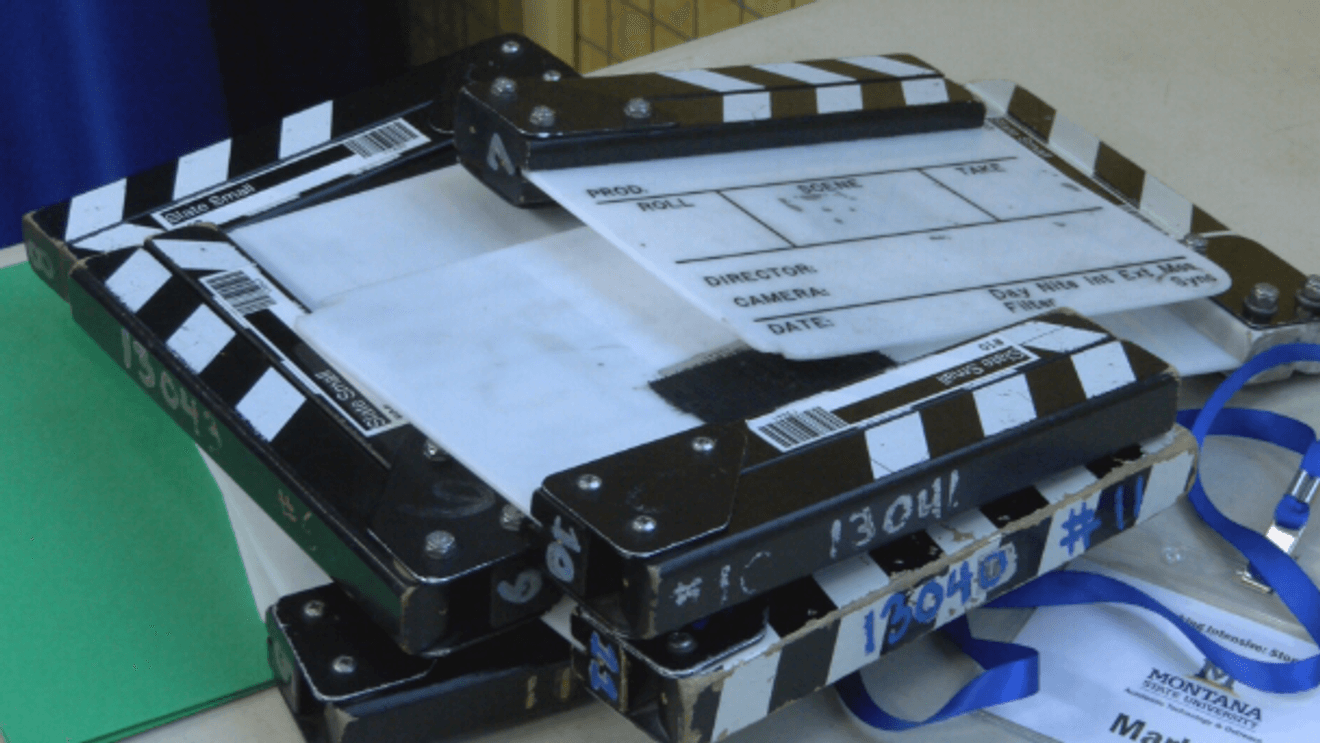
The Teen Movie Making Intensive: Story to Screen brings together students entering eighth through 12th grade for five afternoons of hands-on filmmaking.
Working in small production teams, students are writing original scripts, planning shots, operating cameras, recording sound, lighting scenes, and editing their work into finished short fiction films.
“This camp is built around giving students the opportunity to experience production from start to finish,” instructor Alexa Alberda said. “So, developing an idea, going through the pre-production and the planning process, actually getting to collaborate with their peers and film the movie, and then finally wrapping it up and screening it with their family and friends.”
Alberda, an instructor at MSU’s School of Film and Photography, said the goal is to introduce students to the many jobs involved in turning an idea into a finished production.
Students are writing their own one-to-three-page scripts before moving into production. Throughout the week, they will rotate through different responsibilities involving sound, camera, lighting, and directing.
Alberda said many students arrive knowing about highly visible positions such as director, but may not understand how many other people are needed to make a film.
“They’ll get to work with sound, they’ll get to work with camera and lighting,” Alberda said. “So, if they don’t necessarily get their first choice of being a director, because that’s kind of the one that everybody knows, there’s still a ton of other opportunities of things that they’ll get to try.”
The experience also requires students to work together, compromise, and decide which creative ideas matter most to the final product.
“I would say that students learn a lot of skills of collaboration, and they also get a chance to kind of flex their creativity in terms of defining the stories that they find valuable and the ways that they want to tell them,” Alberda said.
That training comes as film production becomes a larger part of Montana’s economy.
A report released in June by the Montana Department of Commerce identified 213 productions filmed in the state between July 2024 and May 2026. Those projects generated an estimated $241.1 million in total economic impact, supported 480 full-time-equivalent jobs, and produced approximately $41.8 million in employee compensation.
Alberda said Montana has become more of a hub for film production in recent years, creating an opportunity for teenagers to begin exploring creative work without assuming they must first move to Los Angeles or New York.
“Montana has become more of a hotbed for film production over the last few years,” Alberda said. “And I think that it’s important for teenagers to see how that creativity can occur at this point in their life, or it can be something that they choose to explore later in life during college or as they grow into an adult.”
However, attracting projects is only one part of creating a sustainable industry. Montana also needs a trained local workforce capable of meeting the expectations of larger productions.
“Montana definitely risks losing larger productions coming to the state if we are not able to provide a really substantial workforce that is capable of providing the same level of expertise and quality to those larger productions,” Alberda said.
Alberda said Montana already has talented filmmakers, actors and other creative professionals, but believes additional support for training programs could help prepare more residents for production jobs.
“It would be awesome to have more support from the state in terms of funding to help assist with programs that are going to develop those skills,” Alberda said, “so that when larger productions come into the state, they will look at hiring Montanans first before they bring in alternatives from outside of the state.”
The MSU camp filled for its first summer after several years of requests for a youth filmmaking program.
Alberda said that demand reflects young people’s interest in understanding visual media and creating work of their own. She said those opportunities are especially important as artificial intelligence creates uncertainty around the future of creative careers.
“I don’t want students to feel like there’s no chance for them to be creative or there’s no chance for them to work in a career path like this just because AI exists in the world,” Alberda said. “I hope that these types of camps at a younger age will help inspire and motivate them to pursue artistic careers.”
For Alberda, the larger goal is to show students that filmmaking can be more than a summer activity — and that pursuing a creative career does not necessarily require leaving Montana.
“I think personally, as an artist but also as an instructor of film, I know that there are a lot of career paths students can take,” Alberda said. “And I don’t want my students to feel like they have to leave Montana to pursue a career in the visual arts. There are a lot of opportunities, whether it be working on film production or running their own business, where they can be really successful.”
For many of the students, it will be the first time they see their work and names on screen. As Montana works to strengthen its production workforce, it could also be their first look at a career they did not know could begin at home.
