



EDITION→
Global
•
USA
•
UK
•
AUNZ
•
CANADA
•
IRELAND
•
FRANCE
•
GERMANY
•
ASIA
•
EUROPE
•
LATAM
•
MEA
Edition : InternationalLanguage : English
HOME
NEWS
CREATIVE LIBRARY
IMMORTAL AWARDS
MEMBER COMPANIES
PEOPLE
JOBS
How LBB WorksPlans & PricingEditorial Toolkit

news
NEWS
CREATIVE LIBRARY
IMMORTAL AWARDS
MEMBER COMPANIES
PEOPLE
JOBS
Login or Register
The Directors in association withEvents on LBB

Behind The Scenes of Food Advertising with Alex Grima

lbbonline.com
0
LIKE
ADD TO COLLECTION
17/07/2026
Share
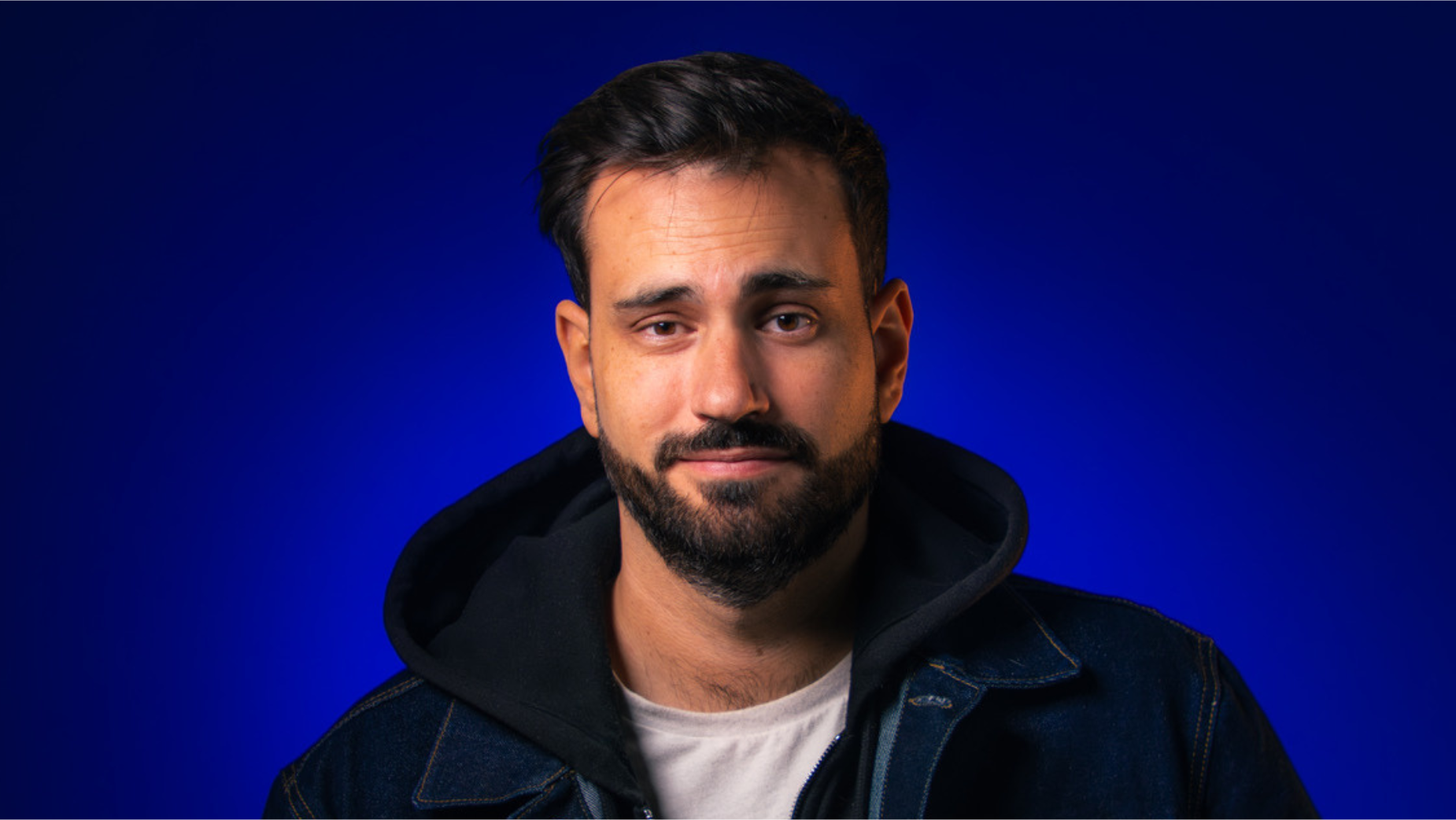
The BITE Collective director on a particularly challenging chocolate shoot, the misconceptions of food commercials, as well as his proudest work, as part of LBB’s The Directors series
Alex Grima is a director specialising in high-end food and beverage films. Alex creates visually refined campaigns that elevate products through texture, motion, and storytelling.
Combining creative direction with advanced filmmaking technology, Alex produces bespoke films for leading brands and agencies. His work reaches an audience of over 600,000 followers, with behind-the-scenes content generating tens of millions of views.
Alex sat down with LBB to discuss his creative process for treatments, the pitching process, and what the rise of AI content means for production.
LBB> What elements of a script sets one apart from the other and what sort of scripts get you excited to shoot them?
Alex> For me, scripts fall into two categories.
The first are traditional scripts with fixed shot lists, where the creative has already been approved by the client and agency, leaving little room for the director’s interpretation.
The second are briefs that provide a clear direction while inviting creative input and a distinct directorial vision. Those are the projects I find most rewarding, as they offer the opportunity to shape the work rather than simply execute it.
LBB> How do you approach creating a treatment for a spot?
Alex> It depends on the project, but my process usually begins with research. I immerse myself in the brand’s visual world by studying past campaigns, social content, and the wider market to understand its position within the category.
From there, I gather references, sketch ideas, and use AI to help develop and refine key visuals. In parallel, I build a shot list that evolves alongside the concept. If the budget allows, we then work with a storyboard artist to bring everything together.
Finally, I craft the treatment, drawing on the brand’s design language while defining the creative vision, lighting, subject, and overall approach. I also like to include a few carefully chosen video clips or GIFs to bring the ideas to life. The goal is always to communicate the vision clearly, without overwhelming the reader.
LBB> If the script is for a brand that you’re not familiar with/ don’t have a big affinity with or a market you’re new to, how important is it for you to do research and understand that strategic and contextual side of the ad? If it’s important to you, how do you do it?
Alex> Research is essential, and it’s actually a core part of my treatment process regardless of whether I know the brand or not. I always take the time to study their advertising history, explore their social channels, and understand how they position themselves in their market. I also look at what competitors are doing to get a clear picture of the landscape.
Understanding the brand’s world isn’t separate from the creative process – it’s the starting point.
LBB> For you, what is the most important working relationship for a director to have with another person in making an ad? And why?
Alex> Without doubt, the most important relationship is with the technical crew. Without them, there is no film. A strong sense of team cohesion is essential. It creates an environment where everyone can work efficiently, stay focused, and strive for the highest standard. Part of my role is to inspire the crew to push beyond expectations and give their very best.
Equally important is the relationship with the agency and production company.
Understanding the creative director’s vision is key to bringing the idea to life, while a strong partnership with the producer keeps the entire process aligned. They are the crucial link between the creative and the client, and a great producer makes every project stronger.
LBB> What type of work are you most passionate about – is there a particular genre or subject matter or style you are most drawn to?
Alex> Food and drink – particularly chocolate! There’s something infinitely fascinating about shooting food: the interplay of light, texture, and movement. Chocolate in particular is technically demanding and visually extraordinary when lit correctly. I’m completely enthralled by it.
LBB> What misconception about you or your work do you most often encounter and why is it wrong?
Alex> One of the most common misconceptions I encounter is the idea that everything in food advertising is fake – that we’re somehow trying to deceive consumers.
In reality, we work with real products as much as possible. When substitutes or technical workarounds are used, it’s always for technical reasons, never to mislead. I think of what we do as being closer to a photo shoot: a person puts on their best outfit, wears make-up, presents themselves at their very best. We’re doing the same for a product – showing it on its best day. That’s not deception, that’s presentation.
LBB> What’s the craziest problem you’ve come across in the course of a production – and how did you solve it?
Alex> Last year, I directed several ads for Lindt chocolate. The challenge was to shoot four films – roughly 14 shots per day – over just three days. The only way to make it work was to find a lighting solution that didn’t require reconfiguring between shots. The problem is that chocolate needs very specific lighting to look right on camera. So my gaffer and I designed a bespoke light cage with diffusion panels in every direction, creating a consistent, flattering quality of light with controlled highlights regardless of camera angle. It was the only way to create consecutive shots fast enough – and it worked.
LBB> How do you strike the balance between being open/collaborative with the agency and brand client while also protecting the idea?
Alex> It’s one of the inherent tensions of the pitch process. When you’re developing a treatment for a competitive pitch, you can never hold back your best ideas – they’re what might make the difference and win the job. But that naturally comes with the risk that those ideas could be picked up and used, even if the pitch isn’t awarded. It’s a reality of the industry that you have to accept and navigate with a degree of trust.
You put your best thinking forward, because it’s the only way to work with integrity and give yourself a real chance.
LBB> What are your thoughts on opening up the production world to a more diverse pool of talent? Are you open to mentoring and apprenticeships on set?
Alex> Absolutely. I’m genuinely open to apprenticeships and always keen to bring interns into my studio. I also regularly share behind-the-scenes footage from my shoots on social media – there’s a real appetite for that kind of content, and it’s a natural way to give people a window into the world of commercial production. If it sparks curiosity or inspires someone to pursue a career in this industry, that’s something I’m proud to contribute to.
LBB> What’s your relationship with new technology and, if at all, how do you incorporate future-facing tech into your work (e.g. virtual production, interactive storytelling, AI/data-driven visuals etc)?
Alex> Technology has always been central to this world – particularly in tabletop and food production. We regularly work with high-speed cameras capable of shooting at over 1,000 frames per second, equipment originally designed for scientific and military research. Motion control systems have been a fixture of the industry for over 20 years.
As for AI, I see it primarily as a pre and post-production tool: useful in pre-production for visualising and developing ideas, and genuinely powerful in post for replacing backgrounds, cleaning frames, or making green-screen integrations more convincing – all of which saves significant time.
That said, I don’t think we should ever go 100% AI-generated. In a world where everything starts to look the same, handcrafted work will always carry added value and remain a genuine mark of quality. If anything, the rise of AI content will make real production even more meaningful – and behind-the-scenes footage from an actual shoot will become an increasingly powerful proof point.
LBB> Which pieces of work do you feel really show off what you do best – and why?
Alex> The Jaegermeister Manifest ad, which showcases the technical precision of tabletop shooting within a beautifully crafted set, combined with a strong human element.
My collaboration with Arnaud Ragaud for Lindt Signature, which I feel best represents my work with chocolate.
The Langres spot for Fromagerie Germain, for its sense of indulgence and appetite appeal. And finally, my showreel – which brings together the shots and campaigns I’m most proud of.

The Directors in association withEvents on LBB
More News from Bite Collective

BITE Collective Signs Food and Beverage Director Alex Grima02/06/2026

For Brian Durnin, the Future of Film Is in Good Hands30/03/2026

BITE Collective Welcomes Director Brian Durnin03/02/2026
ALL THEIR NEWS
Work from Bite Collective


What’s The Difference?Cuisine De France
29/03/2026
ALL THEIR WORK
SUBSCRIBE TO LBB’S newsletterEnter your email
FOLLOW US
Events
DPA + SLA (+ US Add.)
About Us
Contact
Editorial Toolkit
Help & FAQ
Privacy Policy
Main Terms & Conditions
Newsletters
Create your own LBB icons
How it works
Plans & Pricing
LBB’s Global Sponsor

