

I get to try all the latest and greatest lenses for my job, and I am constantly amazed by how well corrected new optics are. Most new lenses are sharp, contrasty, flare-resistant, and free of distortion. Plus, they typically limit false color and draw smooth, pleasing bokeh. That’s great, but I enjoy using lenses with some imperfections in my downtime—photos with characterful bokeh, a slightly soft look, and artistic flare give me the feels.
And thankfully, new mirrorless cameras make it very easy to use old lenses that were originally made for manual-focus SLRs and rangefinders with a basic mechanical adapter. Moreover, many ease upgrades from DSLRs to mirrorless cameras with electronic adapters that let you keep using your existing lenses. Read on to find out how and why I love to use vintage lenses to snap digital photos—and how you can too.
I used a 1960s Canon 50mm F1.2 rangefinder lens to get a soft focus look with colorful, distinct bokeh highlights in this image captured with a Sony a7R (Credit: Jim Fisher)
How Mirrorless Cameras Saved Vintage Glass
In the SLR era, it was hard to use old lenses for a simple reason—they’re designed to sit at a specific distance from an image sensor (or, back in the day, the film) to focus properly. If they’re set too far away, you lose the option to focus on far-off subjects (that’s why macro photographers use extension tubes to get closer focus on the teensy-tiny world). Since most SLR systems share about the same distance between the mount and sensor, it was never practical to use a Canon lens on a Nikon camera, and putting lenses designed for mirrorless rangefinders on an SLR just isn’t a thing.
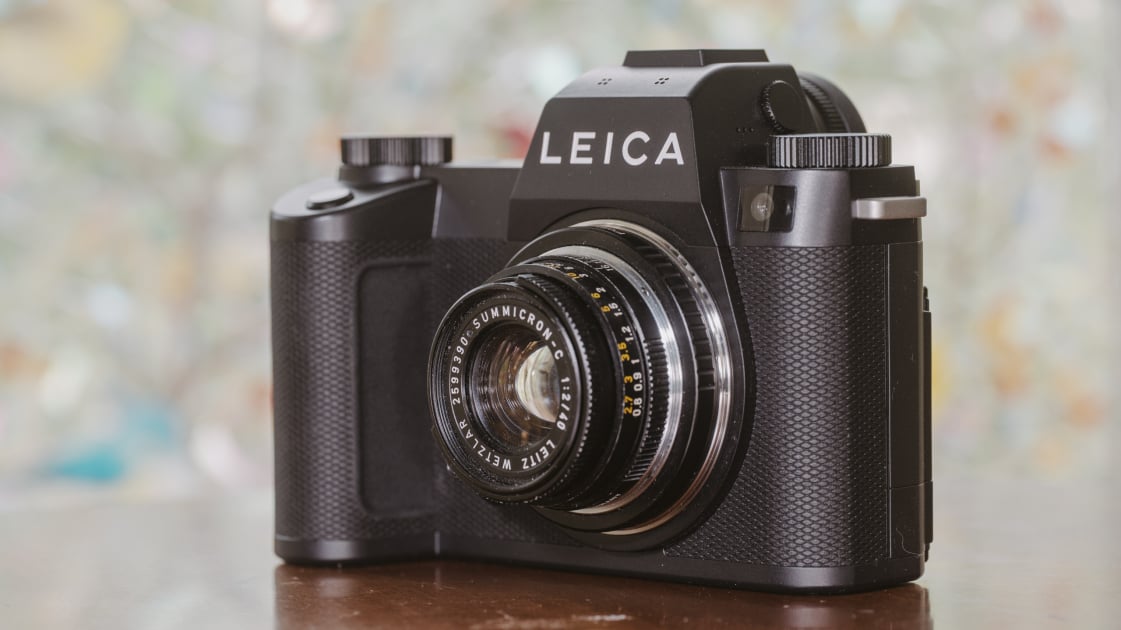
A 1960s Leica Summicron lens on a full-frame Sony mirrorless camera (Credit: Jim Fisher)
The industry‘s move to mirrorless digital cameras with electronic viewfinders changed everything. Mirrorless cameras put the mount just a few centimeters from the image sensor, so all it takes to use an old lens is to find the right adapter (a lightproof metal tube with the correct mounts on each side). Most classic lenses include mechanical aperture and manual focus, while the digital camera takes care of setting the shutter speed, and its image sensor handles automatic exposure metering and white balance.
Creators figured this out pretty quickly. Micro Four Thirds cameras debuted in 2008, and it wasn’t long before adapters for Leica M rangefinder and all types of classic SLR glass from Canon, Nikon, Olympus, Pentax, and other brands appeared. Micro Four Thirds cameras use pretty small image sensors compared with film cameras, but now that full-frame mirrorless cameras are common and pretty affordable, creators can adapt old lenses and use them with their original, intended angle of view.

8 Quick Tips to Fix Your Bad Photos
Basic adapters don’t cost much, either. Fotasy offers a full line of options that cost less than a movie ticket and work well. I regularly use a Fotasy M-to-L adapter to connect one of my old favorites, the 1970s Leica Summicron-C 40mm F2, to new L-mount cameras. A basic adapter does a great job, but you can also find some pricier options from Fotodiox, another reliable brand. Its DLX Stretch series adds a focusing helicoid that moves the lens farther from the sensor to improve its macro capabilities, and its TLT ROKR line adds tilt-and-shift movements to lenses, allowing you to adjust the plane of focus for artistic effects or move a lens laterally to correct perspective in architectural photography.
I love the Leica Summicron-C 40mm F2’s character; its hard-edge bokeh adds texture to backgrounds as shown in this image captured with a Sigma fp L (Credit: Jim Fisher)
The Detective Work: Identifying Your Vintage Lens
Sometimes the hardest thing about getting an adapter for your lens is figuring out the name of the lens you’re trying to adapt. While photo dealers are pretty good about including the necessary information in a sales listing, you may have to do some detective work if you find a gem at an estate sale, thrift store, or in a box of family heirlooms in the attic.
You can even find adapters for some more obscure lenses, like this 18mm F2.8 made for Pentax’s short-lived Auto 110 SLR (Credit: Jim Fisher)
The first place to look is on the front; lenses usually have information printed on a ring that surrounds the front glass. Drop this into a search engine as a first step—Camera-Wiki is a good site to check—and with any luck, you’ll figure out what lens you have pretty quickly. If that doesn’t work out, try posting a photo of the lens on a camera forum (Reddit’s r/VintageLenses and DPReview’s Adapted Lens Talk board are good re
Yes, You Can Even Get Autofocus With Classic Lenses
Adapters aren’t just for manual focus lenses. If you have more recent SLR lenses with autofocus support, the major brands make it easy enough to bring them along and use them with a new mirrorless camera. Canon (EF to EOS R), Nikon (F to Z), and Sony (A to E) sell adapters with aperture control and autofocus support. The only caveat is that Nikon’s FTZ and FTZ II adapters only focus on lenses with internal focus motors.
Recommended by Our Editors
I Love Shooting With Old Cameras. Here’s What I’ve Learned From Years of Buying Used
I Picked Up the Camera That Made Me a Photographer 20 Years Later. Here’s What I Learned
Apple’s First Digital Camera Cost $749 and Held 8 Photos. I Tried It 30 Years Later
Third parties are in the mix, too. Sigma and Metabones make adapters that let you use Canon EF lenses with Sony and L-mount cameras, and lesser-known brands like Megadap and Monster Adapter offer intriguing options, such as Canon EF-to-Nikon Z and Pentax K-to-Sony E adapter, among others. You can also find adapters that move an entire lens back and forth with a motor, adding rudimentary autofocus to manual focus lenses. You can check out some of the ones I’ve tested for PCMag below, but there are many I haven’t had a chance to use, with new options coming out regularly.
The Best Autofocus Adapters I’ve Tested
Canon Mount Adapter EF-EOS R Review
- $99.00 at
Adorama
Check Stock
Nikon Mount Adapter FTZ Review
- $296.95 at
Amazon
See It
Sigma Mount Converter MC-11 Review
- $254.99 at
Amazon
See It
Megadap EFTZ21 Canon EF to Nikon Z Autofocus Adapter Review
- $299.00 at
Amazon
See It
MonsterAdapter Pentax Adapter LA-KE1 Review
- $439.00 at
B&H Photo Video
See It
Megadap also makes the innovative ETZ21 Pro+ adapter, which converts Sony E lenses for use on Nikon Z cameras with full autofocus support. So far, it’s one of a kind, but it opens up more options for Nikon Z owners—there are more autofocus E-mount lenses than for any other system. I’ve not yet had a chance to try it for myself, but it’s proven popular enough in camera forum discussions to merit a mention here. The Nikon Z system is unique in its very short distance between mount and sensor and its extra-wide lens mount, so I wouldn’t count on more cross-mirrorless adapters coming, but it’s nonetheless an intriguing option for Nikon Z owners.
What’s Your Favorite Vintage Lens?
Using an antique lens puts a smile on my face; there’s just something wonderful about keeping classics going today, and many vintage lenses draw images with a characterful look that you can’t match with modern lenses. If you’ve got a favorite lens you want to keep using forever, chime in below in the comments—I’m always looking for a new old favorite.
About Our Expert
Jim Fisher
Principal Writer, Cameras
Experience
Images, and the devices that capture them, are my focus. I’ve covered cameras at PCMag for the past 14 years, which has given me a front row seat for the changeover from DSLRs to mirrorless cameras, the smartphone camera revolution, and the emergence of drones for aerial imaging. I have extensive experience with every major mirrorless and SLR system, and am also comfortable using point-and-shoot and action cameras. As a Part 107 Certified drone pilot, I’m licensed to fly unmanned aircraft systems (UAS) for commercial and editorial purposes, and am knowledgeable about federal rules and regulations regarding drones.
Areas of Expertise
Latest By Jim Fisher
- Ricoh GR IV Monochrome: Black-and-White Digital Photography Goes Pocket-Size
- FCC Ramps Up Its Drone Ban, Targets 9 Companies Making DJI Clones. Here’s Who Will Feel It Most
- I Picked Up the Camera That Made Me a Photographer 20 Years Later. Here’s What I Learned
- Canon EOS R6 V Review: The Camera for Vloggers With Cinematic Aspirations
- The Best Bridge Cameras for 2026
- More from Jim Fisher
