




Nagaland Districts
Popular Sections
- World
- India
OPINIONS
Others
Eastern Mirror
- About Us
- Contact Us
Filmmaking Careers: The Many Jobs that Keep Films Rolling
Explore filmmaking careers, training pathways and opportunities for students in Nagaland amid India’s growing film industry.
Aug 4, 2026
ByPrasanjit Dutta
Education
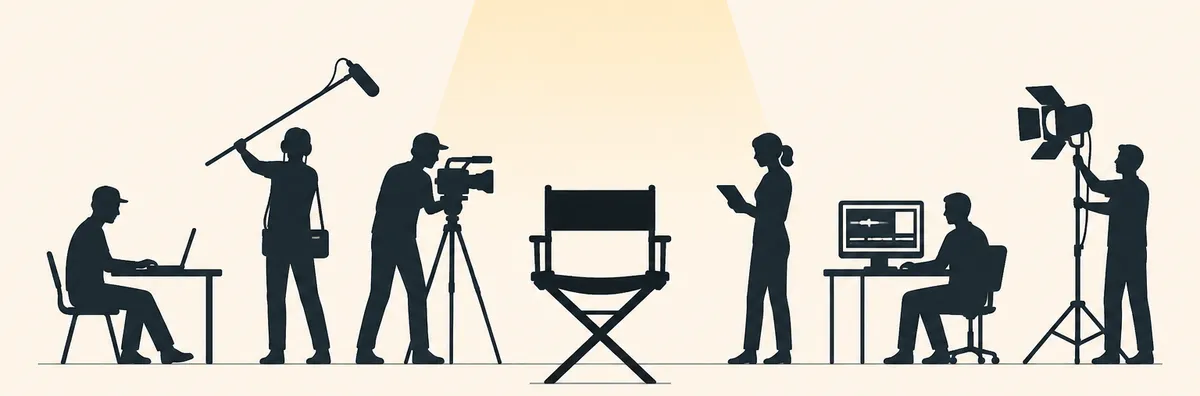
DIMAPUR — The credits at the end of a movie scroll past quickly, and most viewers notice only the actors and director. Yet every film, series, documentary, advertisement, music video and online production is made by teams of writers, camera workers, sound crews, designers, editors, managers, performers and technicians. A career in filmmaking is therefore not one job. It is a group of related professions that combine art, technology, business and teamwork.
The opportunity is also larger than one city, one industry or one language. India’s film culture includes Hindi cinema, but also Tamil, Telugu, Malayalam, Kannada, Bengali, Marathi, Assamese, Manipuri and many other industries. The latest Federation of Indian Chambers of Commerce and Industry and Ernst & Young (FICCI-EY) media and entertainment report says regional cinema accounts for more than 65 per cent of films made in India. For young people in Nagaland, this matters. A local language, community setting or unfamiliar way of life is not automatically a weakness. It can be the reason a film offers audiences something they have not seen before.
Filmmaking is not just directing
The director interprets the script and guides the creative choices but cannot make the finished work alone. A screenwriter develops characters, conflict, scenes and dialogue. A producer finds money, forms the team, manages rights and keeps the project moving. A line producer handles schedules, locations, permissions and daily spending, while assistant directors coordinate the work on set.
The camera department includes the director of photography, camera operators, assistants, focus pullers, data handlers and lighting workers. The art department creates the physical setting through production design, sets, props, costumes, hair and makeup. The sound team records dialogue and background sound, then sound editors, designers and mixers shape what the audience hears. Editors select and arrange shots. Colourists adjust the image. Visual-effects artists create or repair images. Subtitlers, publicists, trailer editors and distribution workers help prepare the film for its audience.
These are recognised occupations, not informal labels. The Media and Entertainment Skills Council’s qualification packs list roles such as director of photography, assistant cameraperson, editor, sound designer, sound editor, costume designer, set decorator, compositor and social-media manager. This is useful for a beginner because it turns the vague wish to “join films” into a specific question: Which part of the process suits my interests and abilities?
#Filmmaking careers#Nagaland#Film and Television Institute of India#Satyajit Ray Nagaland Film Policy 2024
Popular Articles
Personality offers clues. A student who enjoys writing and observing people may try screenwriting or documentary research. Someone who likes photography, light and lenses may test cinematography. A patient person who enjoys structure may prefer editing. A student interested in music, silence and small details may find sound work satisfying. Those who organise college events well may have the temperament for production. Drawing, carpentry, fashion, architecture and crafts can lead toward production design, sets, props and costumes.
Acting is one route, but it is not the only visible career. A film set may require dozens or hundreds of workers, depending on its scale. An Indian skills study estimated that film workers often operate on a per-project basis and that a typical production may require the full-time equivalent of 100 to 150 crew members, with far larger teams on some shooting days. Work can therefore be irregular, especially at the beginning, and new entrants must prepare for gaps between projects.
Students should also understand that filmmaking is not divided neatly into “creative people” and “technical people”. A cinematographer must understand story and emotion while also knowing exposure, lenses, sensors, lighting and data. An editor must understand software but also performance, rhythm and audience attention. A producer must understand budgets and contracts but also recognise why a scene matters. The strongest workers connect imagination with practical judgement.
A film usually begins with development. An idea becomes research, a story outline, a screenplay and sometimes a pitch deck or sample scene. The producer studies the likely budget and audience. At this stage, the team may also secure adaptation rights, prepare a funding proposal and present the project to possible partners.
Pre-production turns the script into a practical plan. The team breaks down every scene to identify cast, costumes, props, locations, vehicles, special effects, weather needs and time of day. The director and cinematographer plan shots. The production designer develops the visual setting. The producer prepares contracts, insurance, permissions and a schedule.
Production is the shooting period. This is the most public part of filmmaking, but often the shortest. Students often focus on camera quality, yet weak sound, unclear performances or missing coverage can damage a film more than a modest camera.
Post-production begins with organising and backing up footage. The editor builds scenes and tests pace, meaning and performance. Sound work includes dialogue editing, effects, music, ambience and mixing. Colour grading creates visual consistency. Titles, subtitles, visual effects and credits are added. The producer then prepares delivery files for cinemas, television, streaming services, festivals or online release.
Distribution and exhibition are separate skills. A completed film has no automatic audience. Producers must decide whether to seek theatrical release, streaming distribution, television sales, educational screenings, film festivals or direct online publication. The Satyajit Ray Film and Television Institute’s producing programme teaches development, budgeting, scheduling, marketing, distribution, exhibition, pitching and film markets.
India’s media and entertainment sector grew 9 per cent in 2025 to INR 2.78 trillion, according to the March 2026 FICCI-EY findings. The report projects that the sector could reach INR 3.3 trillion by 2028. Digital media passed INR 1 trillion in annual revenue, and future growth is expected from digital services, films, live events, animation and visual effects. These figures cover a much wider field than cinema, but that is precisely the point. Film skills now serve many employers, including advertising agencies, online channels, production houses, broadcasters, event companies, education firms and corporate communication teams.
The film segment itself reached a record INR 205 billion in 2025. More than 1,900 films were released, theatrical revenue rose 16 per cent and 37 films earned at least INR 1 billion at the box office. These figures show scale, but they do not promise easy success. A record market can still depend heavily on a small number of hits, and higher ticket prices can raise revenue even when attendance is under pressure. Reuters reported that Indian cinema admissions were about 832 million in 2025, below the 1.03 billion recorded in 2019.
Streaming has widened access to different languages and formats. The 2026 FICCI-EY report says India’s online video market crossed INR 272 billion in 2025, while an Ormax audience study reported 601 million streaming viewers and 148 million paid subscriptions. This creates work in series, documentaries, unscripted shows, dubbing, subtitles, trailers and platform marketing.
The government reported that 3,455 Indian feature films were certified during 2024-25. Certification and release are different measurements, but together the available data show the volume and language diversity of Indian production.
There is no single compulsory degree for filmmaking. Some people study at a film institute. Others enter through mass communication, theatre, photography, music, fine arts, design, computer science or business. Some learn through assisting and making short films. A good course can provide equipment, teachers, peers, deadlines and access to many departments. It cannot replace practice, judgement or professional conduct.
India’s main public film schools offer specialised postgraduate training. The Film and Television Institute of India’s 2025-26 prospectus lists MFA programmes in direction and screenplay writing, cinematography, editing, sound recording and design, art direction and production design, acting, and screenwriting for film, television and web series. Most core film specialisations had only 11 seats, while acting and screenwriting had 16 each. A bachelor’s degree in any discipline was accepted for most programs, with particular art or design qualifications required for production design. The small intake shows that students need alternatives rather than relying on one entrance examination.
The Satyajit Ray Film and Television Institute’s 2026 prospectus includes direction, cinematography, editing, sound, animation and producing. Closer to Nagaland, FTI Arunachal Pradesh offers postgraduate study in screen acting, screenwriting and documentary cinema. The Dr. Bhupen Hazarika Regional Government Film and Television Institute in Assam has advertised professional training in audiography, cinematography, editing and acting. Nagaland University’s journalism and mass communication curriculum includes videography, documentary and film production, film appreciation and production management.
Short courses can be a lower-risk starting point. FTII’s Centre for Open Learning has offered online, weekend and off-campus courses in direction, smartphone documentary, screenplay writing, sound, production design, post-production and the use of artificial intelligence in film work. Course subjects, fees and dates change, so students should check current official notices before applying.
Your portfolio is often more persuasive than a certificate. A writer needs strong scripts and short scene samples. A cinematographer needs a reel that shows controlled lighting, framing and movement. An editor needs sequences that show story judgement. A sound worker needs clean recordings and designed scenes. A production applicant can show schedules, budgets and call sheets from student projects. Keep the reel short, label your exact role and never claim another person’s work.
Students do not need to buy expensive equipment immediately. Colleges, institutes, rental companies and crew members may provide access to cameras and lights. A phone, an affordable microphone, headphones, storage drives and a stable tripod can be enough for early exercises. The purpose of the first projects is to learn framing, continuity, recording, editing and teamwork, not to imitate the equipment list of a large commercial production.
Starting from Nagaland Without Waiting for Permission
Nagaland does not yet offer the same volume of paid production as Mumbai, Hyderabad, Chennai, Kochi or Bengaluru. That is a limitation, but it does not mean a student must wait until moving away. College events, church media teams, music videos, local businesses, sports groups, community organisations, and independent documentaries can provide early practice. The aim should be to improve craft, not merely to collect online views.
The state has taken formal steps. The Nagaland Film Policy 2024, notified in April 2025, calls for single-window clearances, training, studios, post-production facilities, animation laboratories, film festivals, archives and support for film tourism. Policy announcements do not create jobs immediately, but they give students and local organisations a basis for asking about workshops, funding, facilities and transparent implementation.
Recent events show that routes are opening. Nagaland filmmakers and students joined programmes connected with the 2025 Berlin International Film Festival. Nagaland CineFest held masterclasses, discussions and screenings. The first Mokokchung Film Festival was organised in January 2026 with the district administration, the Ministry of Information and Broadcasting and NFDC Cinemas of India. Such events can introduce students to films, mentors and possible collaborators, though attendance alone must be followed by regular work.
National routes should also be watched. The National Film Development Corporation’s film production programme operates under the Development, Communication and Dissemination of Filmic Content scheme, which supports regional cinema and documentaries. Film Bazaar, project laboratories, public calls, festivals and state schemes can help a developed project, but they usually require a clear script, budget, rights position and team. Funding is more likely to follow careful preparation than enthusiasm alone.
Artificial intelligence is changing dubbing, story development, previsualisation, visual effects, editing and marketing. Reuters reported in April 2026 that some Indian companies were using AI to reduce production costs and time, especially for fantasy work, animation-like images and multilingual dubbing. The same report described disputes concerning films altered with AI, showing that faster production can also raise questions about consent and authorship. Students should learn these tools while also studying copyright, data protection and professional ethics.
The most useful school subjects are not limited to media. English and local languages help with scripts, pitches and subtitles. History and social science help with context. Mathematics helps with budgets, ratios and schedules. Physics supports cameras, light and sound. Computer skills help in editing, data management and visual effects. Music, theatre, drawing and literature train attention. Filmmakers need to understand people as much as equipment.
A sensible first year can be simple. Watch films from different countries and study their writing, framing, sound and editing. Read at least six screenplays. Learn one editing program and one sound-recording workflow. Make three very short films instead of planning one costly feature. Work on other students’ projects. Create a clean portfolio page. Apply for internships, workshops and assistant posts. Continue a degree or another employable skill while testing whether production life suits you.
Filmmaking is demanding work with uncertain income, long preparation and frequent rejection. It also allows many kinds of people to contribute, including those who do not wish to act or direct. For students in Nagaland, the realistic path is neither to remain confined to the state nor to erase where they come from. Learn widely, work across India when opportunities arise, and use local knowledge with care.
