


ARTS / CULTURE & LEISURE
Why can a low-budget film without big stars become a major hit in China?
Over the past few weeks, a most acclaimed and unexpected box-office success has not been a big-budget blockbuster, but a low-cost domestic film made almost entirely in a local dialect and without a single major star: Dear You.
According to the film data platform, the film has earned over 600 million yuan ($88.2 million) within just 20 days of release despite having a production budget of only 14 million yuan and an opening-day screen share of merely 3.6 percent. Even more surprisingly, around 95 percent of the dialogue is spoken in the Chaoshan (Teochew) dialect, a regional dialect of South China’s Guangdong Province unfamiliar to many Chinese audiences.
“On China’s review platform Douban, the drama currently holds a score of 9.1 out of 10, making it one of the highest-rated Chinese films in recent years and among the best-reviewed domestic releases of the past decade,” the Xinhua News Agency reported.
The story draws on the history of qiaopi, the letters and remittances sent home by earlier generations of overseas Chinese. UNESCO added the “Qiaopi and Yinxin Correspondence and Remittance Documents from Overseas Chinese” to its Memory of the World Register in 2013.
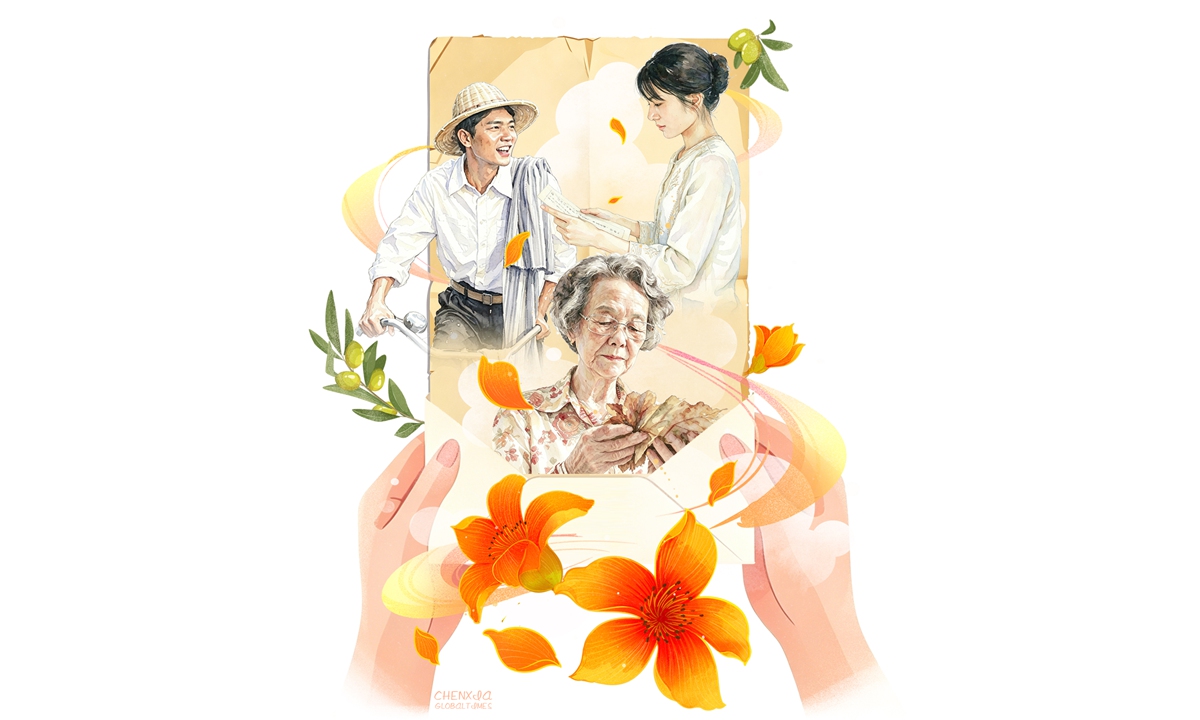
On paper, Dear You does not look like a commercial hit. It is a quiet story following an elderly Chaoshan woman, Ye Shurou, who spends decades waiting for letters from Zheng Musheng, her husband, who goes to Southeast Asia to avoid conscription, working hard to send qiaopi back to his family.
Her grandson later travels to Thailand to uncover the truth behind the correspondence and discovers that the person who wrote to her for years was not Zheng, but another woman.
What gives Dear You its emotional power is something difficult to manufacture: “qingyi,” a deeply Chinese idea rooted in human bonds, kindness and a lasting sense of moral obligation toward others.
The two women at the center of the story are not bound by blood or obligation. Xie writes and sends money to Ye for nearly 20 years after Ye’s husband dies in an accident overseas, as a gesture of gratitude and responsibility.
What makes the film truly moving is the way it reflects the moral and emotional values deeply rooted in Chinese culture, Zhang Peng, a cultural researcher and associate professor at Nanjing Normal University, told the Global Times.
In his view, the grandmother Ye keeps the letters from that she thinks are from her husband for half a century not out of stubbornness, but out of loyalty and faithfulness.
Another major reason for the film’s success is its commitment to authenticity. The cast consists largely of non-professional actors, including 84-year-old Wu Shaoqing, who had no formal acting training before appearing in the film as the elderly grandmother Ye, and then-20-year-old university student Li Sitong, who portrays the younger version of Xie Nanzhi.
The same is true with the Chaoshan dialect. The film has performed strongly not only in Guangdong, but also in cities like Beijing, Shanghai and Chengdu, where most viewers do not speak the dialect at all
The use of non-professional actors, performing with a raw, lived-in sensibility, lends the film a sense of everyday realism that is difficult for trained performers to replicate, Shi Wenxue, a veteran critic based in Beijing, told the Global Times. In his view, the fact that 95 percent of the conversation is in the Chaoshan dialect, along with the central motif of qiaopi letters, does not create a barrier for audiences. Instead, its roots in regional culture help evoke a broader sense of shared heritage and emotional connection.
The success of this low-budget film indicates that the Chinese film market – and even the global film market – is entering a mature phase of “diverse value realization,” said Shi.
The success of Ne Zha 2 demonstrates the continued commercial power of visual spectacle and high-energy storytelling, while the strong performance of Dear You suggests that sincere, quiet, and emotionally grounded narratives also have a clear and sustainable path to a broad audience Viewers have not abandoned blockbuster cinema; rather, they are increasingly unwilling to reward stories that feel formulaic or insincere
Cultural researcher Zhang also believes it marks a turning point. The success of Dear You “represents a return to value after audiences have grown weary of aesthetic fatigue.” “When flashy visual spectacles and traffic-driven marketing have exhausted people’s trust, genuine simplicity and heartfelt sincerity have once again become rare and precious,” Zhang said.
At a sharing session for the film, China’s renowned host Ni Ping shared her feelings and deep emotions after watching the movie. She noted that the film’s significance lies in allowing so many viewers to feel love and longing. She mentioned that some netizens had said the love letters to the grandma are love letters to all the people of China. “Back in those days, our care and longing stretched far into the distance,” Ni said.
The author is a reporter with the Global Times. life@globaltimes.com.cn
