


The latest rule changes by the Academy of Motion Picture Arts and Sciences are not merely procedural — they signal a philosophical shift in how global cinema is seen, validated, and circulated. By loosening the “one country, one film” submission rule for the International Feature category, and allowing festival-acclaimed films to qualify independently, the Academy Awards are attempting to dismantle one of the most enduring bottlenecks in world cinema. For India, this is not just an administrative tweak — it is a structural opening, especially for its vibrant but sidelined independent film ecosystem.
For decades, India’s Oscar journey has been shaped as much by internal gatekeeping as by external perception. The country’s official entry — decided by committees — has often sparked debate, with selections that leaned toward middle-of-the-road narratives rather than daring or politically nuanced cinema. This has meant that some of India’s most globally resonant films never even entered the Oscar race.
No dearth of candidates
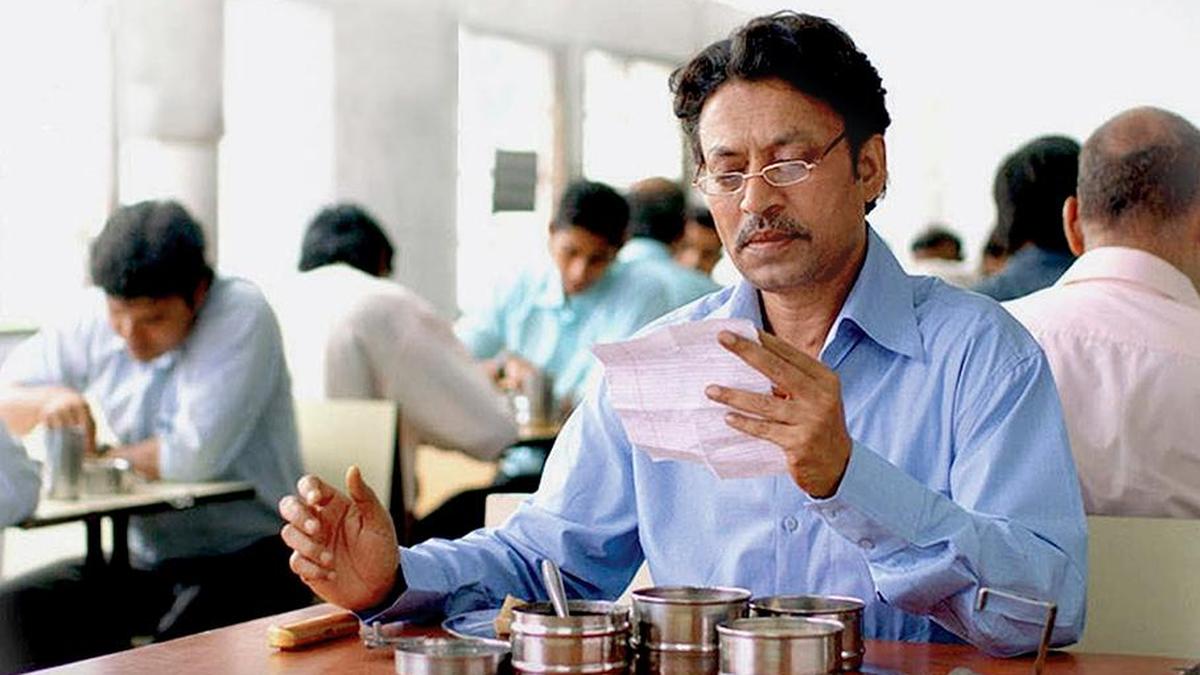
Consider The Lunchbox. Directed by Ritesh Batra, the film premiered at Cannes Critics’ Week; garnered universal acclaim; and travelled widely across international festivals. Its delicate storytelling, anchored in loneliness and urban alienation, spoke a cinematic language that global audiences immediately embraced. Yet, it was not selected as India’s official Oscar entry. Under the new rules, a film like The Lunchbox could have bypassed national selection and entered the Oscars directly.
Similarly, Court by Chaitanya Tamhane, which is a deeply political examination of India’s judicial system, won the Orizzonti Award at Venice and multiple international honours. While it was India’s official entry, it lacked the sustained campaign infrastructure to penetrate the Oscar shortlist. Under a system that values festival recognition more directly, such films gain not just eligibility but also legitimacy.
Or take Masaan, directed by Neeraj Ghaywan. Premiering in the ‘Un Certain Regard’ section at Cannes and winning two awards, Masaan bridged the spaces of the intimate and the universal with remarkable ease. Its exploration of caste, grief, and aspiration in small-town India resonated far beyond its geography. Yet, it never became India’s Oscar entry. In the new framework, its festival success alone could have propelled it into the awards race.
Even more telling are films such as Village Rockstars by Rima Das. A deeply personal, almost handmade film set in rural Assam, it won the National Award and travelled internationally, embodying a kind of authenticity that the global film community increasingly values. While it was India’s official submission, its lack of campaign backing limited its reach. A festival-driven qualification system could amplify such voices, allowing them to compete on artistic merit rather than industrial muscle.
Lack of representation
Indian independent cinema has long been globally visible but institutionally underrepresented. The new Oscar guidelines disrupt this pattern by shifting the axis of validation from national committees to international circuits. This is particularly significant in a country like India, where cinema operates across multiple languages, regions, and aesthetic traditions. The idea that a single film can “represent” such diversity has always been flawed. By allowing multiple entry points, the Academy is acknowledging that cinema is not a monolith but a mosaic. However, this expanded access also introduces new complexities. Festival success, while crucial, is not a guarantee of Oscar traction. The Academy’s ecosystem still relies heavily on visibility, campaigning, and industry networks. Films such as All We Imagine as Light by Payal Kapadia demonstrate how crucial sustained global engagement is. Under the new rules, such films are better positioned, but they still require strategic backing to convert acclaim into nominations.
Yet, the broader implication of these changes lies in how they reshape cinematic aspiration. For Indian filmmakers, especially those outside the mainstream industry, the Oscars are no longer a distant, opaque institution mediated by national selection. They become a more accessible platform — one that rewards global dialogue over domestic endorsement. This could catalyse a shift in how films are conceived, produced, and circulated. One may see greater emphasis on international co-productions, festival strategies, and cross-cultural storytelling. At the same time, there is a risk of homogenisation — of films tailoring themselves to perceived “festival tastes” at the expense of local specificity.
But the history of cinema suggests otherwise. The most globally successful films are often those most deeply rooted in their own contexts. Bong Joon-ho’s Parasite did not dilute its Korean identity to achieve global success. The lesson for Indian cinema is clear: authenticity travels.
The road ahead
Ultimately, the new Oscar guidelines acknowledge that cinema today is transnational — not because it erases borders, but because it speaks across them.
For Indian independent cinema, this is a moment of possibility. The challenge lies in building the ecosystems that can support this transition: better international distribution, and robust campaign infrastructures. If that happens, the impact could be profound. Not just in terms of awards, but in how Indian stories are positioned within the global cinematic imagination.
Vani Tripathi Tikoo is Actor, Producer, and the Artistic Director of the International Film Festival of Delhi.
