





EDITION→
Global
•
USA
•
UK
•
AUNZ
•
CANADA
•
IRELAND
•
FRANCE
•
GERMANY
•
ASIA
•
EUROPE
•
LATAM
•
MEA
Edition : InternationalLanguage : English
HOME
NEWS
CREATIVE LIBRARY
IMMORTAL AWARDS
MEMBER COMPANIES
PEOPLE
JOBS
How LBB WorksPlans & PricingEditorial Toolkit

news
NEWS
CREATIVE LIBRARY
IMMORTAL AWARDS
MEMBER COMPANIES
PEOPLE
JOBS
Login or Register
People in association withThe Monthly Cut
Finding Your Narrative Voice with Kel Embry

lbbonline.com
0
LIKE
ADD TO COLLECTION
17/08/2026
Share
The Lucky Day editor on learning the craft, the influence of Jonathan Oppenheim, and her recent work on Google’s spot starring Ilia Malinin, as part of LBB’s Finely Sliced series
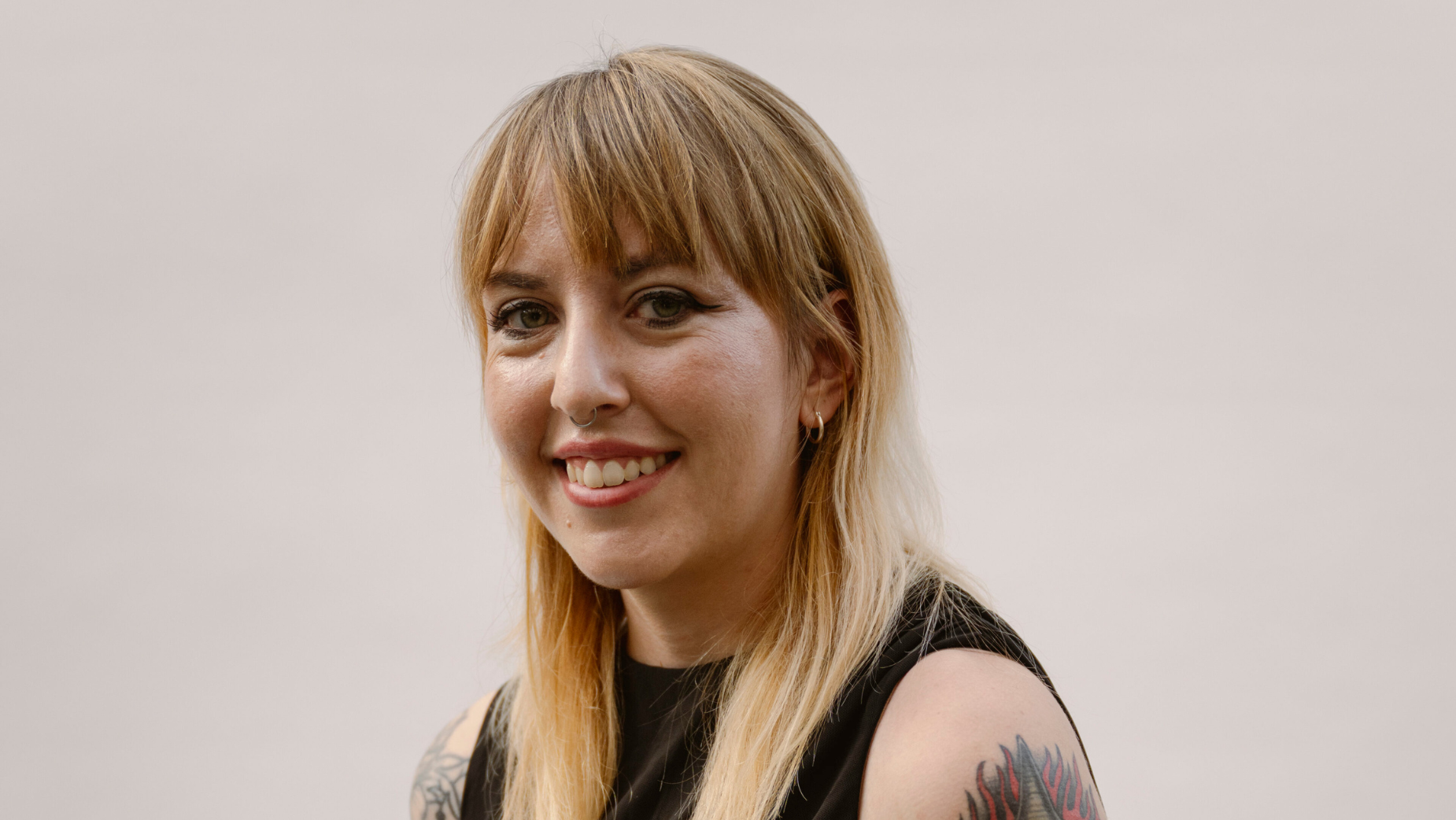
Kel Embry is an editor who believes the best cuts are built on story and human collaboration, not just software. Whether she’s crafting documentary, commercial, or narrative spots, she approaches editing with equal parts instinct and intention. Drawn to creative challenges and unexpected storytelling solutions, Kel is always looking for the heart of a piece.
When she’s not in the edit bay, you’ll likely find her watching films, figure skating, or building playlists that prove great storytelling isn’t limited to the screen.
Kel sat down with LBB to discuss the rise of a more cinematic and story-driven approach to commercial editing, as well as her proudest work.
LBB> The first cut is the deepest – how do you like to start an editing project?
Kel> There are three different ways that I usually like to start, depending on whether it’s commercial, documentary, or narrative.
For commercial, I really like just getting a radio edit first. If they shared boards, I’ll use that as the starting point, and then fill in the visuals after, which is usually more music-driven. I almost never do a radio edit without music, because I think it helps establish the timing for all the visuals in a more condensed time frame.
For documentary, because it is usually overwhelming with the amount of footage that you have to watch, it can feel like getting that first cut is a daunting task. So, I like to reward myself for watching everything by being like, ‘OK, what is the thing that I’m the most excited to put together?’. I usually will start with my favourite scene, and then I build around it. Sometimes, that’ll just be one scene. Sometimes, it’ll be three or four. I know the opening, the middle, and the ending that I want, and then I fill in the gaps until I get to the first assembly.
And then for narrative, it’s kind of the same as cutting documentary, in that I like rewarding myself, but sometimes the biggest scene is the most challenging or it has the most coverage. I just try to get that out of the way so that everything can feed into it, and I use that momentum because it’s harder to stay motivated when you’re getting toward the end of the cut.
It’s hard to motivate yourself in the end, so I like doing the hardest part up front.
LBB> Non-editors often think of editing just in technical terms, but it’s integral to the emotion and mood of a film. How did you develop that side of your craft?
Kel> When I was in college, our editing class was more like an editing theory class. It wasn’t a technical course – ‘Here is how you do Final Cut, here’s how you do Premiere’. It was more about establishing tone and voice as an editor. Specifically, in documentary, it was about being able to listen for what the story points are. The editor’s job is to find those points and then have the technical skills to put them in the right places.
The way that it was first taught to us was when we listened to ‘99 Red Balloons’ by NENA, which is what my professor, Robert Green, thought was a perfect example of structure. Then, we watched a bunch of movies, and it was like, ‘OK, at this point in the chorus, what is that point in the movie?’. After that, we had a lot of editing assignments that were specifically set to music, where we had to find one song that we thought exemplified the perfect story structure and apply it to a bunch of different movies. I probably picked something by My Chemical Romance, but I can’t say that with absolute certainty.
I believe thinking about film and story outside the confines of the medium is really helpful. And finding ways to see the story in everything – specifically in documentary – is what helps you find that narrative voice as an editor.
LBB> How important is an understanding of story and the mechanics of story?
Kel> That’s the whole job, I think. I forget who I was talking to recently, but we were saying all editors should also get a writing credit, even if you are working on something scripted, because what you’re doing is creating the feeling of stakes and rising tension, so that when things happen, the audience gets a payoff from it.
Arguably, I think understanding the mechanics of story is more important than knowing how to do a cross dissolve or a million codecs. These things are useful to know. But at the end of the day, they doesn’t make something well-edited.
LBB> Tell us about a recent editing project that involved some interesting creative challenges.
Kel> A recent one was when we were cutting the Ilia Malinin spot for Google.
The whole driving point of the story is that there was the expectation he was going to land the first quad axle at the Olympics. And the problem we were running into was that he has not done it a tonne of times; it is still a very rare occurrence.
So, there’s a few shots of him doing it in practice, obviously in an empty rink, and then he had only done it in three competitions. On top of that, not all of that footage was licensable. So, we had basically two quad axle shots that we could work from, and we still had to build this entire 30-second spot. Since I have some figure skating knowledge, I knew we couldn’t just swap in a quad toe and have that pass for a quad axle. People would call that out!
It was cool having some extra knowledge on that front, knowing what the problem was, and being able to stay ahead of it. I like where we ended up. At one point, I was like, ’Oh, you could focus on the snap, because the physics required to engage the jump are wild’. And then it turned into more of a thing about spinning really fast and getting dizzy, because of the amount of force generated by the spin.
Ultimately, I appreciate that we had this one starting piece that wasn’t going to be enough, and had to find another side story within that.
LBB> In the US, we know that editors are much more heavily involved across the post-production process than in Europe. What is your favourite part of that side of the job?
Kel> I think working with creatives from a prototype stage forward is helpful for just being in the mindset, and understanding what it is they are trying to achieve through the story. Especially when you’re working with things like found footage.
Having a conversation early on about the end goal is also important, because the first boards are usually so different from what we end up with. I think understanding the ‘why’ can inform what we go searching for. There might be something we discover in that process that wasn’t necessarily part of the original vision, but still meets the ‘why’. I feel like there’s always something that you end up discovering that way. I especially love when our AEs find it, so that they can get their praise from the creatives too.
LBB> Which commercial projects are you proudest of and why?
Kel> Obviously, the Ilia spot for Google.
In the anthem, there was a shot of Ilia doing a quad toe loop, the temporary graphic over it was asking about the quad axle, and I was like, ’Hey, beautiful shot. I like the way that this is working, but just calling out that that’s not a quad axle’.
I think on that job, we (the editors) all ended up with a sport that we knew something about. It was great how the creatives aligned us with what we were passionate about. I think that that led to a better final product, because we cared about how it would be received in our respective communities. Plus, I knew that Ilia was going into the Olympics with so much pressure, that I just wanted him to have something that made him look cool and happy.
Knowing that he’s very hated outside of the US, people were expecting and hoping that he would fail. It was cool to have a moment to celebrate him and the sport. And getting to etch my name in the 2026 Olympics was cool.
LBB> There are so many different platforms for film content now and even in advertising, something can last from a few seconds to a couple of hours. As an editor, are you seeing a change in the kind of projects you’re getting from brands and agencies?
Kel> I think the direction that most ads are going is more social media heavy, which wasn’t the priority before.
Social was the sort of stuff that was handed down to me as an editor while I was entering the field. Broadcast was the main stage for editing, and then below that was social media. A six-second cut was like the lowest of the low. Now, there is more desire for social media, and a larger quantity of 15-second or six-second edits. My whole day might be filled with that.
It’s interesting to see that shift, but it’s ironic for me that I’m still trying to chase broadcast work at this point in my career. Obviously, I want my parents to be able to point to something on TV that I did, and they’re just not getting to, because the work that I do is on their social media feed.
LBB> Who are your editing heroes and why? And what films or spots epitomize good editing for you?
Kel> Jonathan Oppenheim is the greatest documentary film editor of all time. And I know I’m biased, because I did get to meet and talk to him about my senior film when I was in college, (he said I had good editing instincts), and that was life-changing to me. But, he cut ‘Paris Is Burning’ and also ‘The Oath’ by Laura Poitras.
That film had been in post-production for several years, and it just wasn’t working. Then, he cut the scene where he left Laura’s voice in during this interview, which totally changed the way that all the interviews in the film work. I think he’s a great example of how editors are also serving as writers, and to some degree, directors in their own right.
Affonso Gonçalves also has a really good sense of pacing, and just how to make a film feel immersive. There are even some movies that inspired me to want to work in this industry – things like ‘Juno’, which was a great story, but then also had a killer soundtrack, ‘Little Miss Sunshine’, and even ‘Napoleon Dynamite’ (which I think is a damn near perfect movie).
LBB> Have you noticed any trends or changes in commercial editing over recent years?
Kel> Just in the past two years, I’ve been really pleasantly surprised to see commercial editing take a more cinematic and story-driven approach, because for a while, commercial editing was getting so sizzly, and now you have TikTok editors who just make cool, quick edits to music. I think for a while, that’s the direction that commercial editing was going. It was just a cool song and making the product look sexy.
Now, that style is attainable for more people, which is not a bad thing, but it is forcing the commercial world to redirect into more of a story-driven narrative. And I love that.
I think that’s a much more interesting place to play in, because it requires more creative minds to get to that place. And so you have more people trying to think of ways to not reinvent the wheel per se, but make something that you can’t just make on your laptop at home. You know?

People in association withThe Monthly Cut
More News from Lucky Day
Jenn Mersis Joins Lucky Day at Head of Production15/06/2026
The Invisible Art of Finishing with Spencer Eide11/12/2025
adidas Spotlights Friendly Rivalry Between Lionel Messi and Patrick Mahomes18/06/2025
ALL THEIR NEWS
Work from Lucky Day
Earn Your Clean: MascotDuke Cannon
13/03/2025
Earn Your Clean: SepticDuke Cannon
13/03/2025
ALL THEIR WORK
SUBSCRIBE TO LBB’S newsletterEnter your email
FOLLOW US
Events
DPA + SLA (+ US Add.)
MyLBB Score
About Us
Contact
Editorial Toolkit
Help & FAQ
Privacy Policy
Main Terms & Conditions
Newsletters
Create your own LBB icons
How it works
Plans & Pricing
LBB’s Global Sponsor

