








EDITION→
Global
•
USA
•
UK
•
AUNZ
•
CANADA
•
IRELAND
•
FRANCE
•
GERMANY
•
ASIA
•
EUROPE
•
LATAM
•
MEA
Edition : InternationalLanguage : English
HOME
NEWS
CREATIVE LIBRARY
IMMORTAL AWARDS
MEMBER COMPANIES
PEOPLE
JOBS
How LBB WorksPlans & PricingEditorial Toolkit

news
NEWS
CREATIVE LIBRARY
IMMORTAL AWARDS
MEMBER COMPANIES
PEOPLE
JOBS
Login or Register
People in association withThe Monthly Cut
Daniel Haddaway and the Details That Sell the Realism of VFX

lbbonline.com
0
LIKE
ADD TO COLLECTION
18/08/2026
Share
The Format editor and VFX artist on his early work and introduction to the world of VFX, as well as the industry’s biggest misconceptions, as part of LBB’s The VFX Factor series
Daniel Haddaway is an editor, VFX artist, and motion designer at Format, where he helps bring commercial campaigns to life through a blend of editorial storytelling, visual effects, and 2D/3D animation.
Over the past decade, Daniel has worked across a wide range of broadcast, digital, and social campaigns, collaborating closely with directors, producers, agencies, and clients to shape projects from post-production through final delivery. His expertise spans editing, compositing, motion graphics, CGI, and finishing, allowing him to seamlessly integrate visual storytelling with technical execution.
His recent work includes editorial and VFX for Adventure Aquarium’s ’Imagination’ campaign, 3D animation and visual effects for Trane’s ’Nonstop Brilliance’ campaign, CGI-driven content for Five Below, and both 2D and 3D animation across multiple national television campaigns for White Castle. He has also contributed to projects for brands including Amazon, Crexi, Virgin Hotels, Merck, Turkey Hill, and Visit Philadelphia.
Known for his collaborative approach and attention to detail, Daniel works closely with creative teams to develop visual solutions that enhance storytelling without overshadowing it. Whether crafting a polished edit, designing motion graphics, or building complex visual effects, he focuses on creating work that is both visually engaging and strategically effective.
Daniel sat down with LBB to discuss the challenges and subtlety of invisible VFX, early trials by fire in post production, and the craft itself.
LBB> What’s the biggest misconception people have about VFX?
Daniel> A lot of people think VFX is just a catch-all term for CGI added much later, but that’s not true. VFX covers the entire process, from pre-planning shots, executing, through delivering. Practical effects – like real smoke, lighting, or props – are often captured in-camera to help make the digitally enhanced VFX shots look as real as possible. The best results usually are the shots where the right combination of practical and digital FX are used.
LBB> There are two ends to the VFX spectrum – the invisible post and the big, glossy ‘VFX heavy’ shots. What are the challenges that come with each of those?
Daniel> With invisible VFX, the challenge is making it blend perfectly into the real scene – it’s subtle, so if it’s even a little off, it stands out. It’s all about matching lighting, shadows, and textures so the audience doesn’t even notice it’s there.
On the other hand, with big, flashy VFX shots, the challenge is more on the creative and technical side – like rendering time and visual direction – because you’re often building everything from scratch, so it can be anything, and that freedom comes with a lot of decision-making.
LBB> As a VFX person, what should directors be aware of to make sure you do the best possible job for them?
Daniel> One of the best things a director can do is have a basic understanding of the VFX pipeline and how the workflow fits into the production. When directors involve VFX early in pre-production and plan with us from the start, it makes a huge difference. It helps streamline and accelerate the post-shoot workflow, and ensures all departments are aligned on what’s needed to get the best results.
LBB> VFX is a true craft in the classic sense of the word. Where did you learn your craft?
Daniel> Early on, I was often asked to create shots I didn’t fully know how to achieve yet, and being pushed like that really helped me grow. It forced me to figure things out and improve with each project.
I learned through a mix of online classes, tutorials, but mostly through a lot of trial by fire. In post-production, you’re usually up against the clock, but if scheduled properly (and through sacrificing some late nights), there can be some wiggle room for experimentation – much more so than during production. It’s in those moments where you learn the most.
LBB> We imagine that one of the trickiest things with VFX is, time issues aside, deciding when a project is finished! How do you navigate that?
Daniel> That’s one of the hardest parts. You can keep tweaking a shot forever – there are so many variables you can adjust, and each change can give the shot a totally different look or feel. I once heard someone say, “You don’t finish a VFX shot, you just get it close enough,” and that really stuck with me. I try to follow that mindset and focus on what serves the story best, not just perfection for the sake of it. If it achieves its goal, then the shot is finished.
LBB> Is there a piece of technology or software that’s particularly exciting you in VFX? Why?
Daniel> There’s a lot of exciting tech out there but, for me, learning more about Unreal Engine and how it can fit into the VFX workflow is something I’ve found very exciting. It’s opening up new ways to work faster and more interactively on set, especially with real-time rendering and virtual production.
LBB> VFX is a craft that relies on you really looking at nature – how light works, how gravity works, the mannerisms of a kind of creature, how crowds work, skeletons, explosions… whether its animation or compositing or anything else… So how do you like to approach the research side of your job? What’s the most random or intriguing thing you’ve learned from working on a project?
Daniel> I lean heavily on reference materials – watching real-world footage helps me understand how things move and behave, whether it’s water, fire, or even how light reacts in different environments. One of the more random things I learned was how wave patterns change based on wind and object movement. It made me realise how subtle and detailed natural motion is, and how important those details are to sell realism in VFX.
LBB> When you’re watching a VFX-heavy ad or movie, what are the tells that you look for to figure out how well crafted it is?
Daniel> When I see a VFX-heavy ad or movie, I immediately want to dissect it and figure out how it was done. I start looking at things like lighting, shadows, motion, and how well everything blends. But what really impresses me is when I can’t tell how it was pulled off – when the VFX is so seamless, it disappears into the scene. That’s when I know it’s well crafted.
LBB> How did you first get into the industry? What was your very first job in the industry and what were the biggest lessons that you learned at that time?
Daniel> I started as a motion graphics intern in the post-production department, mostly just filling a gap where some After Effects work was needed. I had a bit of experience, so I jumped in and started figuring things out as I went.
From there, I kept exploring new tools and pushing myself to take on more advanced projects. One of the biggest lessons I learned early on was to always be adaptable – being willing to learn on the job and figure things out under pressure really helped me grow.
LBB> What was your first creative milestone in the industry – the project you worked on that you were super proud of?
Daniel> One of the first VFX projects I was proud of was for a therapy company. The VFX involved an actress subtly breaking the fourth wall, reaching out and grabbing the text subtitles that appeared on the screen. It was the first time I worked on a VFX-heavy spot, and even though now I’d probably approach it differently, I’m still proud of how it turned out. It was a big step for me, and taught me a lot about the nuances of VFX, combining subtle effects with storytelling.
LBB> From a VFX perspective, which ads have you seen recently that you’ve been particularly fond of and why?
Daniel> From a VFX perspective, one ad I’ve really liked recently is the Tim Robinson ’Tubi – Alien Takeover’ spot. It blends practical animatronics and VFX in a way that feels both absurd and grounded. The alien design has that tactile, rubbery feel thanks to the practical effects, and subtle VFX enhancements give it that extra polish. It’s funny, weird, and visually striking.

People in association withThe Monthly Cut
More News from Format
Magical Adventure Aquarium Spot Follows a Child’s Imagination Home29/07/2026
Storytelling Through Colour with Andrew Kunkle23/07/2026
The Essentials of Production with Mike Gualtieri14/07/2026
ALL THEIR NEWS
Work from Format
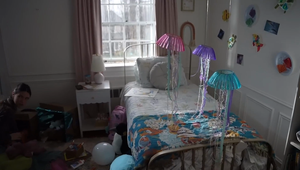
BTSAdventure Aquarium
29/07/2026
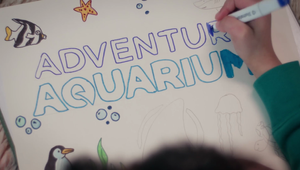
ImaginationAdventure Aquarium
29/07/2026
BTSNesquik
28/05/2026
ALL THEIR WORK
SUBSCRIBE TO LBB’S newsletterEnter your email
FOLLOW US
Events
DPA + SLA (+ US Add.)
MyLBB Score
About Us
Contact
Editorial Toolkit
Help & FAQ
Privacy Policy
Main Terms & Conditions
Newsletters
Create your own LBB icons
How it works
Plans & Pricing
LBB’s Global Sponsor

