


Sarajevo Film Festival: Where the silenced find a stage – Türkiye Today
Sarajevo Film Festival: Where the silenced find a stage


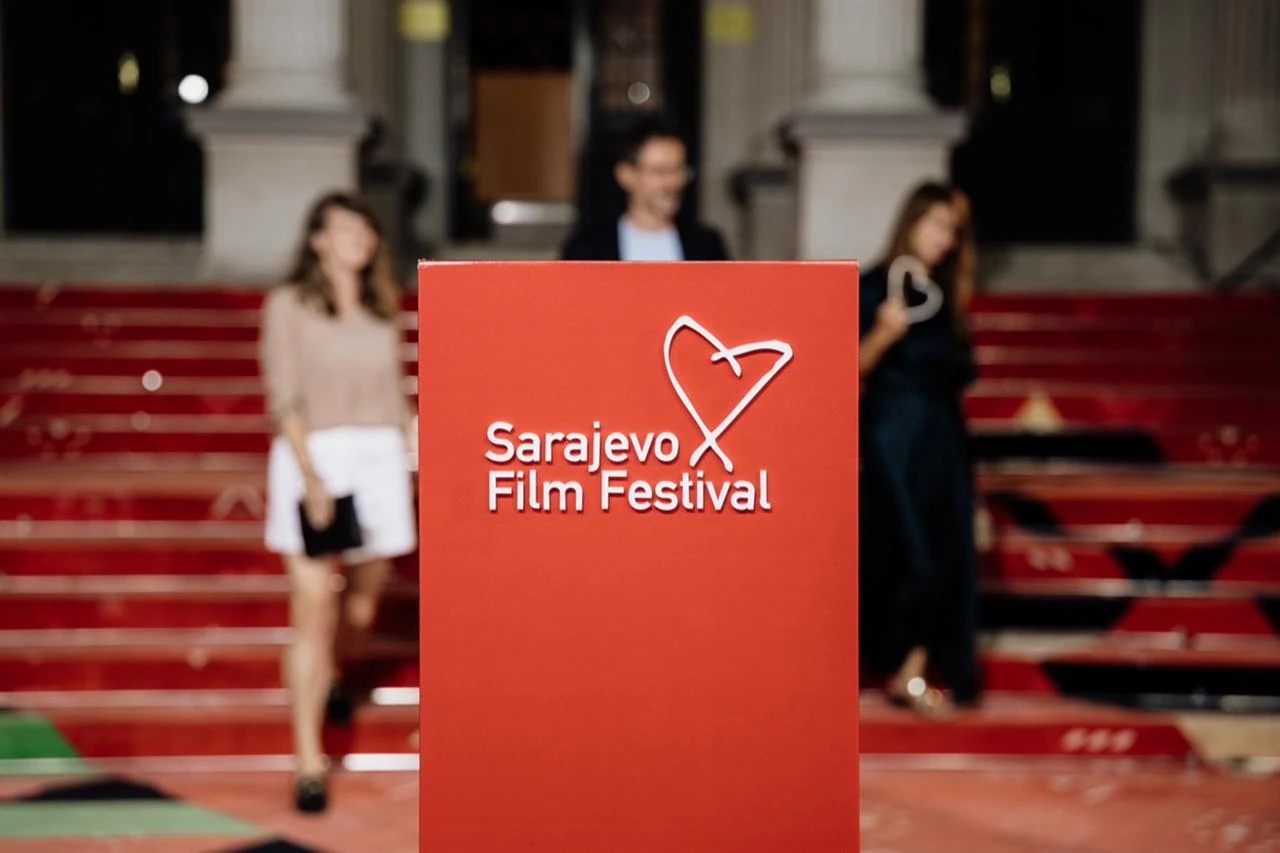
Recipients of Heart of Sarajevo Awards, Red Carpet, National Theatre, 32nd Sarajevo Film Festival, 2026 at Obala Art Centar, Sarajevo, Bosnia and Herzegovina. (Photo
There are film festivals where celebrities arrive to walk the red carpet, where cameras swing toward the stars, and photographers jostle for the shot that will run the next morning—festivals where, for a few days, the city becomes an extension of Hollywood.
And then there is Sarajevo.
The<a href="https://www.sff.ba/en" rel="nofollow noopener” target=”_blank”>Sarajevo Film Festivalwas never meant to be just another festival.
It was born in a city under siege, when going to the cinema could be an act of courage and when culture itself had become a form of resistance.
In the middle of the Bosnian War, Sarajevo was surrounded, shelled and cut off from much of the world. Yet people continued to organize concerts, theater performances and film screenings.
The First War Cinema Apollo began screening films in 1993, creating a cultural space in a city where normal life was being systematically destroyed.
Two years later, in October 1995, the Sarajevo Film Festival was born.
The timing could hardly have been more extraordinary. The war was still not formally over. The Dayton Peace Agreement would be signed only weeks later.
Yet thousands of people came.
They came because Sarajevo needed more than food, electricity and humanitarian aid. It needed something that war could not easily measure: a reason to believe that life would continue.
The festival became an assertion of that belief.
It was Sarajevo telling the world, and perhaps telling itself, that it was still a European city of culture, curiosity and creativity.
That is the part of the Sarajevo Film Festival that should never be forgotten as the red carpets become longer and the guest lists more glamorous.
Because the glamor came later.
The resistance came first.
US actor Woody Harrelson speaks on stage with his “Heart Of Sarajevo” award at the 32nd Sarajevo Film Festival in Sarajevo, Bosnia and Herzegovina, on August 18, 2026. (AFP Photo)
From a city under siege to a city telling its own story
Over three decades, the festival has grown into one of the most important cultural institutions in Southeast Europe.
But its greatest achievement may not be its ability to draw famous actors and directors to the red carpet. It is that Sarajevo turned the experience of war into a platform for telling its own stories rather than letting others tell its story for it.
For much of the 1990s, images of Bosnia were produced elsewhere: images of destruction, refugees, massacres and grieving families. International journalists came to Sarajevo, reported from the front lines and then left.
Cinema offered another possibility.
It allowed Bosnians to become not only subjects of history but authors of it.
That is why the return of actors connected to films about the war can carry a meaning that goes far beyond nostalgia.
30 years collapsed into a single evening
This year’s 32nd Sarajevo Film Festival offered perhaps the clearest example.
American actor Woody Harrelson returned to Sarajevo three decades after filming Michael Winterbottom’s “Welcome to Sarajevo,” the 1997 film about the war and the journalists covering it. Much of the film was shot in Sarajevo in 1996.
This time, Harrelson came back not as an actor portraying Sarajevo’s wartime reality, but as an honored guest.
The festival awarded him the Honorary Heart of Sarajevo. And then, in one of those extraordinary moments that only Sarajevo can produce, “Welcome to Sarajevo“was screened again on 35mm film, fulfilling Harrelson’s wish to see the film as it had been shown at the festival in 1997.
Thirty years collapsed into a single evening.
But the most powerful moment was perhaps not the film itself.
It was the people Harrelson encountered again.
From the stage, he specifically greeted Croatian actor Goran Visnjic, with whom he had made “Welcome to Sarajevo,” and Emira Nusevic Nuhic, who was only 11 when she appeared in the film.
Accepting the Heart of Sarajevo, he said it meant more to him than any other award he had received and that the people of Sarajevo had genuinely touched his heart.
There is something deeply moving about that reversal.
Thirty years ago, a Hollywood actor came to Sarajevo to play a character inside somebody else’s war story.
Thirty years later, Sarajevo gave him its heart.
A view from the 32nd Sarajevo Film Festival Partners’ Awards, Festival Square, 32nd Sarajevo Film Festival, 2026 at Obala Art Centar, Bosnia and Herzegovina. (Photo
Sarajevo refused to remain frozen in war
And perhaps that is what the festival has always been about.
Not forgetting.
Not allowing Sarajevo to become only an image from the 1990s.
Not allowing the city to be permanently frozen in the visual vocabulary of war—snipers, destroyed buildings, bread queues and funerals.
The Sarajevo Film Festival created another image.
Sarajevo at night.
Sarajevo under the stars.
Sarajevo laughing.
Sarajevo watching films.
Sarajevo welcoming the world.
That transformation is not cosmetic. It is political in the deepest sense of the word.
Because wars do not only destroy buildings. They destroy the possibility of imagining a future. They tell people that survival is the only thing that matters.
Culture responds by insisting that human beings are more than survivors.
They are audiences. They are filmmakers. They are writers, musicians, actors and dreamers. They fall in love. They make jokes. They argue about films. They put on dresses for the red carpet. They sit beside strangers in an open-air cinema.
They live.
Photo shows 32nd Sarajevo Film Festival Partners’ Awards, Festival Square, 32nd Sarajevo Film Festival, 2026 at Obala Art Centar, Bosnia and Herzegovina. (Photo
From Sarajevo to Gaza
And perhaps this is where Sarajevo’s story meets the story of Gaza.
Because the festival that was born in a besieged city has increasingly become a place where the stories of other wars can be heard.
The Sarajevo Film Festival gave prominent space to Palestinian cinema and to stories of siege and survival. Its Dealing with the Past program featured “Chronicles from the Siege,” a film by Palestinian-Syrian director Abdallah Alkhatib drawn from his own experience of life in the Yarmouk refugee camp.
Alkhatib’s understanding of siege was shaped by memories of Sarajevo, creating a direct bridge between two cities separated by geography but connected by the experience of living under siege.
Palestinian filmmaker Kamal Aljafari also served on the jury of the Documentary Competition. Palestinian filmmaker Elia Suleiman was previously honored with the festival’s Honorary Heart of Sarajevo, and Sarajevo has repeatedly provided space for Palestinian cinema and filmmakers.
That is what makes Sarajevo different.
It is no longer simply a city where the world comes to watch films.
It has become a stage from which messages are heard.
Messages about memory.
About the right of civilians to live.
About what happens when the world watches suffering and then looks away.
And about the power of culture to refuse that silence.
More to Read
How the World Cup put Bosnia on everyone’s travel bucket list
Opinion 2 min read

‘The Bodyguard’ musical to make Türkiye debut in Istanbul with Whitney Houston hits
Culture 1 min read
‘Palestine Convoy’ arrives in Türkiye after journey from Bosnia, Herzegovina
Nation 1 min read
A city that once needed the world to listen
Sarajevo knows what it means to be reduced to images of destruction.
It knows what it means to wait for the international community to act.
That memory gives the city a particular moral authority when it opens its doors to Palestinian filmmakers and stories from Gaza.
The Sarajevo Film Festival cannot stop a war. But it can do something that is sometimes just as important: It can make sure that those living through war are not reduced to statistics.
It can give them a microphone.
A screen.
A stage.
And perhaps that is Sarajevo’s greatest transformation.
A city that once needed the world to hear its story has become a place where others can make theirs heard.
The guns fell silent in Sarajevo, and the cinema stayed open.
Sarajevo kept telling its story.
Now, from that same city, other stories of siege and survival are being heard.
That may be the most powerful legacy of the Sarajevo Film Festival.
See you next year, Sarajevo Film Festival.
How the World Cup put Bosnia on everyone’s travel bucket list
Opinion 1 min read
‘The Bodyguard’ musical to make Türkiye debut in Istanbul with Whitney Houston hits
Culture 1 min read
‘Palestine Convoy’ arrives in Türkiye after journey from Bosnia, Herzegovina
Nation 1 min read
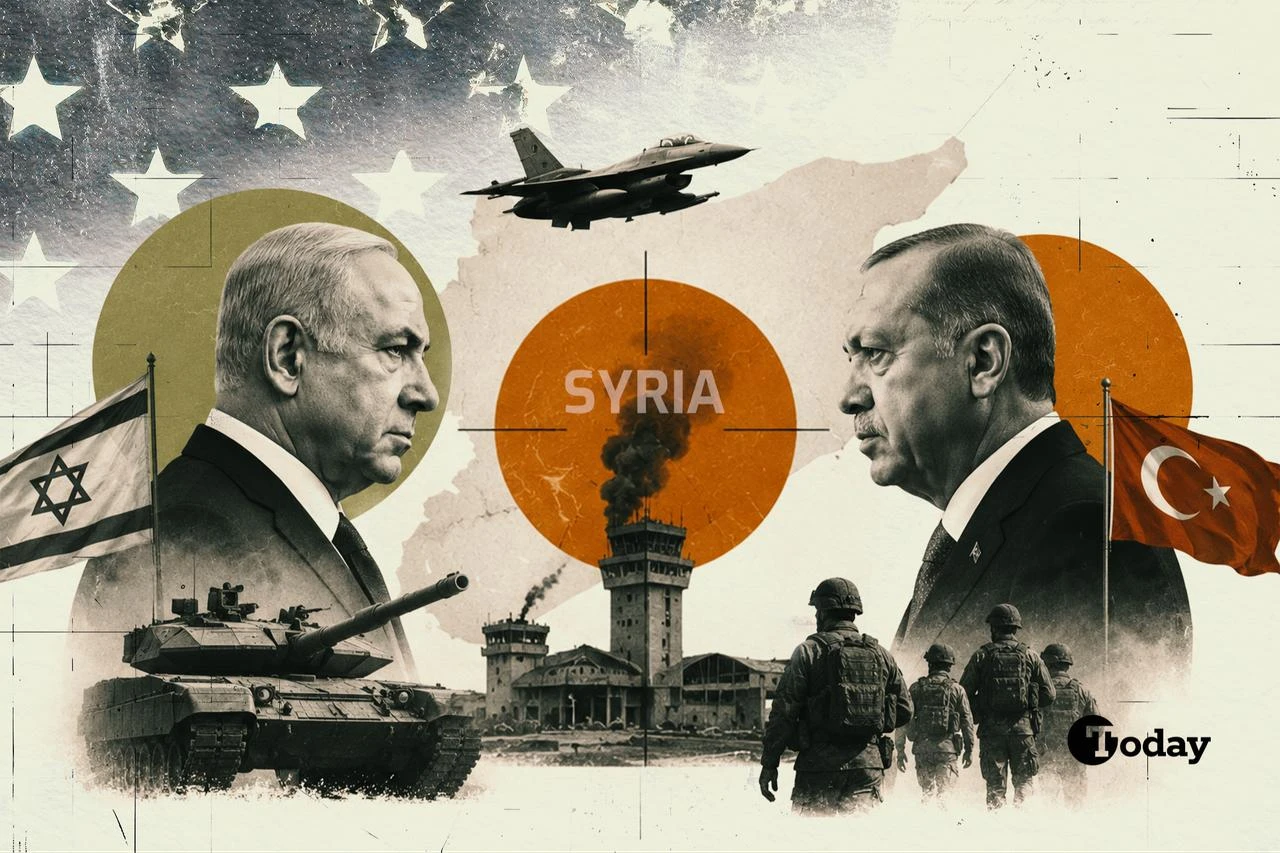
Netanyahu’s Abu al-Duhur strike in Syria: A letter sent to the wrong mailbox
Opinion 8 min read
