

Reading time: about 6 minutes
Summer is a haze of devotion. Mounting an abundance of time, we find ourselves with room for activities and self-serving interests we often neglect during the school year. Built upon freedom and relaxation, the season encourages a unique engagement with art. I’ve always found summer to be a sanctuary for new infatuations, particularly because of its laissez-faire nature.
With school peeking over the horizon, I’m struggling to bid farewell to my recent summer allegiances, which include Paul Newman movies, underrated Kurt Vonnegut books, physical magazines and an old Guns N’ Rosesalbum.
I have always been vaguely familiar with Paul Newman as an actor on the classic Hollywood Mount Rushmore, primarily due to his mention in S.E. Hinton’s classic The Outsiders. It wasn’t until this summer, in the midst of various LEGO builds, that I decided to enrich my Newman movie palette, starting with the underrated masterpiece Cat on a Hot Tin Roof. Directed by Richard Brooks, the film stars Newman as Brick Politt and Elizabeth Taylor as his wife Maggie in a dysfunctional marriage. Newman shines as a deeply broken man who masks his pain with cruel indifference towards those who deeply care for him.
Cool Hand Luke, directed by Stuart Rosenberg, follows an early mid-century chain gang in Florida. Newman stars as Luke Jackson, a World War II veteran who repeatedly denies authority, gaining the respect and idolatry of his fellow prisoners. Luke is a classic Old Hollywood hero, facing the common struggle against cruel and unwavering control. Luke, aware of this, chooses to push against it. He allows himself to be broken by the system, snapping at those who worship him. Even though he is martyred, Newman leaves the audience with the astute awareness that Luke was something more.
A frequent read in schools across the U.S., most people know Vonnegut through Slaughterhouse-Five. And yet, the anti-war masterpiece is far from stand-alone excellence in Vonnegut’s bibliography. Published in 1965, God Bless You, Mr. Rosewaterfollows Eliot Rosewater, a billionaire preparing to prove his sanity and, in turn, keep the fortune. Opposite Rosewater is Norman Mushari, a first-generation lawyer who approaches Fred Rosewater, a cousin who is unknowingly the next heir. In a brilliant piece of satire, Eliot Rosewater’s abandonment of high society to instead perform charity for a small Indiana town is what declares him mad. In the novel, Vonnegut perfectly encapsulates the crumbling American dream and skyrocketing wealth inequality that plagues society today.
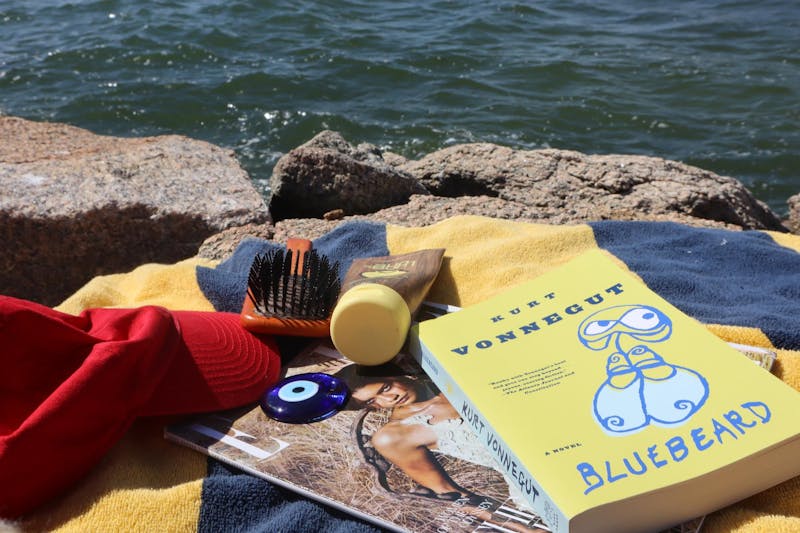
Bluebeard features Rabo Karabekian, a forgotten expressionist artist-turned-collector, as he writes his autobiography. A chance encounter on a Long Island beach leads to Circe Berman, a young widow, moving into his hollow mansion. Berman’s dynamic with Karabekian is both hilarious and semi-infuriating — she shuns all modern art in favor of Victorian girls on swings. Yet, her criticism teaches him to see his collection as a celebration of humanity, culminating in the public reveal of his formally hidden masterpiece (kept in a potato barn of all places).
Vonnegut was truly a master at displaying deep humanity buried under sharp satire.
I bought my first copy of Vogue on an afternoon Stop and Shop grocery run with my cousin and brother. Although I had to put back a packet of sour gummy worms, I was confident the sacrifice would be worth it. The magazine sat around my room for a few days before I finally managed to have a beach day.
Reading a magazine almost feels religious; there’s reverence in leafing through the thin pages, salivating at new fashion and articles that scream cool. Even if I have no interest in the cover page, there’s always a piece of sage advice waiting to be read somewhere inside. It’s in these pages that I discover new writers and artists, projects I was completely unaware of in spite of my (unfortunately) high screentime.
Engaging with culture can often feel cumbersome. Social media demands fast, black-and-white opinions. An article, sandwiched between a perfume and a tobacco ad, alled, there’s no greater church in which to learn about potato varieties, Celine’s new director and Los Angeles home renovation
One late, humid night, I drove back up to my hometown for a dental appointment. I was cranky about having to leave Cape Cod and miss out on a whole weekend of work. The only benefit to leaving around 8 p.m. was how empty the roads were, save for a state police officer here and there. Night drives always demand a soundtrack, and for this particular one, I decided to consult my library in search of an old friend. What I found was Use Your Illusion II, the second (and in my opinion, superior) of Guns N’ Roses’ 1991 double album.
Including some of my favorite songs from 2023, the album features a more rock-heavy “Knockin’ on Heaven’s Door,” a cover that manages to stand alone against the golden standard of Bob Dylan. Also on the track list is the band’s second-longest song, “Estranged,” a classic ’90s grand piano ballad, and the already released “Don’t Cry” with alternate lyrics.
As I drove across long stretches of barely lit highway, I’ve never been so happy to relive the past.
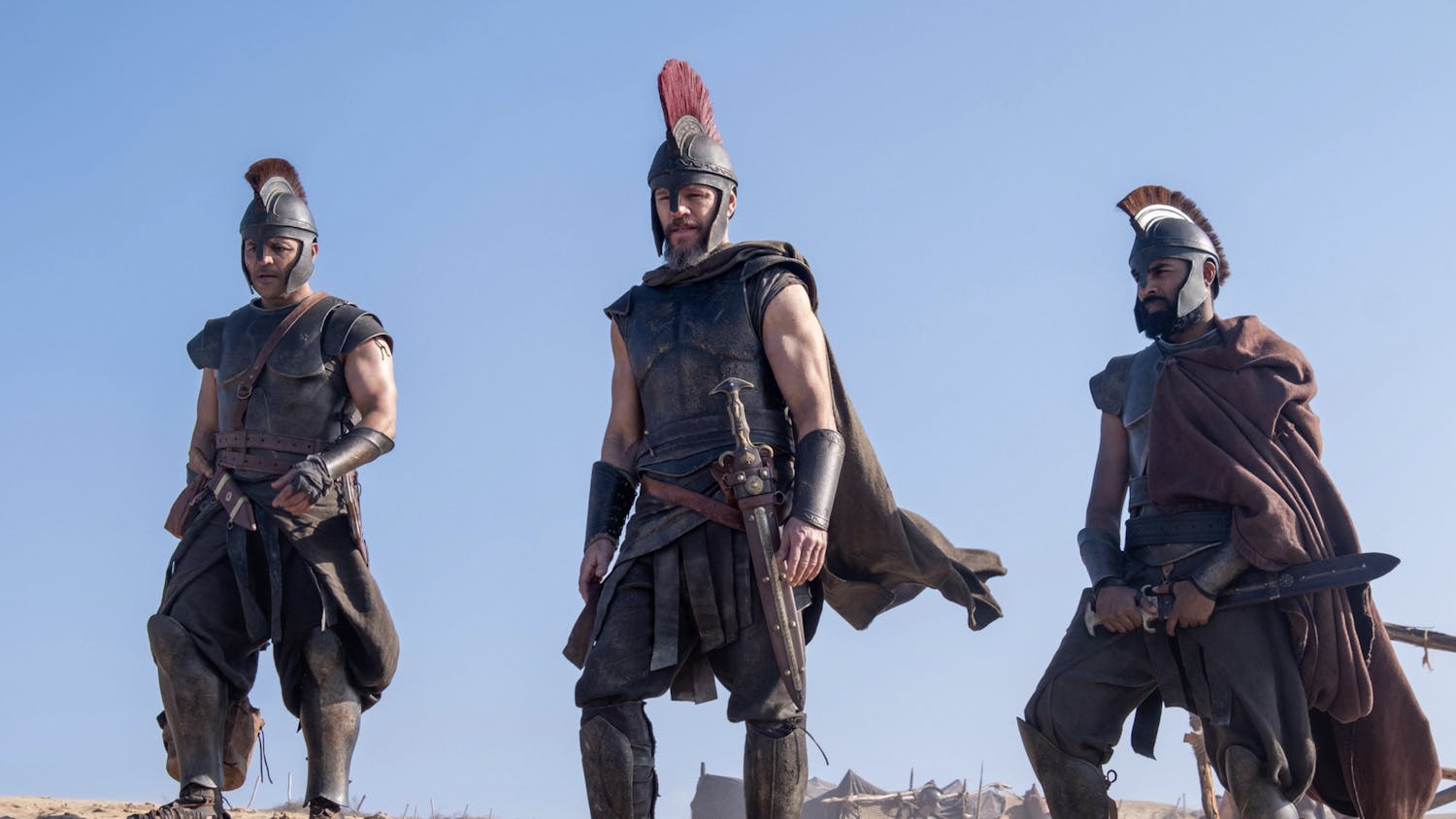
The greatest devotions of all, however, are purely reserved for the art I experienced with others. A fine movie was made better only because my friend was there, laughing along. Running to the car with my dad in the midst of a thunderstorm after watching The Odyssey opening weekend. Listening to the same Noah Kahan song with my cousin on the way to and from froyo.
My summer sanctuary is entirely built around those I love. They are the greatest parts of art.

Kate LaGatta is a member of the Class of 2029 in the College of Arts and Sciences. She is a columnist for the Arts & Culture department and can be reached at klagatta@cornellsun.com.
SOLAR FLARE | Songs of (My) Summer
I’m Just Like Odysseus! Coming Home to Ithaca