


A good film school doesn’t just try to predict the future — it tries to prepare its students for any future.
It doesn’t just teach the newest technology, which will eventually become obsolete anyway. A good film school teaches students to tell stories with next to nothing, if they have to.
It doesn’t teach them to copy the latest cool ideas, but rather to originate cool ideas — and have the confidence to execute them.
A good film school teaches its students to anticipate problems — technical, financial, creative — because telling stories is mostly about solving problems.
Yes, today’s film and TV industry may feel less predictable than ever. Did anyone guess, at the start of 2026, that a low-budget film by a YouTube creator, Obsession, would fare better at the box office than the latest Star Wars?
Did anyone anticipate the similarly spectacular success of Backrooms, which originated with a meme?
Did anyone predict, years ago, that streaming would ever surpass broadcast and cable in terms of viewership?
And why are our social feeds flooded with weird retro AI impersonations of non-existent super hero movies of the 1950s? The popularity of AI — and its ability to churn out a lot of slop, fast — has made the industry feel less stable than it’s ever felt.
But a good film school provides a stable foundation, no matter what surprising or flat-out bizarre things are happening in the entertainment industry.
We asked nine of the film schools on our list of the 30 Best Film Schools in the U.S. and Canada how they’re preparing students for a future that’s impossible to predict. And while they may take different approaches, and may emphasize different aspects of filmmaking, what they all have in common is a faith in humanity — and human stories.
Here are their thoughts on preparing students for the future.
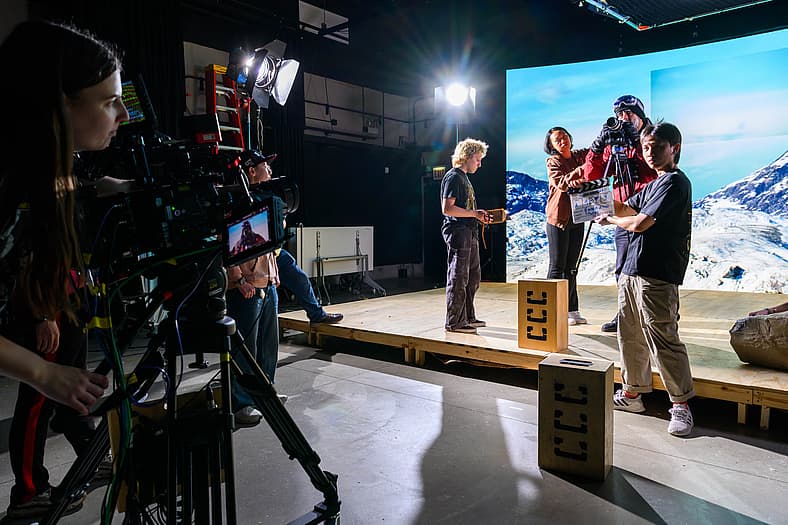
COLUMBIA COLLEGE CHICAGO
Wenhwa Tsao • Dean, School of Film and Television
Every generation of storytellers has to adapt to different technologies, distribution models, and how audiences engage with the content they create. The School of Film and Television at Columbia College Chicago prepares students to understand today’s industry practices and to be adaptable learners who can thoughtfully evaluate emerging technologies. We ask them to keep the human experience at the center of storytelling. We discuss the ethical implications of integrating new tools into their work. We want our students to embrace change, continue learning, and keep creating new work so they can build sustainable careers and maintain their artistic identity.
Students build confidence by working on a variety of projects in a collaborative and supportive environment. They learn by making work, reflecting on it, and making the next project better. The process of creating multiple projects helps them find their voice and understand that they have the ability to work with others. Our graduates are content creators who know they have the resilience, adaptability, and sense of purpose needed to create meaningful work in a rapidly changing world.
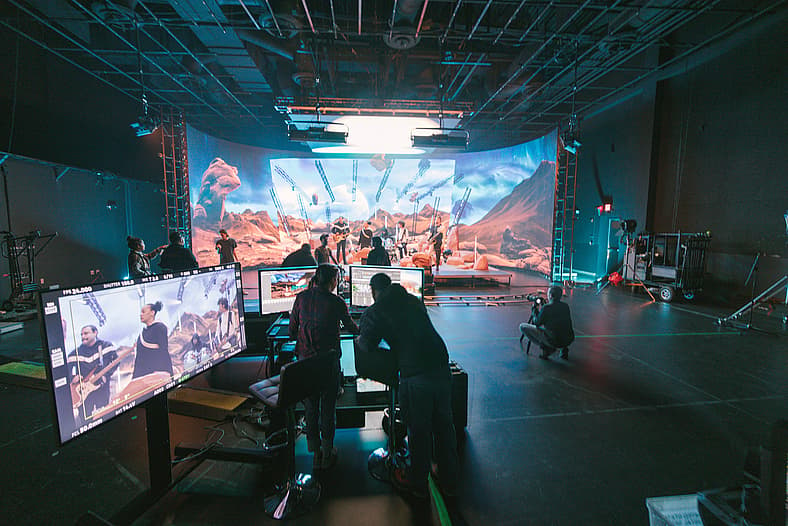
FULL SAIL UNIVERSITY
Anne Russell• Program Director, Film Production MFA
Adaptability has always been a cornerstone of the film industry, and each era has experienced and embraced its own disruption.
This is why we don’t prepare students for one specific job—we prepare them to solve problems, embrace new technology, collaborate across disciplines, and keep learning throughout their careers.
Whether they’re working in traditional filmmaking, virtual production, streaming, or roles that don’t even exist yet, the fundamentals of storytelling, creativity, and professionalism remain constant. Our goal is to graduate filmmakers who are confident navigating across numerous and varying landscapes because they’ve already learned how to evolve alongside an ever-changing industry.

SAVANNAH COLLEGE OF ART AND DESIGN
Andra Reeve-Rabb • Dean, School of Film and Acting and Executive Director of SCAD Casting Office
SCAD’s superpower is that we prepare our students in every aspect of the entertainment industry. From casting to distribution, our programs have bleeding edge programs that allow our students to step seamlessly from a classroom to a set because our classrooms are sets! Not only do we teach them the speed of the game, but also to be nimble, adaptable storytellers as they navigate the ever-changing landscapes within our industry. We are focused on content creation and the importance of collaboration to produce award-winning projects.
We have created an environment where students don’t simply study filmmaking; they live it. They’re casting projects, designing sets, producing content, acting on professional productions, experimenting with emerging technologies, and learning alongside faculty who have built careers at the highest levels of the industry. By the time they graduate, they’re not aspiring professionals; they’re already part of the creative workforce.
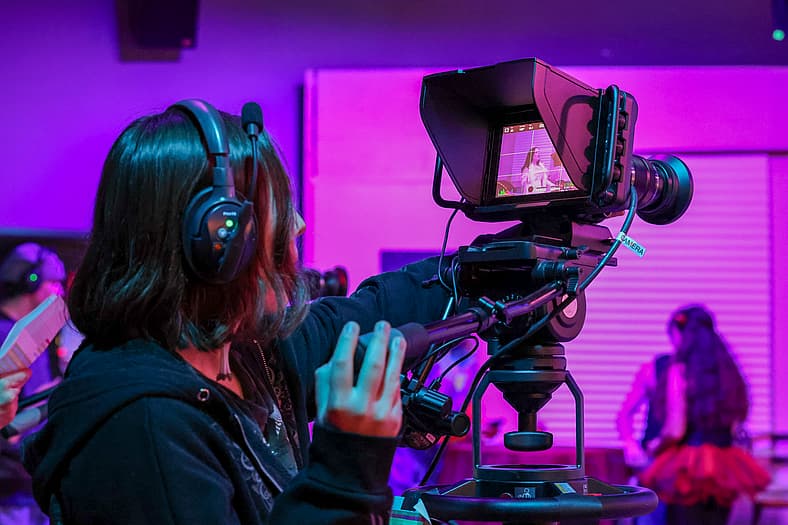
SOUTHERN OREGON UNIVERSITY
Christopher Lucas• Associate Professor and Digital Cinema Program Coordinator
How do we prepare students for an unpredictable future? We tell them that the work of film and media has always been evolving and can be uncertain. Educators must balance the technologies we need to teach the fundamentals with student demand for the latest and greatest. For us, that has meant a solid base of cinema cameras, lenses, lights, grip and electric, studio space, and the labs to finish the work. We listen to student requests for particular tools and software that we can test and consider adding to our stock. But more importantly we
want them to put our classroom explorations into practice by getting into the field with the tools, working together. That’s not just a budget-conscious approach; it’s modeling a professional necessity. The desire for a particular tool should not stand in the way of telling their story or making their art.
There’s no doubt professors in film and media have to hustle to keep up with technology, whether that’s new cameras, AI-augmented workflows, or the latest color grading workspace. But we know the most critical skills film students need — whether last century or next year — will be resilience, resourcefulness, and the ability to work in a team. Students in our program are making media together from the first year forward, whether that’s in coursework, in our film club’s regular “film race” style contests, or in passion projects. We are constantly upgrading our equipment, software, and studio spaces to support their creativity, but providing space to practice this self-directed learning through emotionally and culturally competent teamwork is even more important to us.
TORONTO FILM SCHOOL
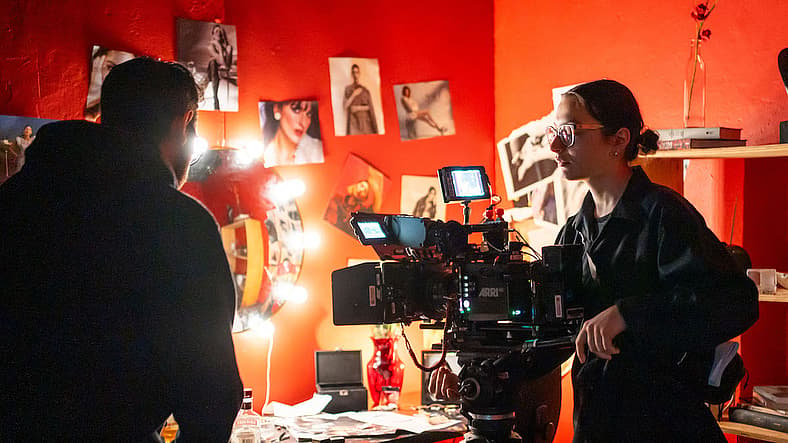
The future of filmmaking has always been dynamic, but that’s also what makes this industry so exciting. Rather than preparing students for one specific job, we prepare them to become adaptable storytellers, collaborators, and creative problem-solvers who can evolve alongside the industry.
At Toronto Film School, students experience the entire production pipeline—from story development and directing to production management, post-production, distribution, and the business of film—through hands-on, collaborative learning led by industry-active faculty. They rotate through multiple production roles, build professional portfolios, develop entrepreneurial and networking skills, and gain experience with both industry-standard equipment and emerging technologies. We believe technology should enhance creativity, not replace it, so our graduates leave with a strong foundation in storytelling, ethics, technical craft, and human collaboration.
Combined with ongoing career support and strong connections to Toronto’s thriving production community, our goal is to graduate filmmakers who aren’t just ready for today’s industry — they’re prepared to help define its future.”
UNIVERSITY OF CENTRAL ARKANSAS
Bruce Hutchinson • Professor and Film Program Coordinator
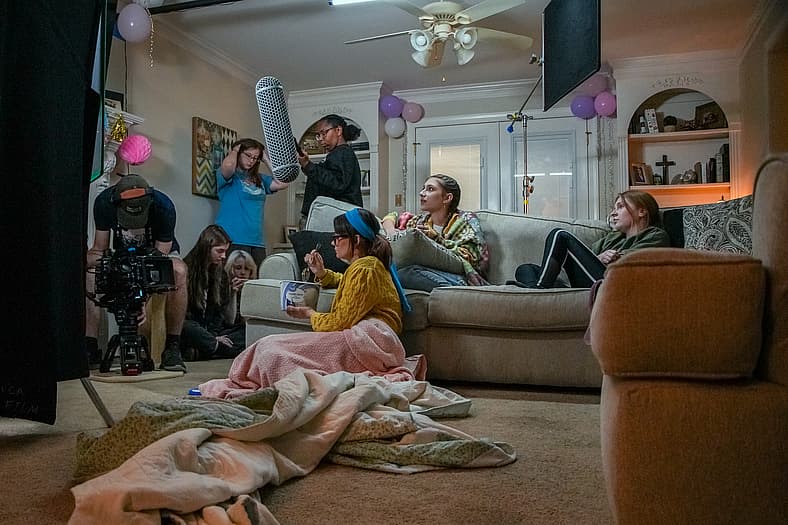
We believe that human creativity will always be a valued capability regardless of what our graduates end up doing professionally, regardless of AI or other technological advancements. With that in mind, helping our students develop both their own voice and unique vision remains central to what we do.
Any art form needs to be emotionally resonant and in the end only humans can determine whether a creation is doing that. Even generative AI requires human creativity in both directing content creation and recognizing effective results. Having said that, it’s important that students understand how AI tools are embedded in nearly every technology they use, especially in post-production.
So making sure they know how to use those tools and that they understand the range of possibilities from generative to assistive AI is vital to preparing them for the future.
Interestingly, Gen-Z both uses AI on a regular basis and yet largely seems opposed to it, so helping them learn how to balance the use of AI by using it to assist what they create rather than using it as the main
UNIVERSITY OF NEW MEXICO
James D. Stone • Associate Professor and Department Chair of Film & Digital Arts
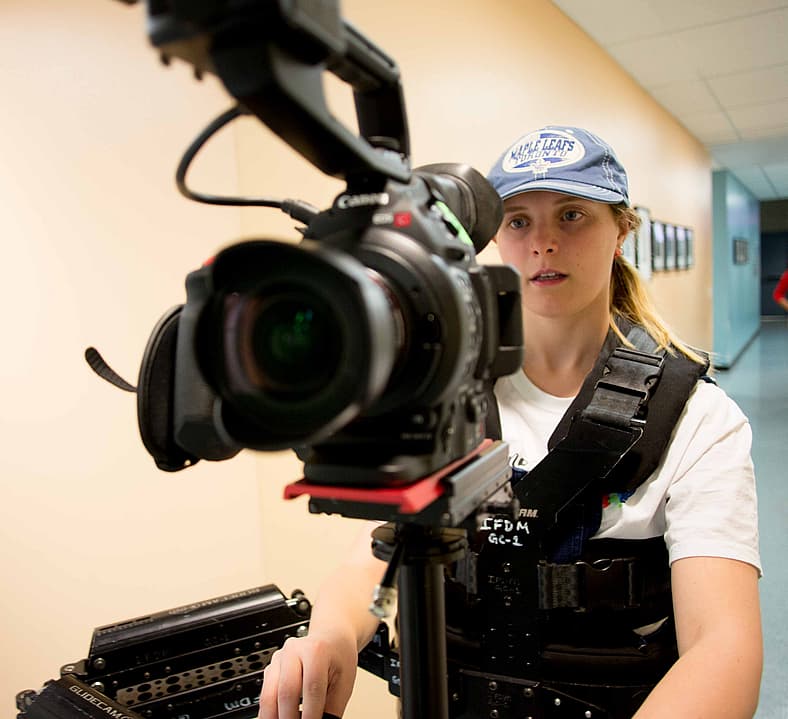
Our students enjoy a rigorous and well-equipped education at a fraction of the cost required by other institutions. Simultaneously, with New Mexico becoming a film hotspot and MovieMaker Magazine regularly placing Albuquerque on its annual Best Places to Live and Work as a Moviemaker list, students find they can build a formidable professional network and gain onset experience with a variety of Netflix and independent productions.
Our program is fast becoming a leading center for digital media education where moviemakers, game developers, animators, writers, and researchers embrace a culture of growth and innovation. We cultivate critical thinkers who understand the historical, cultural, and social implications of creativity.
We have forged a fearless, forward-thinking department where artistic experimentation thrives, ethical standards are upheld, and every voice is heard. Working at the heart of the vibrant New Mexico film community, we foster research and encourage collaboration, building local, national, and international partnerships that create myriad opportunities for our students.
UNIVERSITY OF NORTH CAROLINA SCHOOL OF THE ARTS
Deborah LaVine • Dean, School of Filmmaking
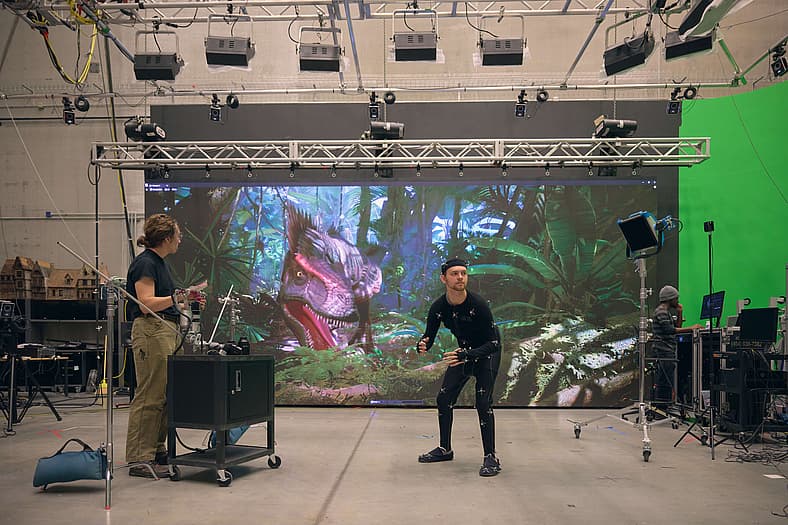
Our responsibility as a film school is not to train students for a specific tool. It is to help them find their voice and master the fundamentals so they are prepared for whatever new technologies emerge. Rather than trying to predict every disruption, we focus on what endures: story, critical thought, analysis, collaboration and the confidence to adapt. Technology changes. Storytelling does not.
Finding your voice as a filmmaker requires more than technical fluency. It requires curiosity, discipline and a dash of courage to engage with complex ideas and emotions. We encourage students to ideate freely, prepare rigorously, then fly free; to see what is actually in front of them through the lens or in the editing room, rather than forcing a scene to become something it isn’t. Some of the most important creative discoveries happen when artists stay alert to what the work is revealing.
To develop that adaptability, we teach traditional filmmaking concepts alongside some of the earliest forms of storytelling: oral storytelling, theater, improvisation and radio plays. Drawing on thinkers and practitioners from Aristotle and Brecht to Viola Spolin, Paul Sills, Uta Hagen and Stanislavski, we equip students not only for today’s industry but for whatever comes next.
VANCOUVER FILM SCHOOL
Jonathan Bell• Managing Director
As the entertainment industry continues to evolve, Vancouver Film School remains committed to providing an unparalleled training experience that aligns with this evolution – preparing our students for the new technologies, production methods, and pipelines used by the industry.
This starts with our signature hands-on, production-focused learning in our Production Centre — an experience mirroring professional studios. Students develop not only technical skills, but the ability to collaborate across disciplines and solve creative challenges in real time. We work closely with industry partners to ensure our curriculum reflects current workflows and emerging technologies, including AI, while still prioritizing the creativity, storytelling, and human collaboration that remains the driving force of creative production.
We’ve also evolved how we deliver education through our new hybrid production model, giving students greater flexibility while preserving the on-campus production experience and cross-program collaboration. Though tools and technologies will continue to change, adaptable, collaborative storytellers will always be in demand. This is what we are training our students to become.
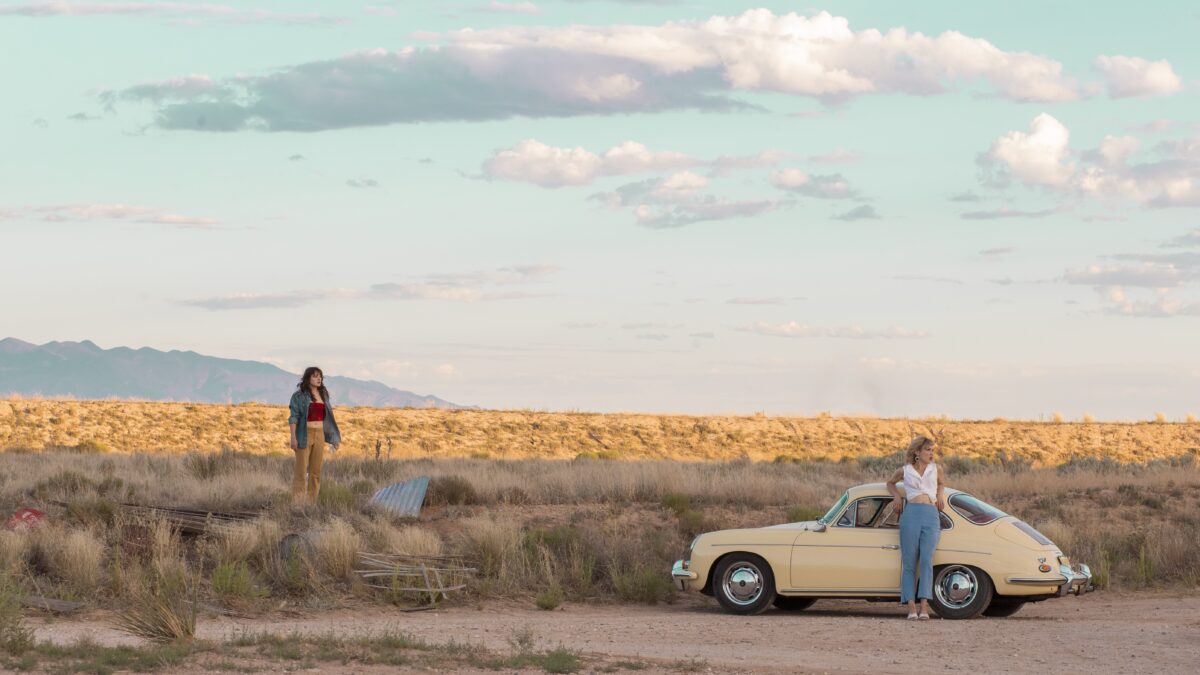
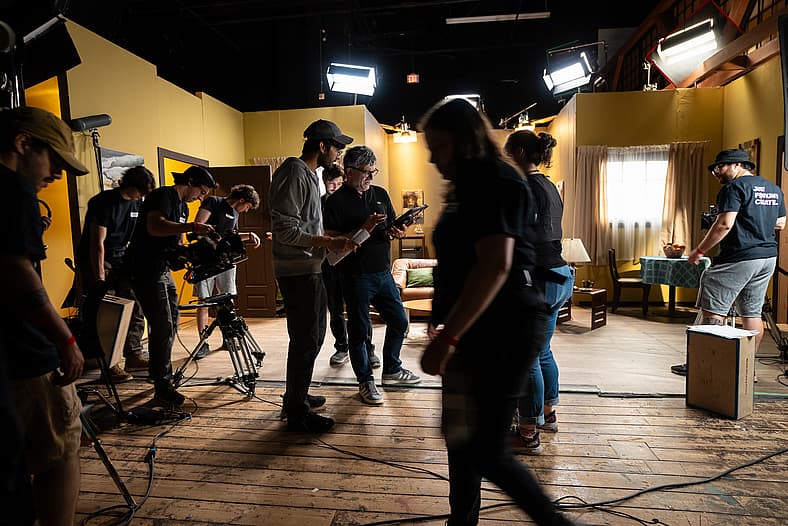
Main image: A University of New Mexico production
All photos courtesy of the schools.
Mentioned This Article:film school
