


After a windier road than expected, Paramount and Warner are now one, under the banner of Skydance, and the film industry is set for a shake-up
Hollywood’s big five have officially become the big four. Following a twist-filled saga that saw the century-old studio Warner Bros nearly acquired by the streaming giant Netflix, only to be outbid by Paramount owners Skydance, the company led by billionaire scion David Ellison. After facing legal opposition that ultimately crumbled, Warner Bros and Paramount are officially under the same corporate roof. They are divisions of Skydance, which joins Sony, Disney and Universal as the remaining major-studio players in Hollywood.
Paramount completes $111bn acquisition of Warner Bros to form new media empire Skydance
Read more
The merger goes beyond film production. Eventually, the streaming services HBO Max and Paramount+ will merge into a single entity, though a timeline has not been disclosed. The television channels HBO, Showtime, CBS, MTV, Comedy Central, Cartoon Network, Nickelodeon, TNT, TBS and CNN are among many now owned by a single corporation. The presence of CNN on that list has brought particular scrutiny, given the post-Skydance meddling with the once-respected CBS News, resulting in a rocky stewardship from Bari Weiss, who has overseen a dip in both ratings and prestige for the flagship program 60 Minutes. Weiss isn’t expected to add CNN to her purview; current chair Mark Thompson will remain in place for now, and Skydance has insisted that CNN will remain editorially independent. But given Ellison’s chumminess with Donald Trump, who has long ranted incoherently about CNN’s supposed biases, the presence of an oversight board with Ellison appointees has been cold comfort.
That oversight board is one of a few concessions for a group of state attorneys general dropping their lawsuit attempting to block the merger. Many of these points amount to maintaining business as usual for certain elements of the companies: negotiations for pay TV rights and channel fees charged to cable companies, for example, will have to be negotiated separately, as if Warner and Paramount haven’t merged. And one of Hollywood’s great fears about the merger, unaddressed by the agreement – the inevitable layoffs that come with consolidation – may not make much immediate difference in casual media consumers’ lives (though the people actually working in the entertainment industry will feel plenty of impact, direct and indirect, none of it good).
So what will be most noticeable from the consumer’s vantage, in the coming months and years? In terms of their wallets, streaming prices will jump again, though that’s less a change than an acceleration of current conditions. Paramount+ is one of the cheaper streaming services at the moment, but HBO Max is one of the pricier options; it’s hard to imagine a combined version would fetch much less than $25 a month, and that’s just for starters; it could easily go much higher (though, again, that fusion of services probably won’t be immediate, and will probably look like business as usual in the short term). This might eventually lead to a streaming landscape less dependent on viewers buying a seemingly infinite number of $20 monthly subscriptions. But consolidation isn’t exactly great for competition, either.
The bigger creative changes will eventually be seen on the movie side of the business. Skydance already nixed Warner movie studio co-chairs Pam Abdy and Mike De Luca, who noted upon their departure, with a hint of snark, that they’re leaving the studio with 39 movies – meaning that any real successes from Warner in the next few years will be owed to their development slate, not whoever at Skydance claims credit. Not all of those 39 movies are locked and loaded for release, of course, but there probably won’t be major, immediate changes to the Warner release schedule – especially not for 2026, which will probably still close out with the DC Comics-based horror movie Clayface, the animated Seuss adaptation The Cat in the Hat, and the sci-fi blockbuster-in-waiting Dune 3.
Further ahead, the Warner movies already well into production for 2027 look financially and sometimes even creatively promising: new movies in the Superman, Ocean’s, Minecraft and Godzilla/Kong series, plus original projects from M Night Shyamalan (in collaboration with Nicholas Sparks) and JJ Abrams. Paramount, meanwhile, has new movies in the Sonic the Hedgehog, Paranormal Activity and Quiet Place series, plus a remake of the artier horror movie Possession and an adaptation of the bestseller Tomorrow, and Tomorrow, and Tomorrow.
But the movies that already have release dates plotted out a year or two ahead of time tend to be the bigger-budget, brand-name and/or franchise fare that defines most major studios these days. Less clear is how the combined studio will meet their self-selected benchmark for number of new releases a year, and whether that might include non-branded movies. That’s a theoretical bright spot of the merger, also owed to that mostly watered-down decree from the attorney generals: Skydance must make good on its seemingly far-fetched promise that consolidating these companies would not reduce film production, and in fact would result in a total of 30 new releases a year, the equivalent of robust years for two different studios.
The AG agreement codifies that number for five years: 30 each year for two years, then 32 each year for the following three. There are additional terms about how many of these need to be wide releases and/or independent films, as well as some deeply dispiriting definitions of what constitutes the latter (“independent” is defined as, essentially, a movie that’s not a big-budget IP play). The agreement also lays out some consequences of highly questionable utility. A sample wrist-slap: for failing to meet these standards, the company would be forced to divest from … Miramax?! This seems about as punishing as insisting that Skydance misbehaves, they must absolutely, positively part ways with VH1.
In theory, though, Skydance has committed to releasing 156 movies in the next five years, which should make theatrical exhibitors happy, and seems to be the main reason some Hollywood figures like Tom Cruise and James Cameron have championed the merger. As for the specifics, the combined planned Warner/Paramount output for 2027 is more or less on track to hit 30 films; 2028 would need another 10 movies or so to meet it, and Paramount’s post-Ellison sensibility hasn’t exactly been informed by the variety of genres and budgets that once defined big studios. These days, Paramount mostly makes big-budget sequels and cheaper horror movies.
That’s where executives like the departed De Luca and Abdy would have come in handy. Their tenure at Warner was characterized by both risks and variety befitting one of Hollywood’s most recognizable and prestigious movie studios. They greenlit two beloved smash-hit horror movies with Sinners and Weapons. The studio won a best picture Oscar – their first in over a decade – with Paul Thomas Anderson’s One Battle After Another. They let indie talents play in a big-studio sandbox with movies like Wuthering Heights and The End of Oak Street. Even their franchise films, like the Dune sequels, Furiosa: A Mad Max Saga, Beetlejuice Beetlejuice, and Superman had the clear creative imprint of individual creators.
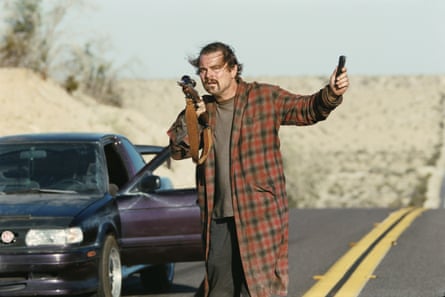
This also meant that Warner released some major flops during the last few years, including The Bride!, Supergirl and the recent Digger, which may have sealed their fate in Ellison’s eyes. (As the producer of sequels to Top Gun and Days of Thunder, he likes his Tom Cruise in big, rumbly vehicles, not addressing the climate crisis!) 2026 was a particularly bleak year for Warner at the box office. More than half their titles were outgrossed by Coyote vs. Acme, a project that CEO David Zaslav wanted binned completely before it was finally sold off to a smaller distributor.
A greater volume of releases should theoretically offset those kinds of big-money misses – and ensure that finished movies aren’t scrapped as tax write-offs, something that another possible penalty ($30m a movie that falls short of the benchmark) seems likely to hold off. But, again, Paramount’s current tastes for non-blockbusters only seem to extend as far as horror cheapies, with an added dose of shameless “apolitical” inspirational junk; Ellison doesn’t have a track record of delivering a diverse array of comedies, dramas and thrillers that might appeal to adults. That’s what ultimately feels so dispiriting about the merger, even as it shows a heartening bullishness over the theatrical business. Warner Bros, a corporate studio with plenty of ups and downs but an overall legacy of cinema history, is being absorbed by Skydance, a company that still treats the movie business – even one that has seen major recent hits like Obsession, The Odyssey and Project Hail Mary – like it can be tentpoled up to the moon.
The nightmare scenario is a 30-movie theatrical slate that looks more like a streaming service’s lineup of assembly-line “content”, only minus the kinds of passion projects that Netflix and Apple have been known to finance as a lure, and maybe plus a whole lot of AI designed to cut costs. After all, Ellison has indicated that he wants Skydance to serve as a tech company as much as an old-fashioned media monopoly – a dystopian fusion that leaves little room for creative or consumer upside. It’s hard not to wonder if the most successful outcome at this point would be failure – which isn’t off the table with $80bn of debt that needs immediate attention. In the meantime, moviegoers might have to comfort themselves with one surprising takeaway: that the ego and greed driving endless entertainment-industry mergers still somehow includes making movies for theaters, at least for now.
Explore more on these topicsShare
Reuse this content
