


Translated by AIVersione italiana
That evening, everyone was at the printing works, and everyone was holding their breath – calm yet furious – as they tore the offending article out of the issue about to go to press. All around were piles upon piles of Por Favor, the magazine which, from 1974 to 1978, served as the ironic, irreverent, satirical and militant voice of Barcelona’s anti-Franco resistance. Editors: Jaume Perich and Manuel Vázquez Montalbán. The creative force behind it all was a young and talented art director, Manuel Outumuro, and it was he who turned up every week at the police station’s censorship department to receive the ‘printing permit’ in General Franco’s Spain. It often happened that the issue would be approved, except for that one page, that headline, those words; and so, off they’d go to cross them out, and then it was a mad dash to the newsagents.
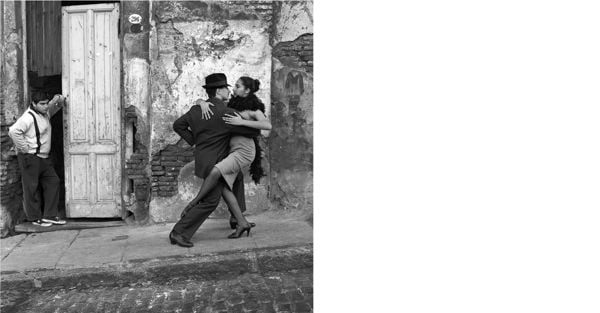
Uno scattodalla serie “Tango” (1989), di IsabelMuñoz, 3.850 €. (Courtesy Galleria Admira)
Fifty years on, in a different Spain and in a different life – for he has become one of the most original portraitists and fashion photographers, much loved for the classic yet modern quality of his vision – it is Manuel Outumuro himself who invites us to discover the photography that, from the early 1960s to the late 1970s, from the final years of the dictatorship to the death of the Caudillo, right through to the upheavals of the transition, the ‘movida’ and beyond, has chronicled and continues to chronicle the history, the soul, the faces, the bodies, the dance, the music, the masculine and the feminine—both within and beyond the conventions, both archaic and revolutionary—of the land of Cervantes and the detective Pepe Carvalho. A form of photography – let us say this straight away – that is rare and precious for the calibre of its creators, for the role it played when the image was truly political, and also for the energy it has managed to gather around itself thanks to a generation of deeply committed curators and gallery owners, amongst whom, not coincidentally, there are many women.
Loading…
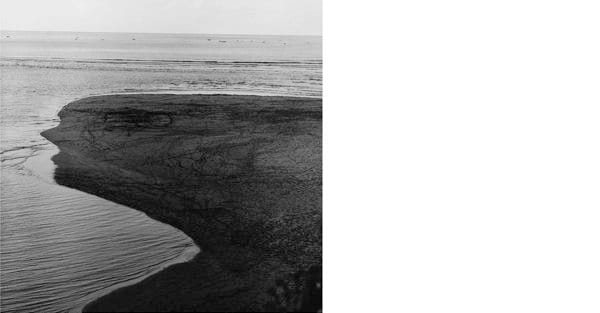
“CantabrianSea. Basque Country” (1977), di Ferran Freixa, 1.500 € in edizione di 10 esemplari. (©Arxiu Ferran Freixa)
In short, a photograph capable of capturing its era so well that it has become part of a cultured, original and intelligent collection – one that is also shrewd in its purchasing and investment strategy, given that prices, for vintage pieces for example, are still affordable. In his studio in the Barrio neighbourhood, a stone’s throw from Barcelona’s Centre for Contemporary Culture (CCCB), Manuel Outumuro is finalising the selection for his new project: a magnificent book and exhibition, due to be ready by the end of the year, focusing on the masterpieces of the Royal Academy of Fine Arts of San Ferdinando in Madrid. On the walls and within the pages of the books, neatly arranged on the tables, are the faces of the new Spain – intense, young and international – from Javier Bardem to Penélope Cruz, from Paco León to Rossy de Palma; and there are also portraits of Balenciaga’s designs, reimagined for the great couturier’s museum in Getaria, in the Basque Country. This is Spain today: freedom to be oneself, to step back in time and to imagine the future. But back then, in the 1970s, what was Spain like? ‘Horrible. At eighteen I was already taking part in demonstrations, and there was insane violence; in the blink of an eye you’d find yourself in prison – and I was there. Just to give you an idea of the level of censorship, we weren’t allowed to use the word ‘democracy’ – it was banned, considered obscene by the regime to the point that we’d had to remove it from the masthead of Por Favor Democracia, which was the magazine’s original name. It was the height of irony to ask for ‘democracy, please’, and an almost sublime irony to leave only that very polite Por Favor’, recalls Outumuro. At the time, there was another place in Barcelona where one could dream of an unprecedented and intoxicating freedom, the Bocaccio – with just one ‘c’ – a nightclub, political forum and literary salon in a basement at 505 Calle de Muntaner where, as Manuel recalls, ‘we could imagine life in the rest of Europe. An open window, fresh air. I was underage at the time, but the bouncer was a friend of my father’s and would let me in: ‘Manolo, just say you’re twenty-one, mind you.’ The music was wonderful, an eclectic mix of disco, baciata, sophisticated pop and bossa nova’. At the Bocaccio, the famous Gauche Divine – the anti-Franco intellectual faction, voluptuous, intelligent and libertarian – danced, thought and protested, alongside architects such as Ricardo Bofill, Oriol Bohigas and Beth Galí, communication historians such as Román Gubern, illustrators and graphic designers such as Toni Miserachs, models such as Elsa Peretti, who had fled Italia, writers such as Rosa Regàs and singer-songwriters such as Guillermina Motta i Cardona; a sensational photographer had also appeared, Colita, the stage name of Isabel Steva, a Barcelona native, born in 1940.
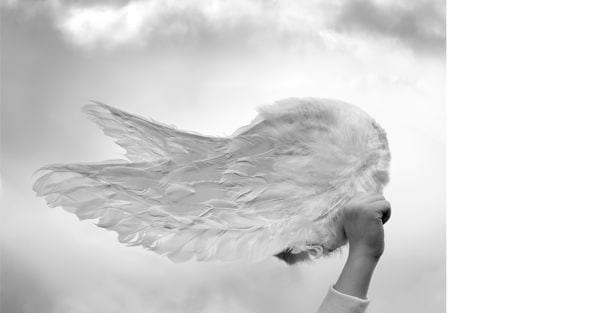
“The AngelI Never Was” (2024), 2.500 €, entrambe in edizione limitata di25, di Manuel Outumuro (©Manuel Outumuro)
A few minutes’ drive, a change of scenery, and we’re in the Sarrià-Sant Gervasi neighbourhood: a coffee, lunch at the Menudo Pau restaurant, at number 1 on the beautiful Plaça Sant Vicenç, and we’re about to set out in search of one of Spain’s very first female photographers, who made her debut in the 1960s, a figure so immediate and profound that she understood that the light to counter the darkness of tyranny was to be found amongst the people – the simplest of them – and amongst other women capable of encapsulating, in a single glance or a dance step, sensitivity, pride and independence. Francesc Polop, a sculptor of extraordinary material power – his studio is at number 32 Cornet i Mas – but above all the director of Colita’s archive and art director of some of her most important books, speaks to us about this with the love and admiration of someone who knew Colita intimately. Francesc Polop, a sculptor of extraordinary material power – his studio is at 32 Cornet i Mas – but above all the curator of Colita’s archive and art director of some of her most important books. We shall mention at least two: Antifémina, a reissue of a historic book published in 1977 that immediately became a cult classic and sold out, and Carmen Amaya 1963; the dedication on the first page is a statement of artistic intent in itself: Gracias, Carmen. ‘Gracias, Julio. Yo no olvido’ – I shall not forget. So, what has Colita never forgotten? ‘To recognise and respect her talent, to defend it in a world that was, at the time, made up solely of male photojournalists,’ says Francesc. ‘Just to give you an idea, at one point during the making of the 1963 film Los Tarantos, the official set photographer had asked the director, Francisco Rovira Beleta, to get ‘that little girl’ out of his way, guilty of having taken an extraordinary series of portraits of extras’. The film, known in Italian as Con odio e con amore, which was nominated for the 1964 Oscar for Best Foreign Language Film, marked Colita’s decisive encounter with Carmen Amaya, a flamenco revolutionary appearing in her final film and during the last months of her life. The young photographer’s portraits are tragic, true, carnal, passionate – in a word, gypsy-like – and it is this ‘measure without measure’ that would guide Colita through her forty years of reportage: humanist because it is rooted amongst the people, and feminist because it always stands on the side of women. Let us leaf through the pages of *i* *Antifémina* */i*; it feels as though it came out only yesterday: it speaks of underpaid labour, of the family as a prison, of marriage as a refuge, of the female body torn to pieces – a magnificent tool for driving the purchase of other things. A brief summary of her thinking: ‘The ideal woman should be burnt alive like a witch. The ideal woman is a patriarchal invention. We are rebels, imperfect and real.’ Witches – a category of women to bear in mind. It is the next stop on our journey.
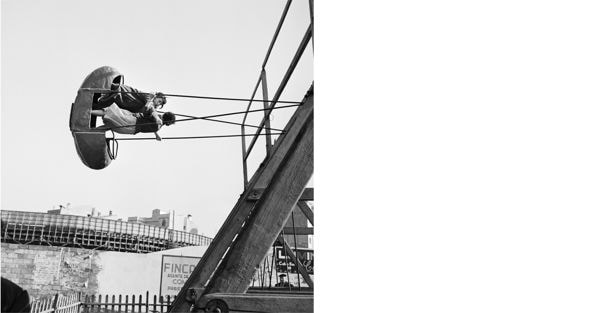
“Terrassa” (1953), di Ramón Masats. (Courtesy of the Ramón Masats Estate and Galería Alta)
They, too, could be las nuevas brujas, the new witches portrayed by Joana Biarnés and featured on a page of Pueblo in 1971. Strong, smiling, confident and feisty women – no one can stop them – and they are the women of the Fundación Photographic Social Vision: Silvia Omedes, director; Marina Balagué, head of archives; and alongside them, Imma Cortés, Valeria Fossati, Alice Monteil, Mireia Plans, Teresa Martelo, Inés Muñoz, Maria Planas, Isabel Cruz, Susana Sors, Mireia Carbonell, Teresa Vallbona, and yes, there is also a man, Carlos G. Vela, head of communications.
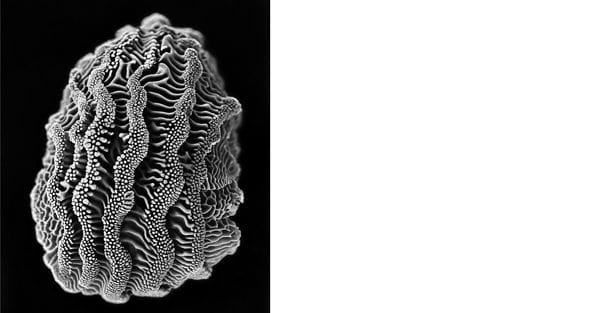
“Microantozous galapagensis”, di Joan Fontcuberta, 6.000 €. (COURTESY Galleria Cartacea)
This year, the Fundación, based at Villa Alegre – a charming early 20th-century residence – celebrates its twenty-fifth anniversary: a quarter of a century dedicated to promoting documentary photography and to the commitment to creating a more democratic, more aware and more engaged society – one that is better informed. In the view of Silvia Omedes, curator, publisher, photographers’ agent and cultural manager, who studied art at the New School for Social Research in New York, photography remains a powerful tool, which is why she has chosen to preserve and promote the archives of those photographers – ten so far – who have chronicled the profound changes in Spanish society. ‘I am thinking of pioneers such as Joana Biarnés, regarded as Spain’s first female photojournalist, or Isabel Azkarate, the first female photojournalist in the Basque Country, a pupil of Lisette Model and a witness to the LGBT community, or Anna Turbau, another splendid trailblazer who, in the 1970s, documented the Galician countryside and the major demonstrations for democratic rights. But I also think of masters such as Joaquín Tusquets de Cabirol, a highly cultured amateur photographer active in the 1940s and 1950s, and his solo exhibition, La forma elocuente, on display until 6 September at the Fundación Mapfre in Barcelona. And I cannot fail to mention masters such as Leopoldo Pomés, Oriol Maspons, who was also active in advertising, or Ferran Freixa, to bring us closer to the present day, with a reflection on the essence of photography – shadow and light, form, presence, memory, and resistance to the passage of time – explored through an extraordinary meditation on laid tables.
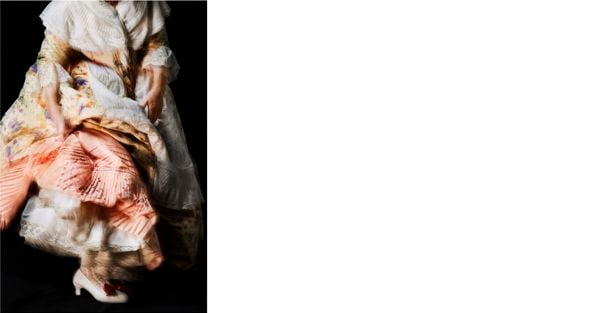
Un costume tipico di Murcia in uno scatto di Txema Yeste, pubblicato su “Dream Magazine”, rivista fondata dallo stesso fotografo e dalla direttrice artistica Cristina Ramos. (Courtesy of the Artist and Galería Alta)
‘And then in our collection we also have an outsider, Jacques Léonard, a Frenchman; his reportage on the Romani community is legendary, but his wife was a Romani woman, Rosario Amaya, Carmen Amaya’s cousin, and it is this emotional and cultural intimacy that allowed him to be on the inside and capture truly memorable images.’ Intimacy – a magic word, indeed the very word around which this highly original collection is built. Intimate and intense – and, we might add, indispensable – are also two immensely talented artists: Ramón Masats, the pre-eminent chronicler of 1950s and 1960s Spain, gifted with an exemplary modernity of composition, and the younger Txema Yeste, born in Barcelona in 1972, with an international background, first a photojournalist, then a highly original fashion photographer and the author of a compelling study of Spanish national costumes, entitled Folk Pride.
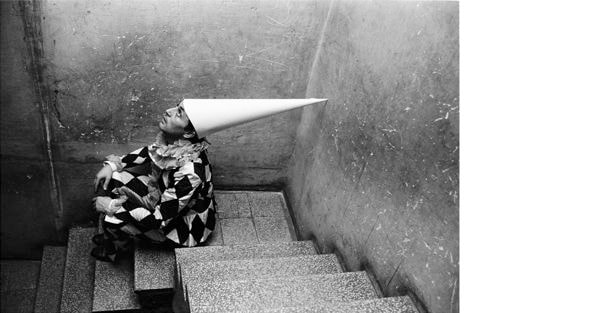
“Joan Ponç vestido de Arlequín”(Barcelona, 1965), di Colita, da 1.200 €. (©Archivo Colita Fotografía / Francesc Polop.)
Where can one find these masters? In one of the most elegant and prestigious galleries on the Iberian Peninsula, the Galeria Alta, founded in 2021 by Pancho Saula and Michelle Ferrara and located in Anyós, Andorra, at an altitude of 1,342 metres – a place well worth visiting for the beauty of the landscape alone. Enrica Viganò, an independent critic and curator – founder of the Admira gallery, a Milan-based venture with an international outlook – also began travelling to Spain early on, right from the first edition of PhotoEspaña in 1998. Since then, alongside truly intimate collaborations here too – such as that with Duane Michals – Enrica has chosen to showcase artists such as Chema Madoz, an interpreter of the most inexhaustible surrealism, and Isabel Muñoz, a Barcelona native and author of a landmark study on dance – naturally, tango and flamenco. Dance is a cosmos, almost a parallel universe – just as the world created by photography is parallel: true and false, material and pure illusion; yet we feed on illusions, to the point of intoxication, to the point where we can no longer do without them. After all, who would want to miss out on adding to their collection a work that is both a thesis and a provocation by Joan Fontcuberta, born in Barcelona in 1955 – a photographer, lecturer, essayist, curator and writer, all within a whirlwind constellation of roles? A visit to the Cartacea gallery in Bergamo, and there it is: the surprising The Milky Way, where stars and galaxies unexpectedly reveal the most ambiguous nature of photographic matter, given that that strange Milky Way is actually mould on a negative.
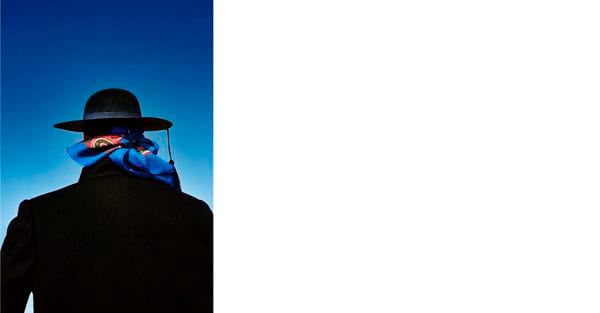
Altro costume tipico di Murciadi Txema Yeste, pubblicato su “Dream Magazine”. (Courtesy of the Artist and Galería Alta)
It’s lovely to keep images close at hand, and few would be willing to give up this pleasure. Certainly not Outumuro, who is also represented by the Fundación Photographic Social Vision (together they produced the book *i* *O anxo que nunca fun* ), and the conclusion of this journey belongs to him, not only because he began it, but because his memory is the most vivid. Manolo grew up in Galicia, raised by his grandparents, whilst his parents had emigrated to Venezuela. Above his son’s bed hung a portrait of his father and mother, deities of goodness and love. Every now and then, a letter would arrive from so far away, and little Manuel, holding the envelope between his fingers and folding it gently, would know whether there was a photograph inside alongside the sheet of paper. A face, a body, the idea of an embrace, the hope of seeing each other again one day. Por Favor, Fotografía.
Copyright reserved ©
Loading…
Loading…
Loading…
Newsletter
Notizie e approfondimenti sugli avvenimenti politici, economici e finanziari.
