

BBC/ Thea Traff/ Javier Hirschfeld
This year’s Toronto International Film Festival featured a host of talent – and, at the BBC’s exclusive photo studio, they discussed the projects that define their life and careers.
BBC/ Thea Traff
Warning: This article contains language that some people may find offensive
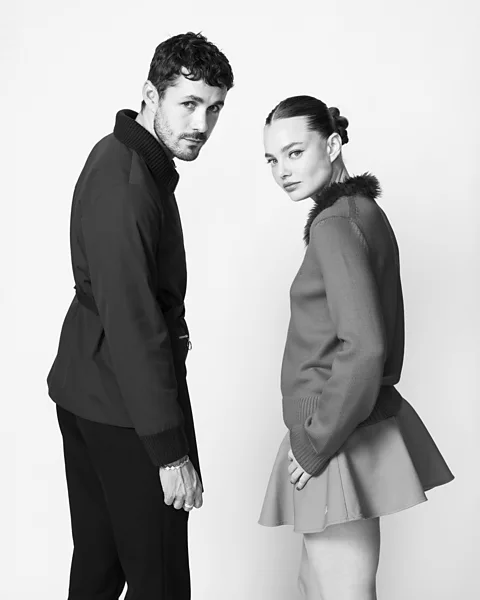
The Face of Horror – starsKristine Froseth and Jonah Hauer-King
What is the film in your career that means most to you?
Kristine: Sharp Stick, a film directed by Lena Dunham. It was a very personal story to her, but to me as well. I play this girl named Sarah Jo, who has arrested growth because of some trauma that she’s experienced in her life. I’m very interested in exploring trauma and the ways people cope with it, and [doing that film] to me was healing in its own way.
Jonah: A film I made this time last year called The Eden Express. It’s about Kurt Vonnegut’s son Mark and his descent into psychosis. The reason I mention it is because it isn’t out yet, so it’s all about my experience of making it and the process. It’s a really beautiful thing when a film goes out into the world, because then it becomes other people’s. But at the moment it still belongs to [all of us who worked on it] in a way, which is really nice.
BBC/ Thea Traff
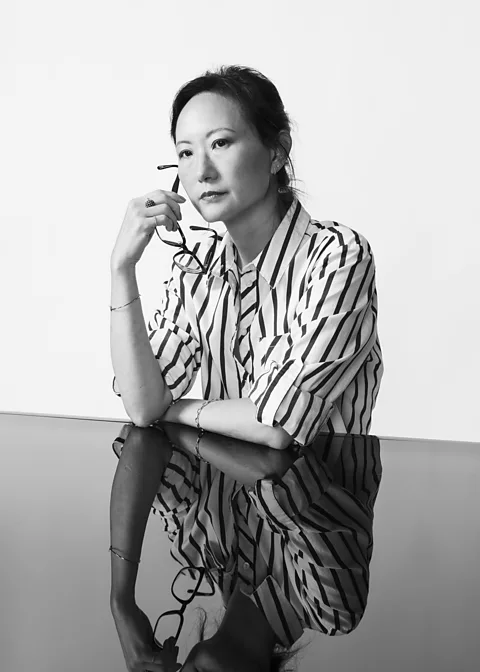
Bedford Park – director and writer Stephanie Ahn
What does this film Bedford Park mean to you?
It’s semi-autobiographical, and it’s incredibly meaningful to me because it says so much about who I was up until a certain point when I became a mother. It explores the conflicts I had growing up as a Korean American and what I went through in coming to terms with two very different cultures and finding synchronicity in that. It was a very challenging and painful process at times, but I finally got to a point in my life where [with this film] I can look back on and really examine it, and that was very cathartic.
BBC/ Thea Traff
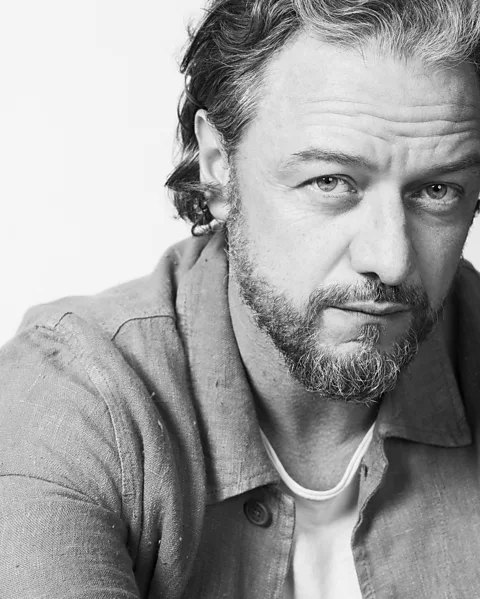
Faith – star James McAvoy
What is the film in your career that means most to you?
I think the [two] films that have meant most were probably Filth, because it was strangely quite a personal experience and character and exploration of mental health. And then Atonement, because those two characters that myself and Keira [Knightley] played just absolutely broke my heart and stayed with me. Atonement was also about the abuse of somebody from a low-income background, and the dangers of social mobility – mixing with posh people [laughs] – and I’ve experienced my [own] much more mundane versions of that.
BBC/ Thea Traff
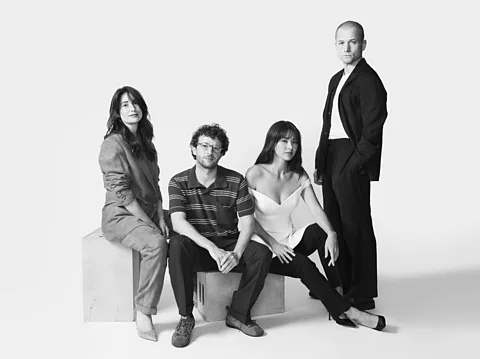
Everybody Wants to F*ck Me – stars Taron Egerton, Jessica Henwick and Charly Clive
What is the film in your career that means most to you?
Taron: [Elton John biopic] Rocketman was a time in my life where I really felt a sense of being able to expand into my own creativity. Prior to then, I felt the model of a leading man in film should be kind of unimpeachable and perfect and slightly veneered, and playing Elton, the way the character was written on the page, it was all about shadow – your fallibility, the things that you’re scared that you are, and the things that you’re scared you aren’t. It was a really important step on my journey to realising that the things that you perceive about yourself to be your weaknesses actually end up being your greatest strength.
Jessica: A film I did a few years ago called The Royal Hotel. I had been a fan of the director Kitty Green for a long time, and [it was incredible] to work with her on a project that really felt like it had something to say. It’s a brilliant study into power dynamics – specifically sexual power dynamics – and binge drinking culture in remote Australia. It had a shoestring budget, and we were in the Australian outback pretending it was summer in our bikinis, and getting blasted by freezing cold winds and sand. So it was a challenge, but I loved everything about it.
Charly: This one, written and directed by Jonathan Schey. I think it’s just properly British, funny, mad, intelligent, and interesting cinema, and I don’t think we’ve had a film like it maybe ever – and it rocks.
BBC/ Thea Traff
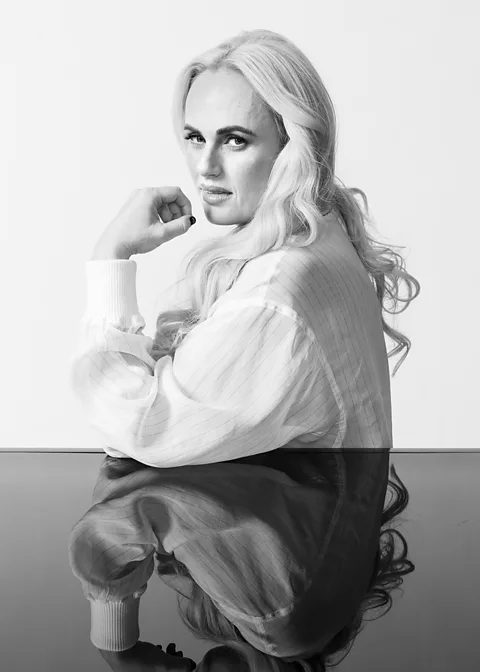
Girl Group – director and star Rebel Wilson
What is the film in your career that means most to you?
Probably my first job in Hollywood, which was Bridesmaids. I was just a girl from Australia, and came to America with one suitcase, and then I booked this movie. It was this ensemble of incredible women – incredibly talented comedians, improvisers and actresses. I felt I was the most junior person on that set, and I got to come in and experience what a big Hollywood comedy is. To me, getting that shot to just let loose and improvise with [director] Paul Feig and [producer] Judd Apatow and the gang was awesome.
BBC/ Thea Traff
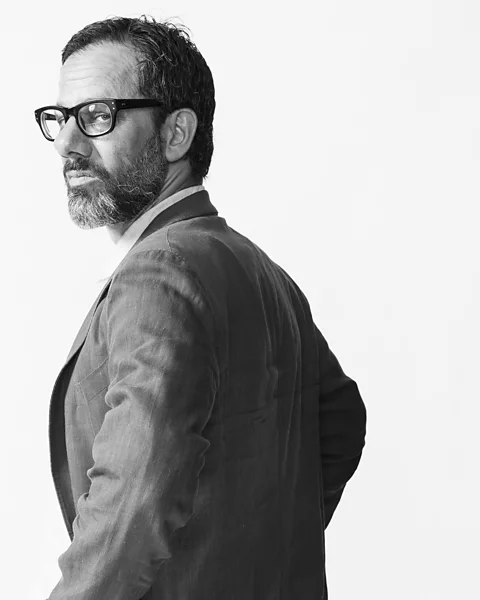
Rapinoe – producer Dan Cogan
Outside of your own work, what is the film that means most to you?
I’ve got to say it’s [documentary maker] Errol Morris’s first film Gates of Heaven. It’s about a group of people obsessed with creating a pet cemetery. It follows their very absurd journey to doing so and failing, and it explores why. It’s a philosophical masterpiece.
BBC/ Thea Traff
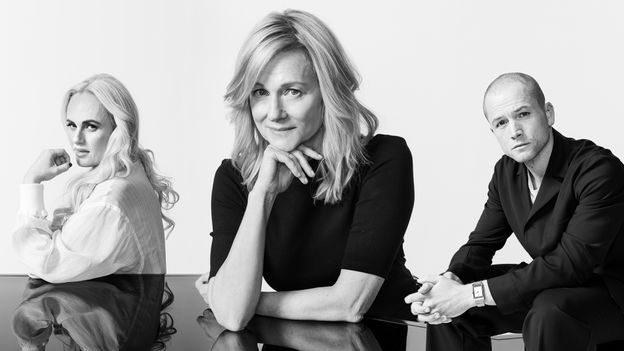
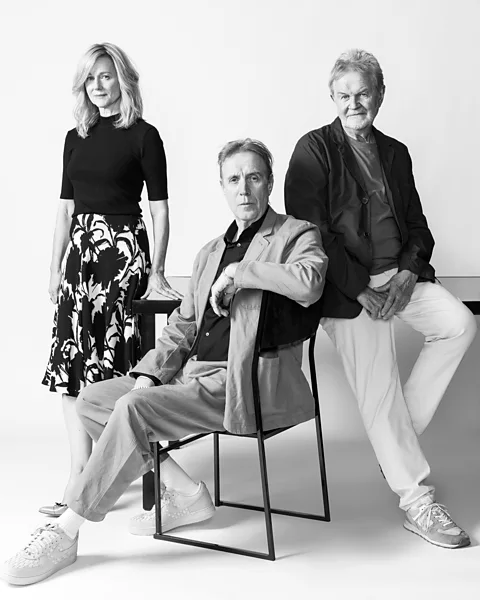
Onwards and Sideways – stars Laura Linney and Rhys Ifans
What does this film Onwards and Sideways mean to you?
Laura: Rarely am I conscious of a movie sort of changing my cellular structure, and this one certainly did: I came out a different person. I play Emma [who meets Rhys Ifans’s character Tony after they are both diagnosed with Parkinson’s disease]. Beforehand, I think I knew what most people know about Parkinson’s. What I did not know is that it is a very bespoke condition – there are 40 different symptoms that can take many different combinations, and everyone’s Parkinson’s is unique to them.
Rhys: It’s rare in this industry to feel on a regular basis that you’re really giving back, or doing something that’s genuinely going to impact people in a positive, long-lasting way. And I sincerely believe that this film will – [to help] everyone get a deeper understanding of [Parkinson’s] and how it impacts people in many different ways.
BBC/ Thea Traff
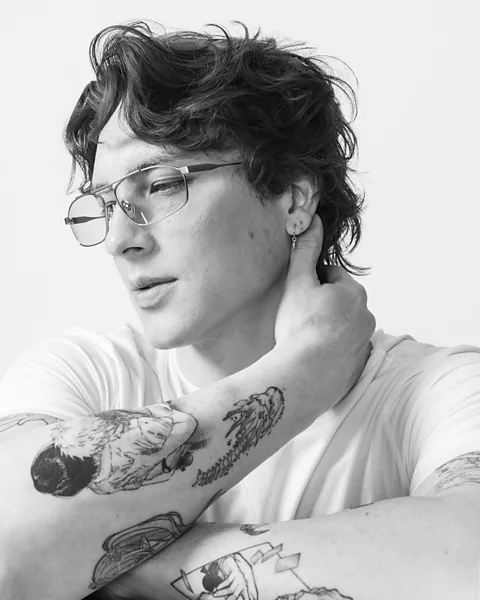
Closing Night – director Cody Fern
What’s your most underrated film?
Fairyland, which was produced by Sofia Coppola and written and directed by Andrew Durham. It’s a phenomenal film about a father in 1980s San Francisco and his young daughter during the time of Aids. I played a wayward lover. It was just a very special little project. It’s that kind of indie film that is very hard to get seen, but it’s really powerful.
BBC/ Thea Traff
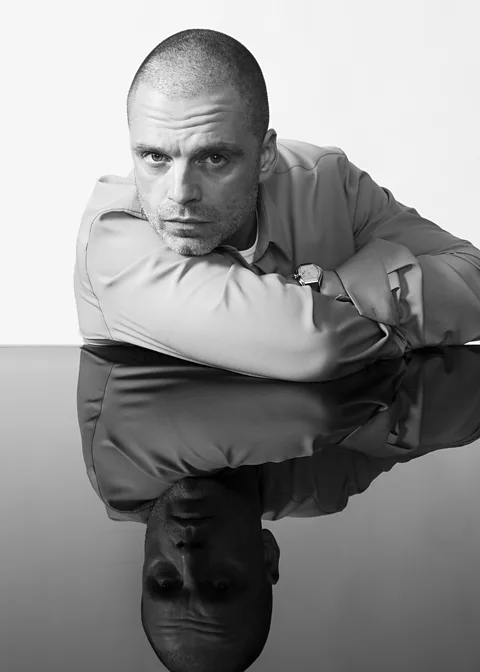
Fjord – star Sebastian Stan
Stan was attending the festival for his lead role in Cristian Mungiu’s drama about a married couple who relocate from Romania to a village in Norway, and come under scrutiny for the way they treat their children. It is the first time Romanian-born Stan has got to perform in his native language in a feature film. He recently told The Daily Show how meaningful that was: “I’ve been trying to connect to this country that I left a really time ago… I had to find my way back, and this film finally solidified that.”
BBC/ Thea Traff
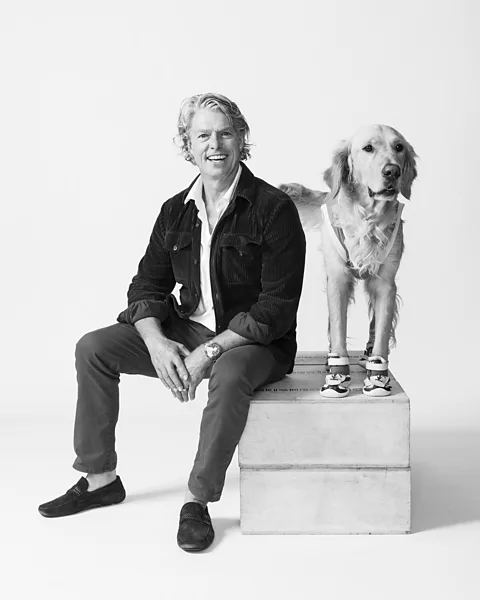
Air Bud Returns – director Robert Vince and star Buddy the dog
Outside your own work, what is the film that means most to you?
Robert Vince: Life is Beautiful is one of my favourite movies of all time, because it’s so positive and life-affirming, and those are the kind of movies I like to make and I like to watch. As for Buddy’s favourite film? [Buddy barks] He said it’s really the first Air Bud film, but he’s a little jealous of the original star!
BBC/ Thea Traff
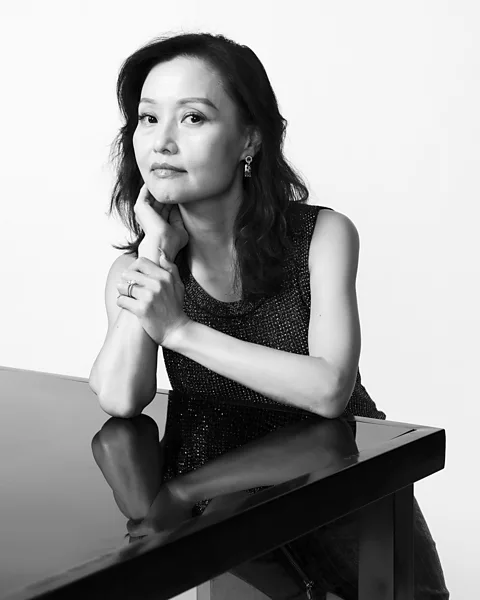
Josephine – producer Crystine Zhang
What is the film in your career that means most to you?
My favourite of all is Lee with Kate Winslet [about the war photographer Lee Miller]. I used to be a journalist, and I can imagine for a woman living in the 1920s, ’30s and ’40s how challenging her job must have been. And working with Kate was phenomenal: she’s such a collaborator. She actually got injured on day two but she said “no, I don’t need a break. Let’s go back to film, because we have schedules to meet”.
BBC/ Thea Traff
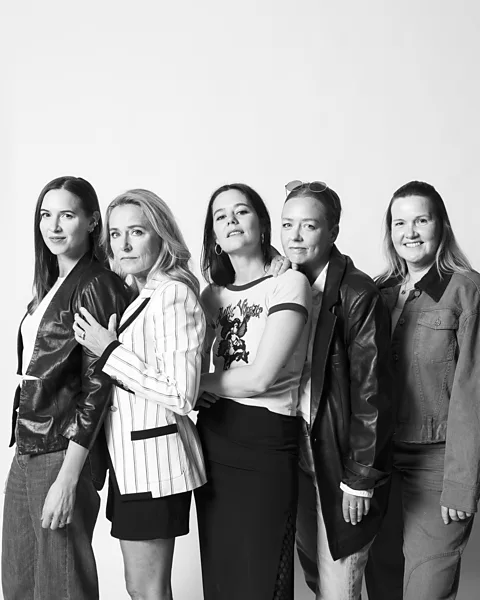
What Lies Between Us – stars Sidse Babett Knudsen and Asta Kamma August
What is the film in your career that means most to you?
Sidse: My first film Let’s Get Lost, which came out in 1997. It was black and white and all improvised. The director had an idea about doing this film about these three guys living together, just hanging out in the 1990s, and he asked if I could come up with a [female] story [for it] because I’m a gal. I was very obsessed with revenge back in the day – I thought it was a really juicy, nice feeling to play on. So I basically created my own storyline [around that]. It will always be very special to me for that reason.
Asta: I’d have to say The Hypnosis, which I made a few years ago and is fun, weird and interesting. I play Vera, who is a very uptight woman who goes through a hypnosis, and it completely changes her personality. It was a challenge as an actor because the new version of the character after the hypnosis is not afraid of social propriety and crosses boundaries.
BBC/ Thea Traff
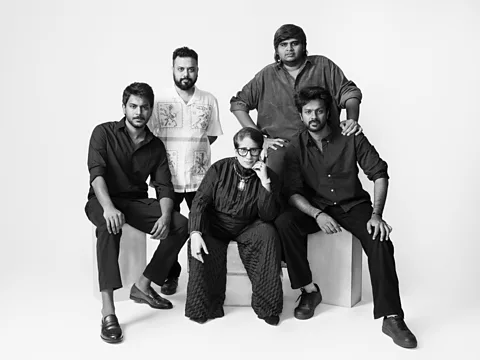
Dorothy – director Karthik Subbaraj
What is your most underrated film?
My 2018 film Mercury. It’s a horror thriller, but it has more going on than that. I wanted to make a film without any dialogue, and it’s about five students getting in a horrible situation. It was a very ambitious project, but it didn’t quite go down how we thought it would, so I would say it’s my most underrated.

BBC/ Thea Traff
Edward Said: Between Two Worlds – producer Sarah Mowaswes
What is the film in your career that means most to you?
It’s the film that I’m [at Tiff] for. It’s a portrait of the Palestinian intellectual Edward Said. It’s all based on archival footage, and as a Palestinian myself, it was a really gratifying experience of bringing this story to a wider audience. Edward is one of the quintessential Palestinian American figures and this feels like a really perfect moment to bring his voice back, and his intellect, and charisma and positivity.

BBC/ Thea Traff
Back in Black – star Ella Ballentine
What is your most underrated film?
The Monster, which I shot in the summer of 2015. It was an A24 horror movie directed by cult horror director Bryan Bertino, and it was just so special. I turned 14 on set, and I worked with Zoe Kazan who was a mentor to me not only as an actress, but also on how to be a woman in this world. It was all night shoots in pouring rain, and it was such a challenge for a young Ella. It felt so intimate and vulnerable, and it was hard work every day, but I feel it paid off.

BBC/ Thea Traff
The Man I Love – producer Caitlin de-Lisser Ellen
What is the film in your career that means most to you?
The Man I Love. It’s about an artist in New York City diagnosed with Aids [played by Rami Malek] who’s having one last gasp at life, through love and one final performance. We’re watching him go through those experiences, and then also see all the people that he touched along the way. My father worked on HIV research when I was growing up, and it was really an honour to be a part of a movie that deals with this subject.

BBC/ Thea Traff
Arne Goes to Space – director Lars Vega
Outside your own work, what is the film that means most to you?
Alexander Payne’s About Schmidt, starring Jack Nicholson. [Payne’s] films mean a lot to me because they have this quirky humour but also some depth, and really strong themes. They have been a big inspiration for me as a director, as have the films of the Coen brothers.

BBC/ Thea Traff
Below – showrunner Jesse McKeown and producer Jessica Rhoades
What is the project in your career that means most to you?
Jesse: It’s 100% Below. I’ve been around for a while, and I’ve worked on a lot of different shows in different genres, but this was the first project that really felt like mine from beginning to end. This was not based on anything except for my own life experience. It’s set on the island of Newfoundland, which I married into. I went there 18 years ago, fell in love with the place, and then met my wife, and my life was totally changed.
Jessica: [HBO series] Station Eleven. We spent six months here in Toronto filming it during the pandemic, and we were making this show about how art helps you live, and why we need it, and how coming together to make something has value. That had a real impact on me.
For more Culture stories from the BBC, follow us onFacebookandInstagram.
If you liked this story,– a handpicked selection of features, videos and can’t-miss news, delivered to your inbox twice a week.
Close Up
Toronto Film Festival
Features
