


Dialogue in modern production often comes with a huge caveat. With productions now watched on so many different mediums, the production process has had to evolve accordingly. It follows the same trajectory as music, which has long been streamed on a phone, played on super-high-fidelity systems, enjoyed on home Hi-Fis and blasted out of club PA systems. Mixes—and audio in general—now have to translate across all of these mediums while keeping every element audible and coherent.
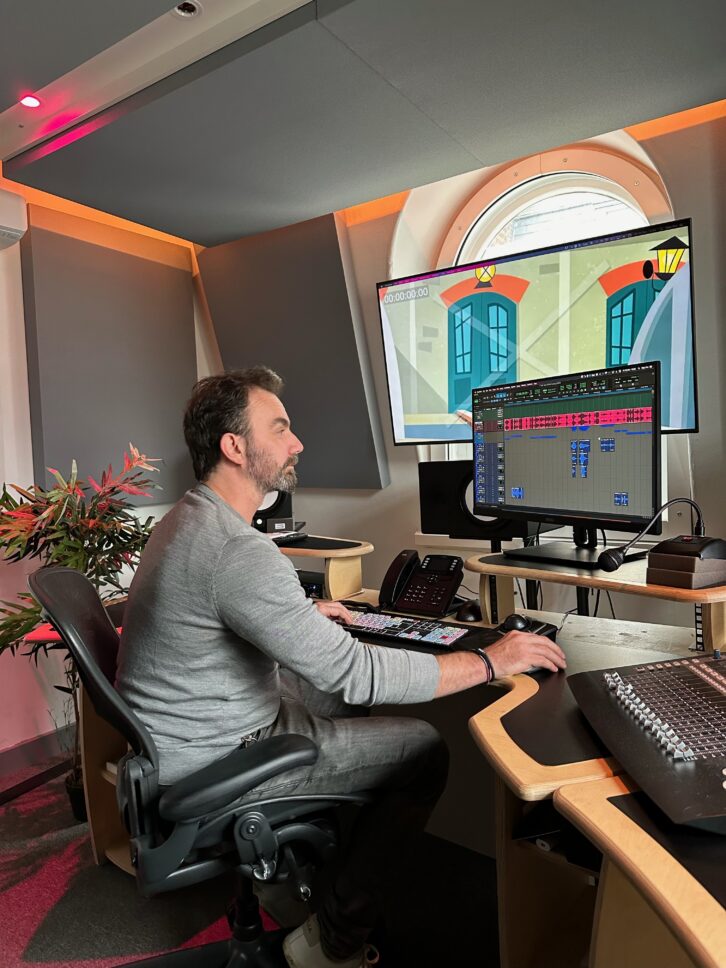
As dialogue specialists at The Voiceover Gallery, we are perhaps more sensitive to clarity than most. We all know the drawbacks of trying to watch an Atmos theatrical mix on a home TV. We are the ultimate sympathisers in the battle against the Nolan-esque treatment of dialogue, where it is pushed into the nether regions of the audio field, sitting somewhere between the gentle splashing of waves and the low rumble of a brass section, leaving viewers pressing rewind and reaching for the subtitles.
Thankfully, in our experience, animation is largely spared these problems. Dialogue is key, often punctuating moments as precisely as the most inflated sound design and music. In this sense, production is more straightforward, as so much of it is dialogue-driven. After all, what use is a series of carefully crafted gags if they’re completely inaudible? On our recent work for season two ofMonster Loving Maniacs, the creators were keen to establish from the outset that dialogue is the most important thing: punchy, fast, clear.
Because we cast, direct and record, we are always hyper-aware of the mix from its earliest stages. We cast and direct voices that will cut through an iPhone speaker, and shape performances that won’t struggle to claim their place when the mixer finally gets their hands on the material. We direct and record for clarity and punch, and we help the show’s creators and writers understand why.
Social viewing is also a strong consideration. Audiences are increasingly multi-screening, playingBlock Blastwhile watching the latest Netflix show and streaming YouTube at the same time. To catch their attention, clearly articulated dialogue with a strong attack is one of the best tools we have. Audio therefore has to communicate quickly and clearly in environments where there is competing noise, different speaker quality and potentially distracted viewing.
Nonetheless, challenges remain the same. Mixes have to comply not just with regional broadcast standards, but also with streaming specifications. As mentioned, the viewer has to be able to hear the mix clearly through more devices than anyone could count. As a result, careful workflow planning is essential, and audio production templates need to be set up accordingly.
From a production perspective, workflow planning is everything. A clear idea of the final deliverables is key. Whether it’s dialogue, edits or mixes, and naming conventions and templates, all of those elements should be decided and created as far in advance as possible. In many cases, this starts with the production company having a clear idea of what those deliverables look like, and making sure all parties involved are talking to each other so that assets are transferred correctly and efficiently.
Compliance matters too, whether that’s ISO 27001 or, more commonly in media, TPN certification. Many studios have high-security processes, and aligning with them early will help prevent major bottlenecks in production. In short, more formats usually mean more deliverables.
In general, we find that most production companies and audio post-production houses are well aware of this, and there is a good level of standardisation across the industry.
In animation in particular, clarity of dialogue is key, and with that in mind, it can make sense to work in the opposite direction to a theatrical release. Consider that the media is now often consumed on handheld devices first. A mix that is punchy and clear on a phone speaker is much easier to scale up for a soundbar, a home cinema or a theatre than a big-screen mix is to scale down. Start small, and the higher-end versions largely take care of themselves.
Most houses understand the problem. The difference is planning for it from the first casting session, not the final mix. Get the voices, the performances and the recordings right, and the mix has a chance of working wherever it’s heard.
