


Netflix, Google, Meituan, ByteDance, and the short-drama ledger.
ByJinPublished about 2 hours ago•6 min read
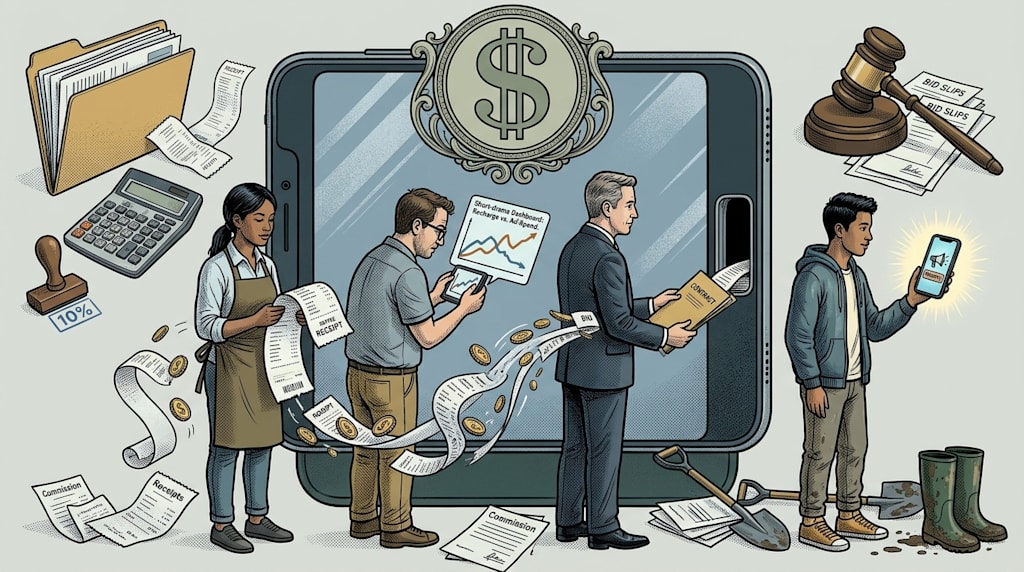
In a conference room in Seoul, a production company representative flips through a contract. The terms are detailed: number of episodes, delivery date, cost cap, global rights ownership. The platform buys at production cost and leaves a slice of profit above cost. The industry summarizes this as “cost plus 10%.” The production company boss puts a calculator on the table. He tallies art and props, then post-production effects, then the salaries due next month. The 10% keeps the company alive to open another production.
In another office in Xi’an, a short-drama boss stares at the backend. The recharge curve shoots up. The ad-spend curve almost hugs it. In eight days, recharge revenue tops 100 million yuan. He exports the Excel sheet. His finger stops on the ad-spend column: more than 90%. After platform revenue share, shooting, actors, and team costs, net profit is a few million. Another screenshot on his desk shows eleven dramas in two months earning 9.9 yuan. He puts both images in one folder. The folder is named “Next One.”
The difference comes down to who holds the distribution gateway, who bears uncertainty, and who allocates the profit pool.
I. Netflix’s 10%: Procurement Logic
Netflix commissions Korean companies to produce Korean dramas. It wants stable delivery, exclusive rights, and finished shows it can distribute globally. The production side wants to avoid a total loss. The profit slice in the contract takes over part of the production risk. The platform bears market-demand risk. The production company bears delivery risk.
The art director buys a lamp and keeps the receipt. The post-production company delivers VFX shots and passes the review sheet. At month end, the production company boss reads the bank statement, pays the location balance, then actor fees. The 10% lands on the last line. It does not guarantee riches from one hit. It guarantees the company can keep writers, directors, editors, and VFX staff on payroll.
Squid Game exploded globally. The biggest commercial upside went to the platform. The production company got production profit and a ticket into the next show. The split is unequal. It still acknowledges one fact: the production side needs predictable profit, or the supply chain breaks.
II. GSP: Keep Advertisers From Bidding Themselves Distorted
In Google’s early search-ad auctions, advertisers entered the maximum price they would pay. The system ranked them. The winner paid the second-highest bid plus 0.01.
The advertiser opens the backend report, sees the actual cost per click below the maximum it entered, and relaxes. Next time it still enters its true valuation instead of probing the system’s bottom line every day. The platform gets long-term stable auction revenue.
The platform did the math. Letting advertisers keep part of their cost is more sustainable than forcing everyone to submit fake bids. Second price plus a minimum increment reduces the winner’s curse and stabilizes the long-term transaction between advertisers and the platform.
III. Meituan’s Commission: The Ledger of a Latte
The coffee shop owner clips Meituan receipts into the ledger. A latte: ingredients, rent, platform commission, rider delivery fee, late penalties. He subtracts line by line and circles the number left at the end.
I ask him whether he can just leave the platform. He says no. People in nearby office buildings open their phones and check the platform list first. If the shop is not on the list, the lunch crowd does not come in. The platform bets he cannot afford to close. It bets that if a rider quits, more will come. It bets that users will not walk 500 meters extra to save two yuan.
The platform does not negotiate with every merchant. It faces a supply pool. If this shop rejects the commission, the shop next door is waiting to go live.
IV. ByteDance: Tips, Tokens, and Ad Spend
A creator receives 100 yuan in tips. The platform takes its share. The number that arrives is smaller. He makes AI videos with Seedance. Each generation costs a few tenths of a yuan. He runs dozens. The balance drops. The video goes live. He buys paid traffic with a 5,000 yuan budget. The backend shows it consumed. Views rise. He stops spending. Views fall.
He thinks he is making content. The platform knows he is producing ad inventory. Tip sharing, AI tokens, and paid traffic move money from the creator’s account into the platform’s account. The platform’s main business is still selling ads. Content is the production process for ad inventory.
The creator backend has a “Promote” button. Next to it is the balance. If the balance is too low, the video sits there. The platform does not urge him to spend. It does not stop him either. The supply pool still has a queue.
V. Peerless: Over 100 Million in Recharge, a Few Million in Net Profit
In 2023, Xi’an Fenghang Culture’s live-action short drama Peerless topped 100 million yuan in recharge revenue in eight days. The boss exports the backend data. The recharge curve and the ad-spend curve almost overlap. Paid traffic buys more than 90%. The rest is split between platform and production side. Then come shooting, actors, and team costs. Net profit is a few million, still subject to internal division.
Short-drama companies look more like ad-material suppliers. Recharge revenue over 100 million is not the production side’s income. It is the cash flow of the paid-traffic system. The platform, the traffic-buying system, and the traffic owners take the certain returns. The production side takes the uncertainty. A hit leaves a few million after traffic and costs. A miss leaves zero.
A screenshot showing eleven dramas in two months earning 9.9 yuan circulates in a group chat. Someone asks whether they should spend on the next one. Someone replies: spend. Peerless’s 100 million recharge is circulating in the same chat.
VI. The Executive Director With 120,000 Yuan
A million-yuan ad project passes through layer after layer. By the time it reaches the executive director as Party E, 120,000 yuan is left. On the phone he says: this job pays 120,000. Are you taking it? If not, I will find someone else. The other side takes it. He subcontracts part of it out again.
The contract is signed. The shoot date is set. The platform squeezes the producer. The producer squeezes downstream. Downstream squeezes further downstream. Everyone thinks they are integrating ree executive director breaks 120,000 into location, equipment, actors, and post-production. He leaves himself a labor fee. Then he posts in the group: “Next time you have work, call me.”
VII. Why Platforms Dare to Squeeze
A short-drama crew hiring an executive director receives dozens of résumés in a day. In paid-traffic groups, some borrow money to buy volume. Some post screenshots of backend spend. The platform does not need to squeeze every person. It needs the supply pool to be big enough. If you do not do it, someone will. If 120,000 is too low, someone takes 80,000. If paid traffic is expensive, someone borrows money to spend.
Everyone thinks they will be the next hit. Losers do not speak. Hits get forwarded again and again. The platform sells possibility. Stable return is not on offer. Content can be produced infinitely. Users’ attention and the platform’s recommendation slots are limited. Whoever holds the distribution gateway holds pricing power.
VIII. The Shovels Have Changed Material
During the American gold rush, the people who made money sold shovels and rubber boots. Today the shovel sellers are paid-traffic systems, compute, templates, and training courses. The gold diggers change batch after batch. The shovel sellers remain the same few.
The coffee shop owner clips the Meituan receipt into the ledger and turns the page. The short-drama boss sends the 9.9 yuan screenshot to the group and asks whether to spend on the next one. The executive director signs the 120,000-yuan contract and writes “partially subcontracted” in the notes. In the creator backend, the ad-spend number keeps ticking.
