


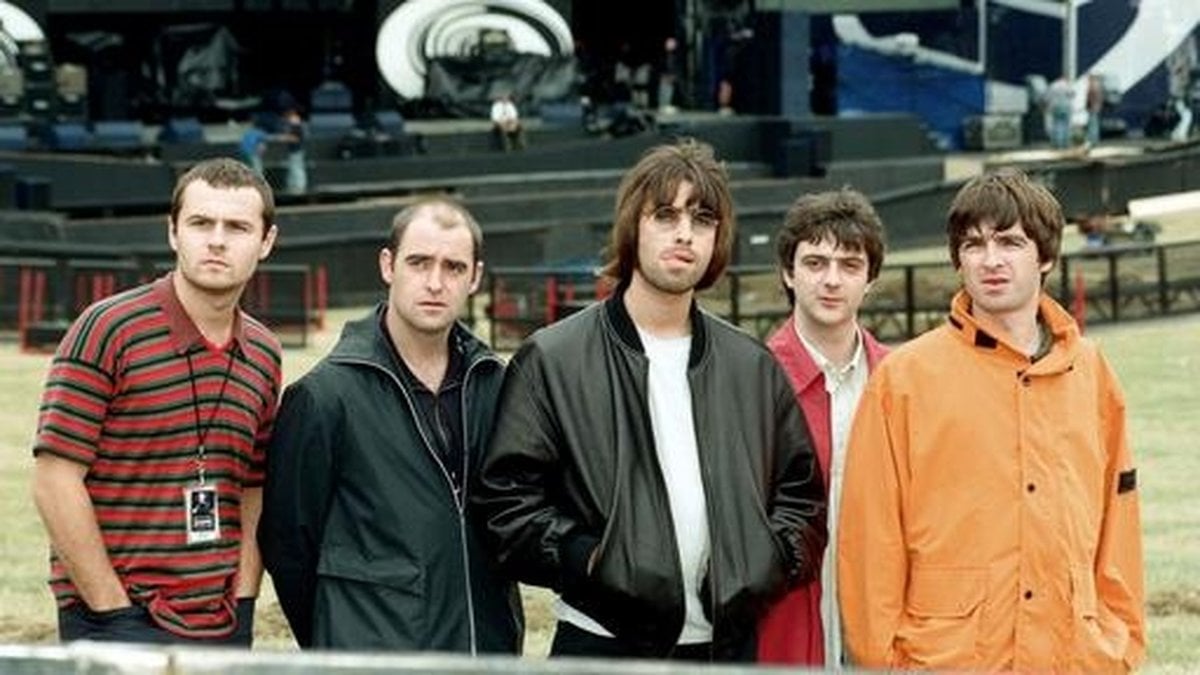
The Venice Film Festival has always been the place where cinematic legends are made, but in 2026, it’s the documentaries—rather than the usual parade of A-list actors—that have stolen the spotlight. This year’s lineup is bursting with nonfiction films that don’t just chronicle history, but make it, and nowhere is that more evident than in the much-anticipated Oasis reunion documentary, which captures the band’s triumphant return to the stage after decades of rumors and sibling rivalry.
According to The Hollywood Reporter, the festival’s documentary slate is its most ambitious yet. From Alex Gibney’s four-hour deep dive into the world of Elon Musk to Disney’s intimate chronicle of Oasis’s reunion, the nonfiction films in Venice this year are not just about famous faces—they’re about moments that define culture. There’s even a politically charged entry, NAZA, which examines Israel’s military actions in Gaza, and Laura Poitras’s They’re Here, an ICE documentary that’s already making waves. But among these heavyweights, the Oasis film stands out—not just for its star power, but for the nostalgia and drama it evokes.
The Oasis documentary, titled Don’t Look Back in Anger, takes audiences on a journey from the band’s record-breaking Knebworth gigs in 1996 to their rumored upcoming return in 2027. The original Knebworth concerts were a phenomenon: over two nights, 250,000 fans packed into the Hertfordshire park, making it the largest open-air concert in UK history. As reported in a personal account published on September 3, 2026, by a fan who attended the first night at age 17, “This is history, right here, right now. This is history,” Noel Gallagher declared from the stage, and he wasn’t exaggerating. With 2.5 million people scrambling for tickets—one in every 20 Britons at the time—the demand for Oasis was unprecedented.
The 1996 concerts are widely seen as the zenith of the Britpop era. The crowd, decked out in bucket hats, Stone Island jackets, and Adidas tracksuits, sang along to every word of anthems like “Supersonic,” “Cigarettes and Alcohol,” “Don’t Look Back in Anger,” “Live Forever,” and, of course, “Wonderwall.” The festival atmosphere was electric, with support from acts like the Chemical Brothers, Manic Street Preachers, and the Prodigy. Backstage, the VIP area was a who’s who of 1990s pop culture—Kate Moss, Naomi Campbell, Jarvis Cocker, and more—complete with gourmet barbecue, ice cream vans, and goodie bags filled with Oasis and Levi’s merch, disposable cameras, and mini bottles of spirits.
Fast forward nearly thirty years, and the Gallagher brothers are once again at the center of music world speculation. Rumors are swirling about six possible Oasis dates at Knebworth in September 2027—a full-circle moment that would see the band return to the site of their greatest triumph. The demand, if anything, is expected to be even more intense than in 1996. As the fan reminisced, “I’ll be trying to get tickets for their return along with hundreds of thousands of other nostalgic fans… even though they’ll definitely set me back more than 50 quid.”
But it’s not just Oasis that’s making this year’s Venice Film Festival a nonfiction powerhouse. Brad Pitt, an avowed architecture enthusiast, has stepped in as executive producer for Wim Wenders’ 14-year-in-the-making documentary portrait of Peter Zumthor, the Swiss architect behind the new Los Angeles County Museum of Art. This film is another gem in a documentary lineup that includes stories as diverse as Barbara Kopple’s Union Town, a cinéma vérité look at New York delivery workers fighting for their rights against corporate giants; Everest: The Other Side, which follows two mountaineers’ audacious attempt to climb and ski the north face of the world’s tallest mountain; and The Truffle Hunters duo’s romantic romp through Burgundy’s wine country.
Takashi Miike, known for his prolific and genre-hopping fictional films, makes his documentary debut with Shumei: The Living Legacy of Kabuki, offering rare access to Japan’s traditional theater world. Julia Loktev’s My Undesirable Friends: Part II – Exile provides a six-hour immersion into the lives of independent Russian journalists in exile. Meanwhile, Russell Crowe turns the camera on himself and his globe-trotting rock band in what festival chief Alberto Barbera calls the actor’s “most personal” film yet. There’s even Erik Shirai’s Sumo: Spirit Weighs Nothing, which takes viewers inside the closely guarded world of sumo wrestling, and Robert Greene’s Too Much Sugar, a strikingly original meditation on fatherhood and masculinity.
Venice’s commitment to documentary film isn’t new, but it’s never been more pronounced. The festival has a storied history with nonfiction, dating back to its very first edition in 1932, when the Dutch avant-garde documentary Rain closed out the inaugural event. Yet it was under the stewardship of Alberto Barbera, who returned as artistic director in 2012, that documentaries began to compete for top honors. In 2013, Errol Morris’s The Unknown Known and Gianfranco Rosi’s Sacro GRA were both in the main competition, with the latter winning the prestigious Golden Lion. As Barbera explained, “My impression is that the financial resources available for making documentaries have increased, as a result of growing demand from streaming platforms but also increased interest from the public, which is now much more willing to watch nonfiction films of good quality.”
This year, Venice has doubled down on its documentary focus with the introduction of the new “Film on Films” strand. Here, audiences can experience Luca Guadagnino’s seven-hour meditation on Bernardo Bertolucci, Sophie Fiennes and Slavoj Zizek’s The Pervert’s Guide to Utopias, and a tribute to cult director Seijun Suzuki. The festival has also shown a willingness to embrace politically charged and diverse perspectives, screening Palestinian, Ukrainian, and Israeli films without succumbing to calls for blanket bans. Alexander Rodnyansky, a Ukrainian director and producer, praised Venice’s “ability to invite filmmakers with very different—or even opposite—political positions and cultural points of view, and put their work in conversation.”
Rodnyansky himself is producing Israeli documentarian Amos Gitai’s The Road to Jericho, which will premiere out-of-competition and explores the country’s threatened Bedouin community while reflecting on the Israeli-Palestinian peace process. “These are turbulent times, and a festival should try to reflect the polarization of the societies we observe and continue the conversation using artistic means,” Rodnyansky said. “It’s a very simple mission, and I think Barbera inherited that legacy and has continued to enrich it in a brilliant way.”
With its eclectic, daring, and deeply human selection of documentaries, the 2026 Venice Film Festival isn’t just making a statement about the power of nonfiction cinema—it’s giving audiences a front-row seat to the stories that define our age, from the anthems of Britpop to the struggles and triumphs of societies around the globe.
