


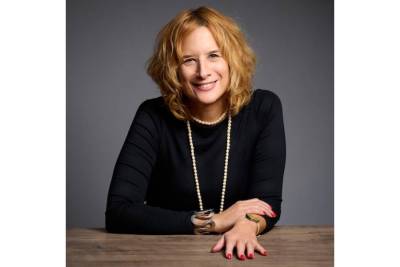
HERCEG NOVI: FNE spoke with Montenegrin producer and director Marija Perović about the Montenegro Film Rendezvous and its importance in developing a strong network of professionals in Montenegro and the region.
The 3rd edition of Montenegro Film Rendezvous (22 – 28 August 2026), organised by the Film Centre of Montenegro in partnership with the Ministry of Culture and Media, the Municipality of Herceg Novi, and JUK Herceg Fest, brought together prominent film authors and professionals, representatives of national film centres, European funds, festivals and leading organisations from the film and audiovisual industry in Herceg Novi.
Marija Perović had two projects at Montenegro Film Rendezvous, and the film that she coproduced, Our Father / Oče naš (Serbia, Italy, Croatia, North Macedonia, Montenegro, Bosnia and Herzegovina) by Goran Stanković (produced by This and That Productions, coproduced by Nightswim, PomPom Film, Dream Factory, Kino, Srđan Novi Film, and Cineplanet) won major awards at the 39th Herceg Novi – Montenegro <a href="https://cinemamix360.com/2026/09/06/venice-film-festival-shines-spotlight-on-documentaries/" title="Venice Film Festival Shines Spotlight On Documentaries”>Film Festival (22 – 28 August 2026) including best feature film and best director (shared).
Marija Perović is the first female director for film and TV in the history of Montenegro. She graduated film directing at the Faculty of Dramatic Arts in Belgrade, and she is the director and co-scriptwriter of three awarded feature films, including Breasts / Grudi(produced by Montenegro’s Open Box Studio in coproduction with Croatia’s Mitropa, Montenegro’s Meander Film and Serbia’s Visionary Thinking), which was Montenegro’s candidate for the Academy Awards in the Best International Feature category in 2021.
Her sophomore feature Look at Me / Gledaj me (produced by Visionary Thinking) was awarded for best directing of first or second film at the Alexandria Film Festival, Egypt in 2009. She also directed three TV series, produced in Serbia and Croatia, of which the miniseries Breasts / Grudi(2018) won a Special Award at the 14th Seoul International Drama Awards in 2019.
She is the co-founder of the Montenegro-based production company Kino d.o.o., through which she is producing her own films or coproducing regional and international projects. Additionally, she is a professor of Film and TV Directing at the Faculty of Dramatic Arts in Cetinje, University of Montenegro, a columnist for Pobjeda daily news, and an author and host of more than 80 episodes of various breakthrough television series.
FNE: What are your takeaways from the third edition of the Montenegro Film Rendezvous? Did you also take part in other activities beside the presentation of your projects?
MarijaPerović: The third edition of Montenegro Film Rendezvous was the highlight of the Herceg Novi Film Festival – Montenegro Film Festival for Montenegrin filmmakers. The production company Kino d.o.o. presented two projects: Embryo, the debut feature by director Maša Šarović and screenwriter Sara Đurović, produced by Vuk Perović and myself, which is currently in the work-in-progress phase; and Hotel Boka, a project in development, which I am directing and producing.
In addition to presenting these two projects, which I produced at different stages of development, I attended almost all of the masterclasses and events organised by the Film Centre of Montenegro during the three-day programme.
Asghar Farhadi’s masterclass and his conversation with Montenegrin filmmakers were both marvellous and highly valuable. Hearing about the obstacles he faced, as well as the extraordinary success of a director who has won both the Oscar and the Palm d’or twice, was a unique experience.
At the same time, the masterclass with the vibrant and joyful Nina Heartstone, a sound designer who has won two Oscars, offered a completely different experience, but one with many similarities. The same passionate approach was evident in the masterclass with Manuel Claro, the award-winning Chilean-Danish director of photography.
Finally, the case study of To Hold a Mountain / Planina by Biljana Tutorov and Petr Glomaz, Montenegro’s award-winning documentary, delivered the best message of all: the Montenegrin film industry can be part of world cinema.
FNE: How was it for you to showcase two of your projects as a producer there?
MarijaPerović:Embryo, a feature film currently in the work-in-progress and editing phase, was presented by Vuk and me as part of the showcase. We presented the project to a professional audience, including festival programmers, sales agents, distributors, and potential funders who could help us complete the film.
The presentation resulted in several meetings, along with valuable advice, suggestions, and opportunities for collaboration.
To be honest, I was particularly surprised by the one-to-one meetings concerning Hotel Boka. Four European producers expressed interest in contributing to my passion project, my fourth feature film, which already has the support of three regional funds but still lacks sufficient financing for completion. The questions asked by potential partners on the Hotel Boka project were exactly the right ones.
FNE: Tell us more about Embryo and Hotel Boka. What is so special about them that made you get involved in producing them?
MarijaPerović: As I mentioned, Embryo and Hotel Boka are two different projects at different stages of production. What they have in common is that both stories are set in Montenegro and feature women as their central characters.
Embryo is a contemporary coming-of-age family drama, a small arthouse film about postpartum depression. My daughter wrote the script, so this family drama became a family production. I don’t know many films about young, educated women struggling with motherhood, particularly in the Balkan countries and especially in Montenegro.
Hotel Boka, on the other hand, is a story about a woman’s survival, set between 1913 and 1979, a period marked by two wars and profound social change. In terms of genre, I want to make it a historical drama with musical elements. This film is a huge challenge, especially for me as a producer.
However, in answering this question, I realised that both stories are ultimately about the same thing: how difficult it is for women to live their lives in the way they want, and deserve, to live.
FNE: What are the elements that made your Montenegrin minority coproduction Our Father a success story? What was the Montenegrin contribution to it?
MarijaPerović:Our Father is a good film, with strong directing, storytelling, and magnificent actors. The film’s theme, the changes and destruction of an individual’s personality within a community set in a church environment led by a powerful priest, is deeply relevant to contemporary Montenegrin society. Three actors, including lead actor Vucic Perovic, are from Montenegro.
Most importantly, as a minority coproducer, I was involved at almost every level of this successful film project. I really enjoyed working with This and That Productions because of their professionalism, and with director Goran Stankovic because of his talent and creative gift.
Of course, one of the most important aspects of Our Father is that it was supported by the Film Centre of Montenegro (fccg.me) as a minority coproduction.
FNE: As the first female director for film and TV in the history of Montenegro, how strong was the example that you set for other women in your country?
MarijaPerović: As a professor at the Faculty of Dramatic Arts in Montenegro, I notice that in every new generation there are one or a few young women who have the potential to become film directors.
Working in a mostly male crew requires patience, resilience and thoughtful decision-making, and I believe women can be very strong in this approach. Perhaps, I can teach them something through my own experience, as sometimes experience can teach us more than lessons.
