


InSense and Sensibility, director Georgia Oakley creates a fresh take on the Jane Austen classic. After their father’s death, the Dashwood family is forced to leave their palatial home at Norland Park and take up a cramped residence at BartonCottage. There, the two sisters—Elinor (Daisy Edgar-Jones) and Marianne (Esmé Creed-Miles)—navigate their new destinies, as the title suggests, in very different ways.With a remarkable cast, includingCaitríona Balfe,George MacKay, Frank Dillane, Tom Brooke, and Fiona Shaw, the film revels in the rich natural surroundings and real world of its characters.The Telegraphwrites, “This wildly entertainingSense and Sensibilityis Austen with the bonnets blown off.”
To give this classic an earthy reality, Oakley turned to cinematographer Arnaud Potier, who brought a deep, vibrant look to films likeDead Man’s Wire. The two worked hard to create a soft, painterly patina that resonated with Austen’s world.IndieWirewrote, “Working with cinematographer Arnaud Potier, Oakley brings a grounded visual eye to the text, highlighting costumes and hairdressing that look lived-in and worn by real people of the period.”
We talked with Potier about shooting on film, creating a painterly composition, and making nature a character.
Get tickets forSense and Sensibility—in theaters now!
The official trailer forSense and Sensibility
How did you get involved working onSense and Sensibility?
It started with a phone call from my agent, Ann Murphy, on a Friday evening. She asked me to read the script over the weekend. She was honest with me: I was a bit of an outsider; there were already several cinematographers in the running. I spent the whole weekend with Diana Reid’s script, put together a visual document with my first ideas for the film, and met Georgia Oakley the following Monday. That first meeting was over Zoom, and I felt the connection straight away, creatively and personally. We were speaking the same language. As I talked her through my ideas, I could see that what I had in mind visually was really what she was imagining too. I left that call thinking that if I get this film, it’s going to be a wonderful collaboration. Then came the waiting, because she still had other people to meet. I was invited back for a second meeting, this time in person, and a few days later I was offered the job.
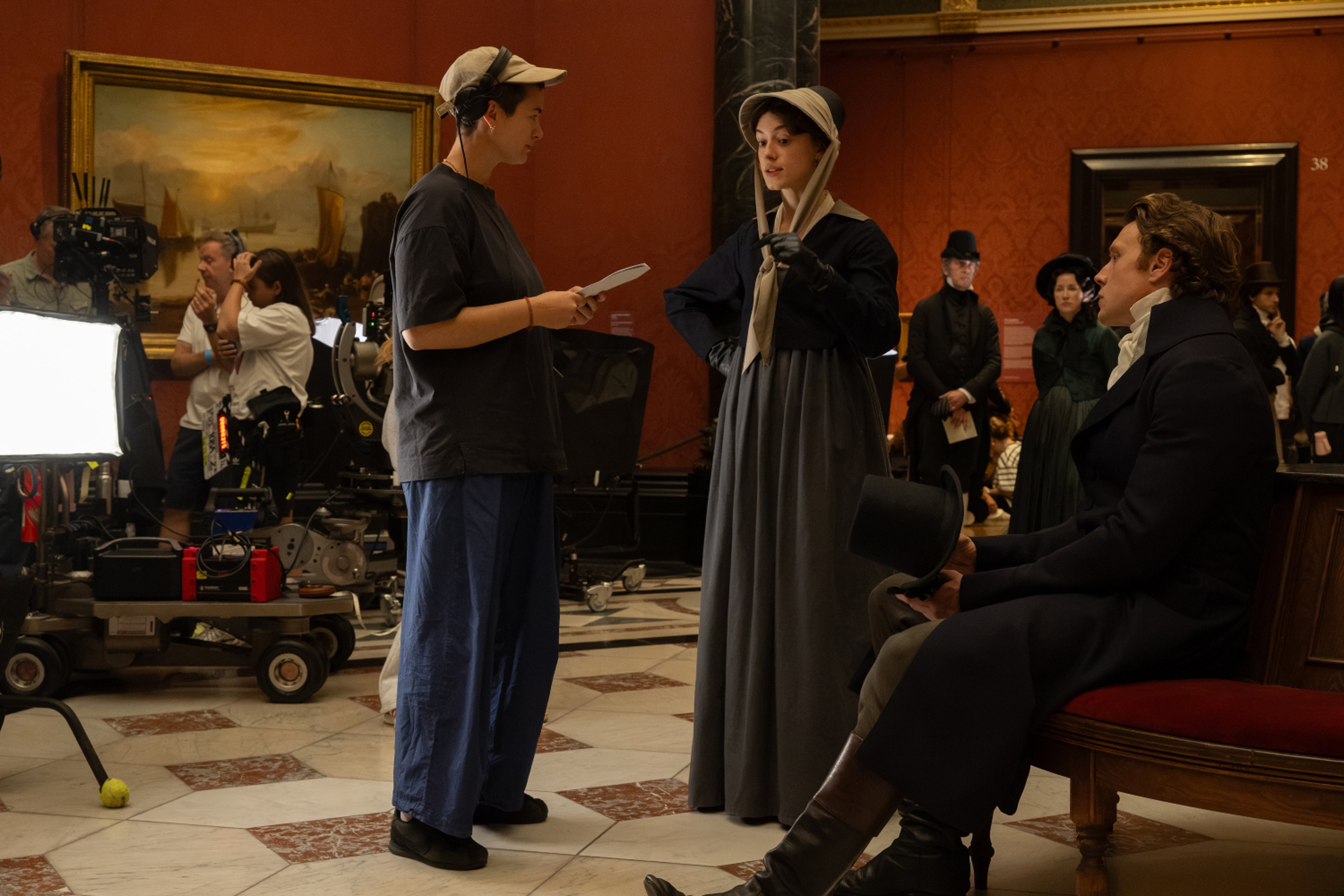
Georgia Oakley with Daisy Edgar-Jones and George MacKay on the set of Sense and Sensibility
With so many Austen adaptations, how did you find the look?
For me, this is a film about character, sensitivity, and texture. The look grew out of those three words rather than out of other adaptations. Georgia and I wanted something intimate and unforced. Even though it’s a studio film, we wanted it to feel almost like an independent film: always as close as possible to the characters and what they feel.
The first big decision was 35mm. Georgia was already pushing for film before I came on board, and I was completely with her. Film handles highlights and shadows in a way that feels organic, especially with candlelight, and it brings you closer to the texture and richness of a painting. Then we did extensive lens tests and landed on Panavision’s vintage series. They were the closest to the painterly quality we were after: a beautiful texture and softness that pulled us away from the very sharp, modern look and towards the paintings of the period. We also deliberately avoided the saturated colors and strong contrast you see in a lot of contemporary films.
How did you create Norland Park and Barton Cottage?
We shot in real historic houses, and you feel it from the very first scout. These places carry a history, and that history goes straight onto the screen. It gives the images a depth and an authenticity that is very hard to build artificially. Norland had to feel like a world of inherited wealth, generous but cooling once the father is gone. Barton had to feel small, rustic and isolated.
With Georgia and our production designer, Francesca Di Mottola, we worked to make sure that each location’s wall textures and palette fit the visual language we had built together. Francesca did amazing work on the cottage in particular: the house we found wasn’t period accurate and didn’t even have windows, and she transformed it into the Barton Cottage you see on screen. Each house has a long list of rules. Depending on the location, you couldn’t put lights too close to the walls, you couldn’t rig anything to the ceilings, and even when lighting through the windows, there were limits on how much heat a fixture can give off to protect the historic glass. More than once that completely changed how I had imagined lighting a scene. But I like constraints: they make you think differently and push you back to what’s essential. It’s a price I’m very happy to pay.
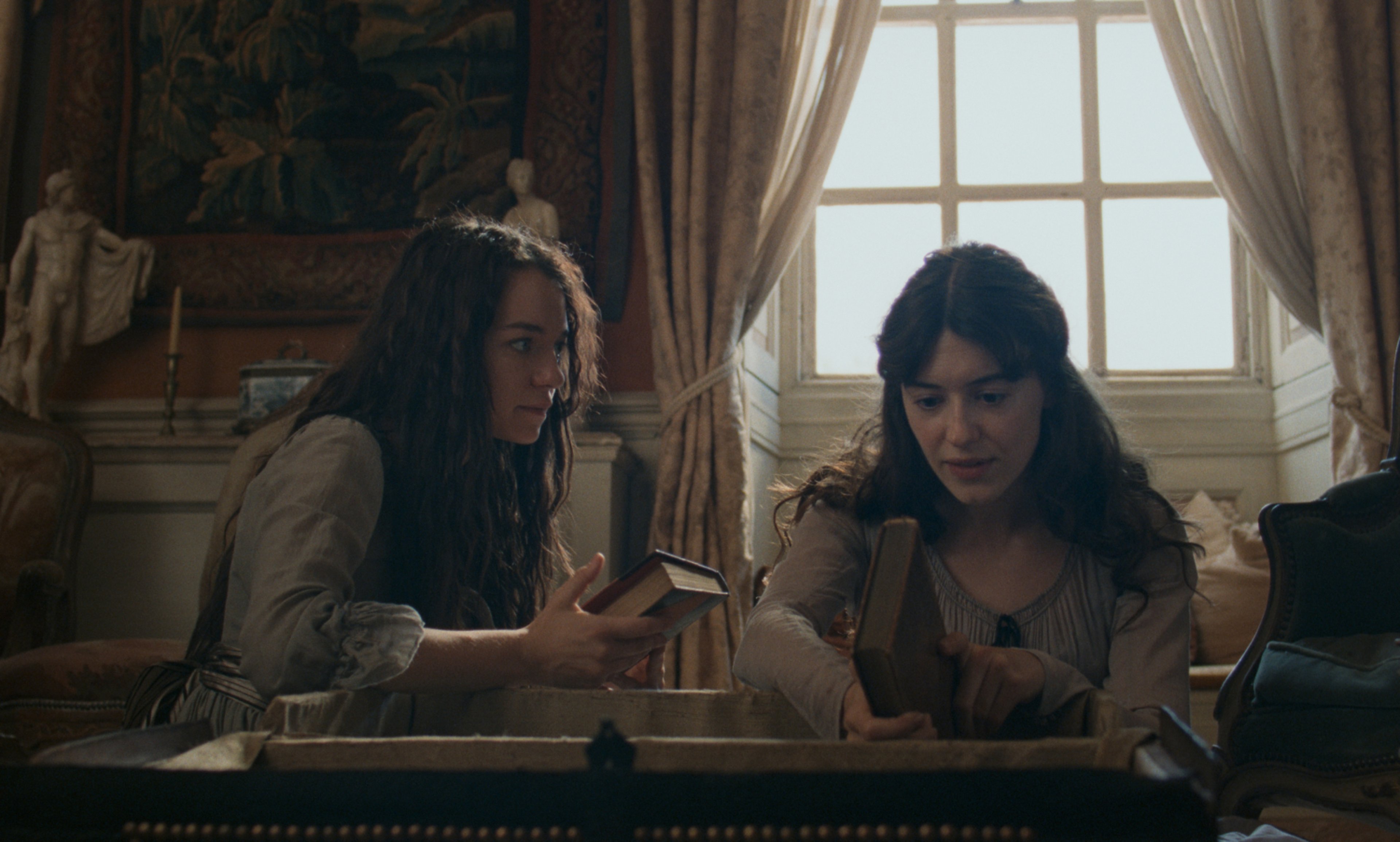
Esmé Creed-Miles and Daisy Edgar-Jones inSense and Sensiblility
How did you develop the color scheme?
The starting point was restraint: finding the right level of contrast and a palette that felt closer to the paintings of the period than to a modern film. Lower saturation, softer contrast, and the 35mm and vintage lenses did a lot of that work in camera. The palette follows the places the Dashwoods move through, which also happen to follow the seasons. Norland is warmer, with more presence in the highlights. At the cottage, the image becomes denser, more textured, and more rustic. In London, it turned colder and more contrasted, because that world is much harsher on them. And by the end, we come back to something warmer and more organic, but with a different emotional weight that carries everything they’ve been through.
None of that works without production design and costume: the walls, fabrics, and colors all had to sit inside the same scheme. Then, in the grade, our colorist Damien helped us take the last step, towards the painterly look we had been chasing from the start.
Was there a particular language of camera work?
It shifts with each world the characters live in. At Norland, the camera is more fluid and expressive. There’s movement, but the family is still whole. When they arrive at the cottage, the camera becomes stiller, but we kept a very subtle handheld feeling so the image never freezes and stays organic. In London, it becomes much more composed, with deliberate tracking moves, more formal, like the society they’re stepping into. At the end we return to something looser and more organic again.
I think that continual sense of movement you describe comes from that subtle handheld breathing, and from everything that moves inside the frame: wind, water, light. We kept bigger moves for when the emotion asked for them. The Steadicam, for instance, we used only once in the whole film, for the London ball.
How did you shoot the dance sequences?
There are two dances in the film, the village hop and the London ball, and we treated them as opposites, visually and emotionally. The hop is rustic and spontaneous, so the camera is handheld: sometimes a little loose, sometimes more controlled, moving with the dancers in a simple, direct way. The real challenge was the light. We wanted a summer evening just before sunset, that warm orange end-of-day glow, but we were shooting over two days in a huge room with very large windows, and the real sun kept trying to change the scene. So, we built a distant source that suggested low sun coming through trees, warm, natural and a bit nostalgic, and held it consistent across both days.
The London ball is the only time in the film we used Steadicam. Marianne crosses that room searching the crowd for Willoughby, and the camera had to carry her urgency. It is sometimes following close behind her, sometimes moving ahead of her, so you feel her restlessness. But it’s also a graceful, formal dance, so the movement had to stay fluid and elegant, showing the beauty of the room and Marianne and Elinor’s turmoil at the same time. Lighting it was hard. The location had a lot of restrictions and we had to shoot in the daytime. We blacked out every window, took full control of the light, and built it so the candles always read as the main source, adding only what we needed around them.
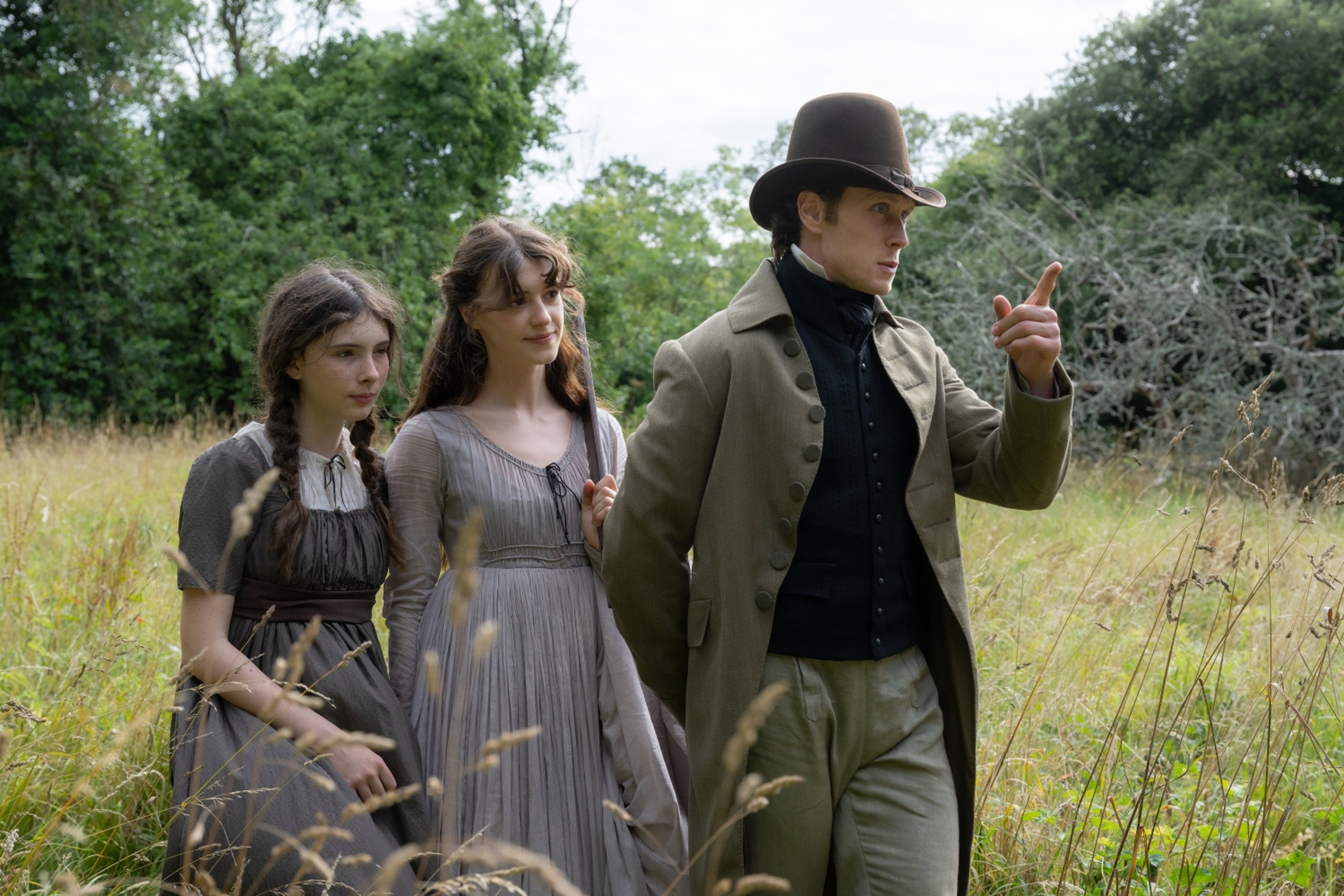
Bodhi Rae Breathnach, Daisy Edgar-Jones, and George MacKay inSense and Sensibility
What visual references did you work with?
Not one in particular. We looked at photographs, films and paintings, but no single work served as a direct reference. The questions were more technical and emotional: what’s the right level of contrast, what’s the right palette. We looked at painting more than cinema. What we did want was an image that felt close to painting. What I took from that is that the period look isn’t about copying a canvas. It’s about texture and softness, and that’s where 35mm and the vintage lenses came in. They gave us that painterly quality directly in camera, rather than something we had to impose later.
How did you treat nature in the cinematography?
Georgia had a very clear idea about this from the start. She wanted nature to feel organic and alive, so you could almost feel the elements: water, rain, reflections, wind, the light changing, and animals all around the Dashwoods. For these women, especially once they’ve lost Norland, nature isn’t scenery. It’s where they can breathe. Whether it was a wide landscape or a very intimate detail, like a flower moving in the wind, the idea was always to make nature present, almost another character in the story. That’s also one of the reasons that shooting on film mattered so much.
How did you handle lighting, especially candlelight at night?
The idea was for everything to feel natural, while of course still being crafted. Light always had a reason to be there: a window by day, a fire or candles at night. And we were never afraid of darkness; letting the corners of a room fall away is part of how those houses really felt. For candlelight, film was a gift. The way 35mm holds highlights and rolls off into shadow makes a candle flame and the skin it touches look right in a way that’s hard to get otherwise. On the London ball, for example, we blacked out the daylight completely and built everything so the candles always read as the key source.
What do you hope people take away from the film?
That it feels close. I hope people forget they’re watching a costume drama and simply feel what it is to be a sister, to lose a home, to fall in love too fast, or to hold it in too long. If the images did their job, people won’t remember the cinematography. They’ll remember a face by a window, a candle in a dark room, a flower moving in the wind. And maybe a sense that these women, two hundred years ago, felt exactly what we feel.
This interview has been edited and condensed for clarity.
