

Hollywood’s dark era: where did all the colour from movies go?
This article is more than 7 months old
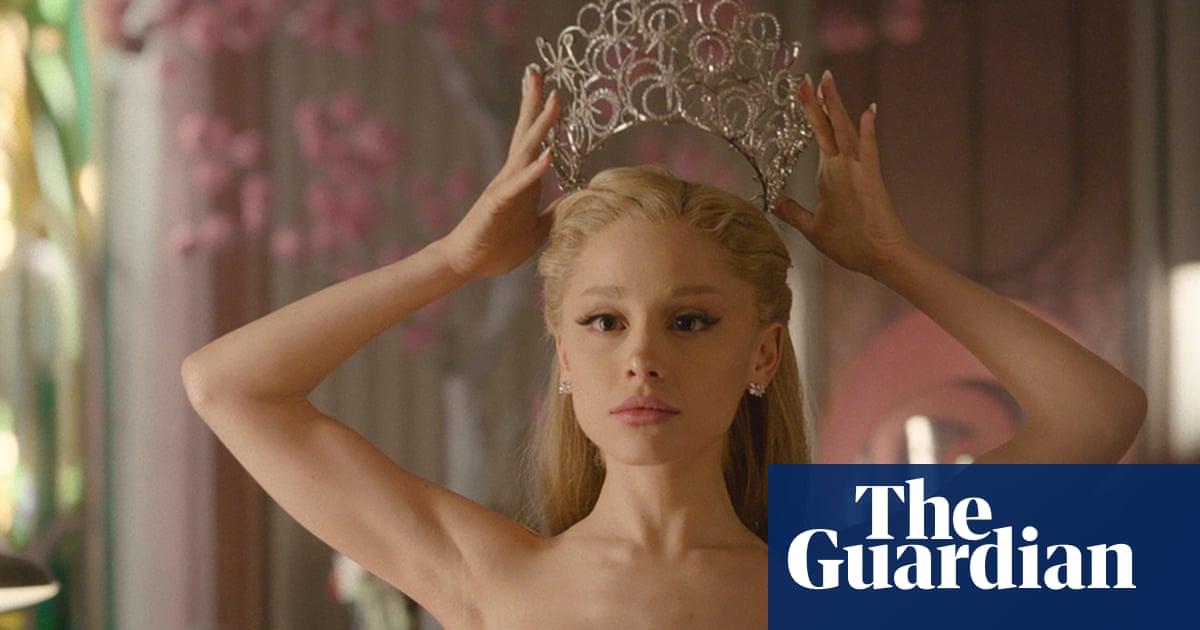
Blockbuster sequel Wicked: For Good has become the latest film to receive complaints about both the lack of colour and the inconsistent lighting
We all know the late-night slog of finding something to watch, flicking between streaming services until settling on a series someone mentioned at work. And then a few minutes later, you’re squinting, adjusting your lighting or playing around with TV settings – it’s a night-time scene and you’re unable to make out what’s going on. Prompting the question: ‘When did everything on screen get so dark?’
This question isn’t new, gaining traction after a few incredibly poorly lit battle scenes in the final season of Game of Thrones, with articles and posts popping up begging explanation, one Reddit user commenting: “If you need an article to defend that not being able to see shit is a stylistic choice, maybe the stylistic choice should be reconsidered.”
Film critic and journalist Barry Levitt feels strongly on the subject. “If you walk outside on a warm day, you’ll find infinitely more colour than you would in a contemporary blockbuster.”
Wicked forever: the enduring appeal of The Wizard Of Oz
Read more
Last year’s biggest film Wicked received widespread critique for the way it felt on screen, even being compared to a TV advert. It’s harder still, to refrain from critique when The Wizard of Oz, a film often credited with changing film colouring forever, serves as the first in this cinematic universe.
This month’s much-anticipated sequel Wicked: For Good has been similarly criticised. In his review for the New Yorker, Justin Chang asked: “Why is everything in this movie, for all its lavishly gilded, emerald-studded set design, either too dim or too bright – so blindingly backlit that Oz seems to be under perpetual thermonuclear attack, or so murky that you could scarcely tell a monkey from a Munchkin?”
Technicolor, used in The Wizard of Oz, enabled extremely vibrant colours to be captured through a specialised camera splitting the light that enters into blue, green and red light. These beams were sent to separate strips of black and white film, with post-production combining these into the larger than life, deeply saturated colours we’re familiar with. But its expense and complexity spelled its own doom as technology moved on.

“The prevalence of flat monotone images in film and TV today is due in part to changes in camera technology and a lack of careful colour grading work.” says Laura Hillard, lecturer in cinematography at the University of Salford.
Modern digital cameras capture what it sees in a more realistic way without the stylistic saturation and texture that was inevitable with film. Some credit The Lord of the Rings for marking a turning point in visual effects, with grading and editing utilised to naturally integrate these as realistically as possible. And many of us will recall from the pre-digital time, 1991’s The Addams Family was one of many films able to portray dark, gloomy environments and moods without any struggle to understand what’s happening on screen.
“What I’m noticing these days, if we call it a trend (though I prefer to think of it as a specific stylistic direction), is a move towards lower contrast, softer highlights, more muted colour palettes, and a less visible lighting style,” says Hootan Haghshenas, a digital colourist with credits including 2016’s The Salesman. “And even though it can appear effortless, there’s usually a huge amount of work behind achieving this kind of naturalistic look, just as much as in more traditional, stylised lighting.”
He adds: “There is sometimes a misconception that darker images are purely a cost-saving strategy in lighting or production design. That can occasionally play a part, but it’s not necessarily true.” Haghshenas believes “we’re simply in an era where film-makers have far more control and freedom over the final image than ever before.”
It’s not simply down to technology though. Jon Constantinou, a producer and director, explains that the visuals of a film can be a battle between “abstraction and immersion”. With abstraction being something “very obvious that you are watching a depiction of something on the screen which you have to use your imagination to relate to, it oftentimes takes a little minute to get into it but then you’re along for the ride” and immersion being a “trend that kicked up at the dawn of digital, typically involves a combination of wider angle camera lenses, with the cameras being placed closer to the action”intending to make you feel like you’re there, experiencing this reality on screen.
Constantinou speculates an immersive approach was taken to Wicked, to ground you in the same experience as Glinda and Elphaba – confirmed in an interview with director Jon M Chu. “I think what we wanted to do was immerse people into Oz, to make it a real place,” he said.
“There’s a strong creative preference at play. Many film-makers want a visual world that feels grounded, atmospheric and emotionally truthful. Darker images can add tension, intimacy and realism,” echoes Haghshenas.

It’s not just Wicked experiencing visual criticism, Frankenstein’s lighting seemed inconsistent with the intended gothic tones, with many believing it felt like a video game, unlike Nosferatu, another gothic creature horror that enthralled with its masterful use of lighting and darker tones. Decider’s review of Frankenstein recognised “that signature Netflix flatness in its lighting and focus, a lack of contrast that makes the surfaces stick together across each focal length. Few elements on-screen feel real and tangible, and for a film about blood and sinew, that’s a problem.”
“That signature Netflix flatness” has become a more commented on problem with the streamer’s increased dominance in Hollywood. Vice dived into this topic three years ago, finding that Netflix had restrictive lists of approved cameras and wished all content to be shot in 4K UHD, ready for when 4K TVs became the norm in home. Though similar to the jump from digital to film, compressing 4K data into something watchable on the average TV set also results in something uncanny and not at all lifelike. Not much has changed since then – last year Esquire devoted a takedown to the streamer’s “bizarre visual language”.
Meanwhile many series and films have fallen short in trying to capture darkness with criticism aimed at Game of Thrones, The Walking Dead, The Handmaid’s Tale and The Batman.
Our at-home television technology has rapidly been advancing (even if it’s maybe not advancing at Netflix’s schedule), and has also affected how visuals are interpreted on screen. Haghshenas recognises that we can now “see and appreciate the subtle texture that would have been lost a decade ago. So film-makers now have a real incentive to craft detailed, tactile images, knowing the display technology can support those nuances.” Even if immersion is what is aimed for, it can be lost when viewers want to fiddle with settings and lighting at home.
“Lighting challenges have always existed, regardless of the aesthetic trends of the time,” says Haghshenas. It’s hard to predict future trends on screen – we saw the 3D come and go, meanwhile immersion seems to be hitting new heights with the Las Vegas Sphere hosting an AI enhanced version of The Wizard of Oz, claiming that it “transports audiences, making them feel like they have stepped inside the film”.
The response to Chu’s use of colour in Wicked: For Good has been mixed. Levitt recognises that while it “has more colour than most, it’s still weirdly muted” while Den of Geek’s David Crow believes the issues of lighting and colour are “more glaring” in the sequel. Maybe it’s bad timing – a colourful universe has its biggest expansion in an exceedingly colourless time in cinema.
Explore more on these topicsShare
Reuse this content
