


Five ways Fleabag changed TV – for better or for worse


Alamy
A decade ago, Phoebe Waller-Bridge’s dark comedy about a witty but pain-filled young woman premiered – and became a cultural phenomenon.
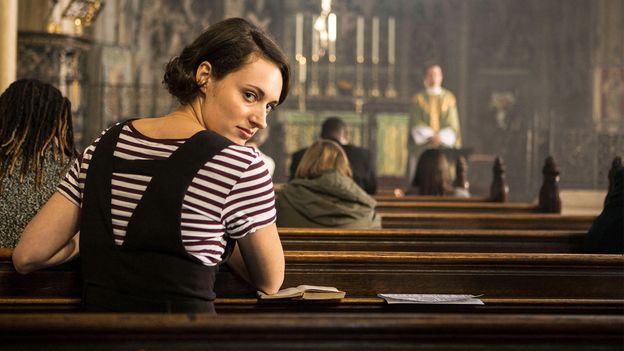
Ten years ago today, Fleabag burst on to the-then online-only UK channel, BBC Three. A barnstorming opening told viewers exactly what they could expect from this one-of-a-kind series: within the first 55 seconds, the main character narrates having sex with a man she’s just met – ending with a jaw-dropping punchline.
A thoroughly contemporary tale, it undoubtedly changed the TV landscape as we know it now. Here’s how:

Alamy
1. Helped a new wave of female TV auteurs flourish
Film and TV commissioners were shaken awake by the roaring success of Fleabag, and, alongside Lena Dunham’s Girls, which premiered a few years earlier, it proved that not only was there a vital need for more women’s voices in the traditionally male-dominated industry – there was a big appetite for them too.
In the UK, especially, it paved the way for other complex and edgy female-created shows like Michaela Coel’s I May Destroy You, Aisling Bea’s This Way Up, Big Mood starring Bridgerton’s Nicola Coughlan, and author-turned-screenwriter Candice Carty-Williams’s Queenie. We’ve got the “genius” of Waller-Bridge to thank for this wave, says Alice Redman, editor at Broadcast Intelligence: “There’s a direct legacy of comedies about complicated, emotionally rich and challenging female characters that you can see across the TV landscape following Fleabag, in both comedy and drama.”
Waller-Bridge is also directly responsible for championing the career of the most high-profile female film auteur in the UK, Wuthering Heights and Saltburn director Emerald Fennell. With her first post-Fleabag show, 2018’s spy thriller Killing Eve, Waller Bridge passed the showrunner reins on to a variety of different women, including Fennell, who oversaw the second series.

Alamy
2. Cemented the ‘messy woman’ trope
Fleabag showcased a very particular type of heroine that had rarely been seen on screen: erratic, chaotic, reeling from the death of her mother and her best friend, and filling the void with alcohol and one-night-stands. Certainly in the UK, female lead characters on TV had rarely been allowed to be this defiantly flawed or “messy” before.
However, there can be too much of a good thing and some critics have since challenged the rise of the “messy woman” archetype that Fleabag arguably inspired. Writing in The Guardian in 2022, Rachel Aroesti claimed that “the messy millennial woman” had become “TV’s most tedious trope”, as it “migrated from a bracingly realistic proxy to something fast approaching a reductive stereotype, monopolising comic portrayals of the female experience”. She cited post-Fleabag shows like Everything I Know About Love, Feel Good and I Hate Suzie as adhering to this trend.
But Redman says that it shouldn’t be underestimated how the series’ depiction of its protagonist pushed TV in a better direction: “It feels slightly reductive to label it as a ‘messy woman’ story when there’s a reason why it became so popular. Before Fleabag you can count on one hand the series that reflected a millennial experience of women trying to figure out who they are. Fleabag is a ‘messy woman’ but the story is a lot deeper than that because life is also messy.”

Alamy
3. Popularised the ‘trauma plot’
Fleabag is also regularly cited as a key proponent of the in-vogue “trauma plot”, in which a character’s problems are all explained away by the revealing of a past trauma. Again, though, not all critics have been fans of this device: in a celebrated 2021 essay for The New Yorker, Parul Sehgal made “the case against the trauma plot”, citing Fleabag alongside Ted Lasso and Marvel’s Wandavision among her TV examples and asking: “Does this trope deepen characters, or flatten them into a set of symptoms?”
Scriptwriter Amelia O’Loughlin sticks up for this kind of storytelling however: “I do take that view that there can be too much self-analysis that isn’t interesting. But equally, we’re shaped by our trauma. We’re shaped by the things that have happened to us. So I think in a way, quite organically, the evolution of the messy woman has since become ‘okay, she can be messy, but we’re also gonna need some real plot here’. I think that that probably is a true and apt evolution for the TV world.”

Alamy
4. Encouraged others to break the fourth wall
One of the most striking elements of Fleabag was the fact she constantly broke the fourth wall, talking in asides to the audience and, alongside witty one-liners, expressing her dark innermost fears and desires. Since then, a number of shows have broken the fourth wall in a way that has evoked Phoebe Waller-Bridge’s creation – most recently Netflix university dramedy Vladimir, with Rachel Weisz. But this use of the device hasn’t always been a hit: the 2022 Netflix adaptation of Jane Austen’s Persuasion, was heavily derided for having its 18th Century heroine, played by Dakota Johnson, talk to the audience in what was seen as a Fleabag-esque “gimmick”. Indeed, O’Loughlin says that when pitching ideas to TV development execs now: “I’m always told, ‘Avoid the flashback and breaking the fourth wall as much as you possibly can'”.
However, Fleabag had a particular reason for its heroine’s style of address, which can be traced back to the fact it started life as a theatre production, O’Loughlin explains: “I think that artists that come from a theatrical background frequently break the fourth wall. It’s been a vehicle since Shakespeare. I think that can also be a bit trope-y, and that can also be a slightly lazier option. But in the same breath, I will say there are so many moments in my own writing where I’m like, ‘I really kind of want for my protagonist to just have a word with the audience’.”

5. Opened up the ‘posh and privileged’ debate over who gets to tell women’s stories
At the time of Fleabag’s second series, The Guardian’s Ellen E Jones praised the show’s “undeniable genius”, but added “this isn’t a criticism… but it is for posh girls”, while Huck’s Aimee Cliff noted that Waller-Bridge has baronets and an MP in her family tree, adding: “Waller-Bridge isn’t all of us, and Fleabag definitely isn’t. It’s a very good show about a posh white lady. It’s okay to frame it that way, while also acknowledging that we need more stories than that.”
Ten years on, O’Loughlin thinks this still rings true: “ I think that Fleabag opened the floodgates for your ‘middle-upper class but troubled women’ stories. It was like, ‘sure, we’re looking for diversity in our voices, but it’s okay because you’re female, so that’s diverse enough’. But I would have liked to have seen more about the type of woman who experiences all that Fleabag experiences, but hasn’t got the safety net that she does.”
However Redman believes that “as Phoebe Waller-Bridge said herself, it ‘undermines the story’ to perceive it as being about or for posh people”. In a 2019 interview on the How To Fail Podcast, Waller-Bridge added that “I like to think that whatever life I’d lived, wherever I’d been born or brought up, I would still have written if I had been given the encouragement. That’s the thing that I care about, encouraging people to do it.”
What’s more, in the past decade, there have been positive moves to champion female voices from across society – see, in the UK, the Bafta-winning Alma’s Not Normal starring and written by working class comic Sophie Willan, Such Brave Girls by showrunner and actor Kat Sadler or Welsh coming-of-age series In My Skin, by Kayleigh Llewellyn.
At this stage, O’Loughlin says, “people don’t want another Fleabag. Commissioners say: ‘Let’s not make the same kind of material’, because it’s ‘been there done that’, so Fleabag is both a product of its time and a defining moment in TV”.
If you liked this story,– a handpicked selection of features, videos and can’t-miss news, delivered to your inbox twice a week.
For more Culture stories from the BBC, follow us onFacebookandInstagram.
Television
Comedy
British culture
Features
