


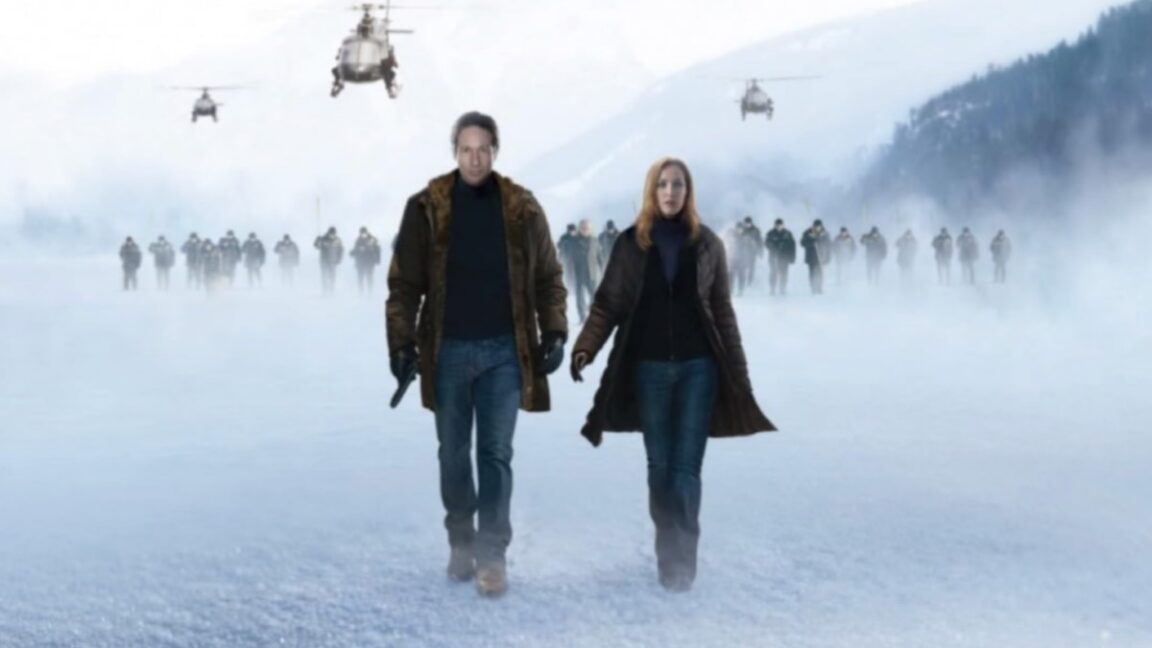
There is a lot of excitement and some trepidation among The X-Files fans about Ryan Coogler’s reboot for Hulu, currently in production. While we’re waiting, Hulu just released Chris Carter’s revamped (and R-rated) director’s cut of the 2008 standalone spinoff film The X-Files: I Want to Believe, distinguishable from its predecessor with a slightly different title: The X-Files: I Want to Believe–Vrach Frankenshteyn.
(Minor spoilers below but no major reveals.)
I Want to Believe received mixed reviews at its release and didn’t exactly light up the box office, but it still grossed $68 million against its $30 million budget. By 2015, the project led to the return of The X-Files as a limited-run TV series, with the six-episode season 10 debuting in 2016. Mulder and Scully were reunited 14 years after the events of season 9 as the FBI reopened the X-Files under Assistant Director Walter Skinner (Mitch Pileggi). The response was strong enough to warrant a follow-up ten-episode season in 2018, focusing on Mulder and Scully’s search for their missing son, William.
So one could hardly call I Want to Believe a failure. I quite enjoyed the film, but I always had a niggling sense that something was missing. That suspicion was confirmed when Carter made an appearance on David Duchovny’s podcast last summer and revealed that the studio had insisted he cut numerous scenes to get the desired PG-13 rating. Carter also hinted that a director’s cut was in the offing. “I made it too scary,” Carter told Duchovny of his original vision. “Now I have a chance to go back and make the scary movie that I always intended.”
Originally slated for a June release on Disney+, I Want to Believe–Vrach Frankenshteyn eventually moved to Hulu with an August 14 release. It’s largely the same film as in 2008, just rejiggered to emphasize the stronger horror aspects that Carter originally envisioned. Per the official premise:
When a group of women is mysteriously abducted, it becomes a case right out of The X-Files. Years after walking away from the FBI, Fox Mulder and Dana Scully are pulled back from the shadows when a federal agent vanishes without a trace. In a case you’d never see on TV, their only lead is a disgraced, defrocked priest claiming to have horrific psychic visions of the crime. Forced to confront the ghosts of their past, the partners must navigate a chilling winter landscape and an even darker human monstrosity. The truth of these crimes is out there somewhere… and it will take Mulder and Scully to find it.
Ars Technica caught up with Carter to learn more.
Fox Mulder (David Duchovny) and Dana Scully (Gillian Anderson) reunite to solve a new X- file.
Courtesy of 20th Century Studios
Fox Mulder (David Duchovny) and Dana Scully (Gillian Anderson) reunite to solve a new X- file.Courtesy of 20th Century Studios
Father Joe (Billy Connolly) leads FBI agents to a gruesome find.
Courtesy of 20th Century Studios
Father Joe (Billy Connolly) leads FBI agents to a gruesome find.Courtesy of 20th Century Studios
Fox Mulder (David Duchovny) and Dana Scully (Gillian Anderson) reunite to solve a new X- file.Courtesy of 20th Century Studios
Father Joe (Billy Connolly) leads FBI agents to a gruesome find.Courtesy of 20th Century Studios
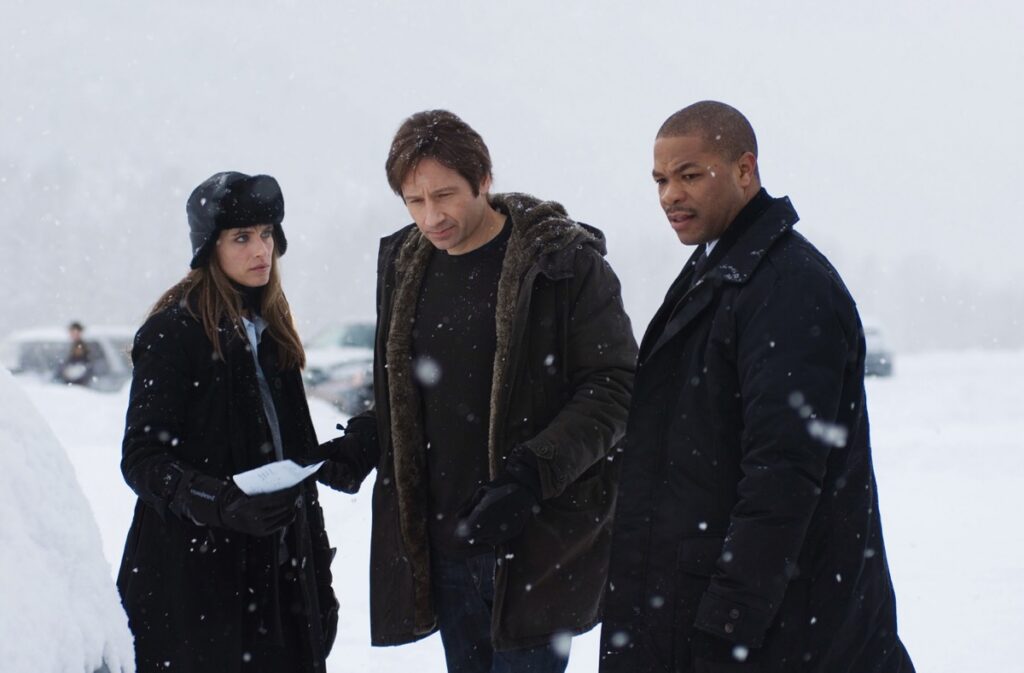
Special Agents Dakota Whitney (Amanda Peet) and Mosley Drummy (Alvin Joiner) hope Mulder can help them crack the case.
Courtesy of 20th Century Studios
Special Agents Dakota Whitney (Amanda Peet) and Mosley Drummy (Alvin Joiner) hope Mulder can help them crack the case.Courtesy of 20th Century Studios
The film also probes the familiar theme of faith versus science and reason.
Courtesy of 20th Century Studios
The film also probes the familiar theme of faith versus science and reason.Courtesy of 20th Century Studios
Special Agents Dakota Whitney (Amanda Peet) and Mosley Drummy (Alvin Joiner) hope Mulder can help them crack the case.Courtesy of 20th Century Studios
The film also probes the familiar theme of faith versus science and reason.Courtesy of 20th Century Studios
Ars Technica: The original series always had some elements of horror. I’m curious about why you wanted to make a feature film that was more overtly horror with I Want to Believe.
Chris Carter: We certainly mined the horror genre over and over. The show always works at the intersection of science and science fiction. The original inspiration for this movie was that I read about a doctor who had done a head transplant from one monkey to another monkey’s body, and he’d done it successfully. Immediately I said, “That’s an X-File. I’ve got to tell that story.”
Of course, I wanted to tell it with human beings. So I flew to Cleveland, Ohio, where this doctor was, and he told me how he did it. It was successful, but ultimately the monkey died. But then I started thinking, “Well, maybe this is a way to live forever.” If you could transplant your head onto a younger person’s body, you could possibly keep doing that until something went wrong.
There’s this tech-bro fascination with living forever right now. So this story is as relevant now as it was back then. It’s a great time to tell this story. And I got to go back and revisit something that I was unable to make the way I wanted to make it, due to studio executives who really didn’t know the show. I had promised them I’d make a PG-13 movie because I thought, “That’s what I make on TV every week.” But it turns out that both the executives and the MPA, the people who do the ratings, are less permissive with a PG-13 movie than network television was with horror.
Ars Technica: There’s more to your director’s cut than just restoring a few deleted scenes. You’ve done a full re-edit.
Chris Carter: I worked with two different editors, people I respect and I’ve worked with before who weren’t involved with it all originally. I asked them to watch the movie and help me to refine the cut and make it the scary movie that I originally intended to make. It was heroic on their part. The movie was originally edited by an Academy Award winner, and so coming in and basically re-editing his vision took some courage.
That said, I think the editors alone, just in the way they re-approached the movie, really helped it. I gave them the reins early on, and then when they gave those cuts back to me, that’s when I started to work on it. They added material, they took out material, they restructured material. I wanted to make a good, scary movie. The [2008] movie was a relationship movie for Mulder and Scully that happened to have an X-Files case. The weighting was wrong, and I wanted to remaster that.
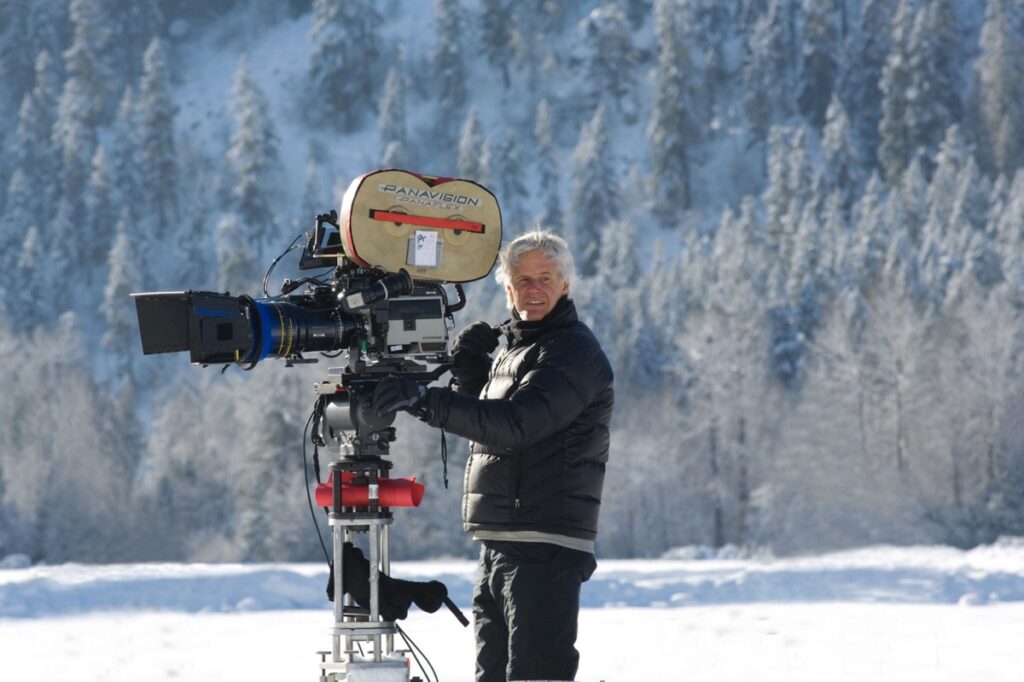
Chris Carter mans the camera while shooting I Want to Believe on location.
Courtesy of 20th Century Studios
Chris Carter mans the camera while shooting I Want to Believe on location.Courtesy of 20th Century Studios
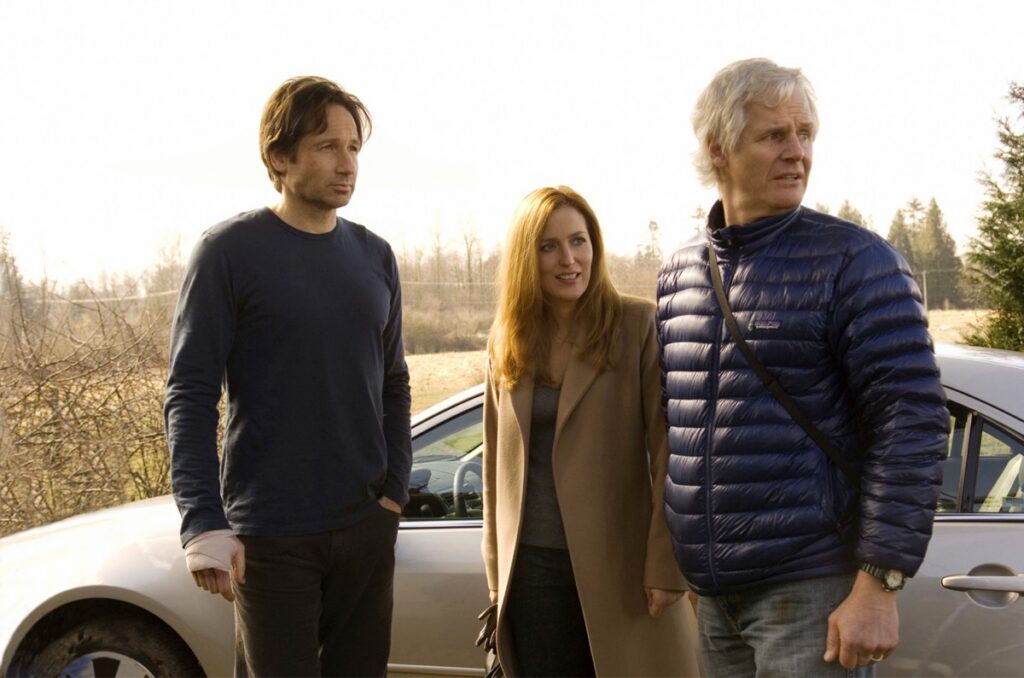
Carter on location with Duchovny and Anderson.
Courtesy of 20th Century Studios
Carter on location with Duchovny and Anderson.Courtesy of 20th Century Studios
Chris Carter mans the camera while shooting I Want to Believe on location.Courtesy of 20th Century Studios
Carter on location with Duchovny and Anderson.Courtesy of 20th Century Studios
Ars Technica: Vrach Frankenshteynis Russian for Victor Frankenstein. You dabbled with that theme in the series occasionally as well. What keeps drawing you back to that particular well?
Chris Carter: Creating life anew, breathing life into something that is inert, is fascinating to me. That story just fascinates me. The Mary Shelley story is much different than the original Frankenstein movie. They didn’t use lightning bolts to bring the creature to life. It was much more like an X-Files story. I’ve always drawn on my love of that story. Even if it’s not as pointedly like The Postmodern Prometheus, that science lives and breathes in several places in The X-Files.
Ars Technica: For many fans, Mulder and Scully will always be the beating heart of The X-Files. What makes them such an enduring couple, even if they are not always technically “together”?
Chris Carter: Scully being a scientist and Mulder being a believer in the paranormal, and that they agree to disagree wonderfully—it’s part of the nature of their relationship. I think it’s their mutual respect for one another. That, for me, is the ideal man-woman relationship. It feels inevitable. It feels destined. I have that relationship with my wife. I believe in those connections, and I believe that everyone has a path. It’s just figuring out what path to take. Sometimes the path presents itself and you can’t see it. But with Mulder and Scully, they found their paths, and they’re traveling them together for better or worse.
Ars Technica: Back in 2008, you said that if I Want to Believe did well, there was a third X-Files film you were eager to make. Is that still ticking away in the back of your mind?
Chris Carter: It is ticking away in the back of my mind. If you watch the two reboots, there are four episodes [collectively] called “My Struggle.” They are the bookends for each of those series. They ended up in a place where people either loved me or hated me—when Scully revealed that she was pregnant. That is part of a bigger story, and I want to tell that story sometime. Right now, I think everyone’s focus is more on the Ryan Coogler reboot, and I don’t want to do anything to get in the way of that. I respect him, admire him, and want to see his vision. The story that I want to tell, if it is told—and I sure hope it will be—will be apart from that, but we certainly can’t ignore it.
Ars Technica: Did you envision when you created The X-Files that the series would become such a cultural touchstone for so many people?
Chris Carter: No, I didn’t. I was sitting alone in my mid-30s. I’m working in Hollywood. I’ve been hired to create TV shows. I love movies like the Sherlock Holmes movie Murder by Decree. I love Kolchak: The Night Stalker. I have all these things that are inspiring me. I put them all together into a—call it a kiln. And I fired the kiln, and I opened it up and it’s The X-Files. I had never in my wildest dreams believed that I’d be sitting here talking to you today about The X-Files, that there’d be a Lego set coming out, that it would’ve changed people’s lives.
At the 30th reunion anniversary in Minneapolis, I had 12-year-old, 10-year-old kids come up and say they love the show. And I have to think to myself, “Your parents probably didn’t even know each other when the show first aired.”
I’ll tell you another story that is near and dear to me. My wife and I were running on the beach not long ago; we run for 10 minutes, and we walk for a minute. When we started walking in that minute, I look up and I see an image that I recognize immediately. I start walking toward this young woman in her early 20s who’s wearing a graduation gown and holding her mortarboard in her hand. On the top of the cap, it’s got an image of Mulder and Scully. And it says, “The future is out there.” I say, “I know that image.” She said, “Oh yeah, it’s Mulder and Scully from The X-Files.” And I said, “I know, I know. I wrote that show.”
It was a wonderful moment. She didn’t grow up with the show, she found the show. That’s the mind-blowing thing to me: it inspired her enough to put it on her graduation gown and cap. That kind of thing you can never imagine when you sit down to create something.
The X-Files: I Want to Believe–Vrach Frankenshteyn is now streaming on Disney+ and Hulu.
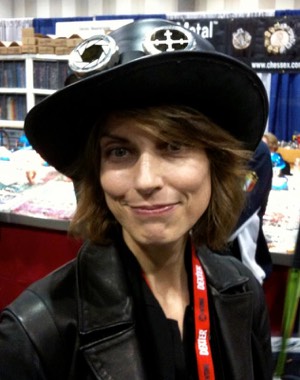
Jennifer OuelletteSenior Writer
Jennifer OuelletteSenior Writer
Jennifer is a senior writer at Ars Technica with a particular focus on where science meets culture, covering everything from physics and related interdisciplinary topics to her favorite films and TV series. Jennifer lives in Baltimore with her spouse, physicist Sean M. Carroll, and their two cats, Ariel and Caliban.
