


Editor’s note: A version of this story is published in our August/September 2026 print issue. The following is an extended interview with the creators of the television series.
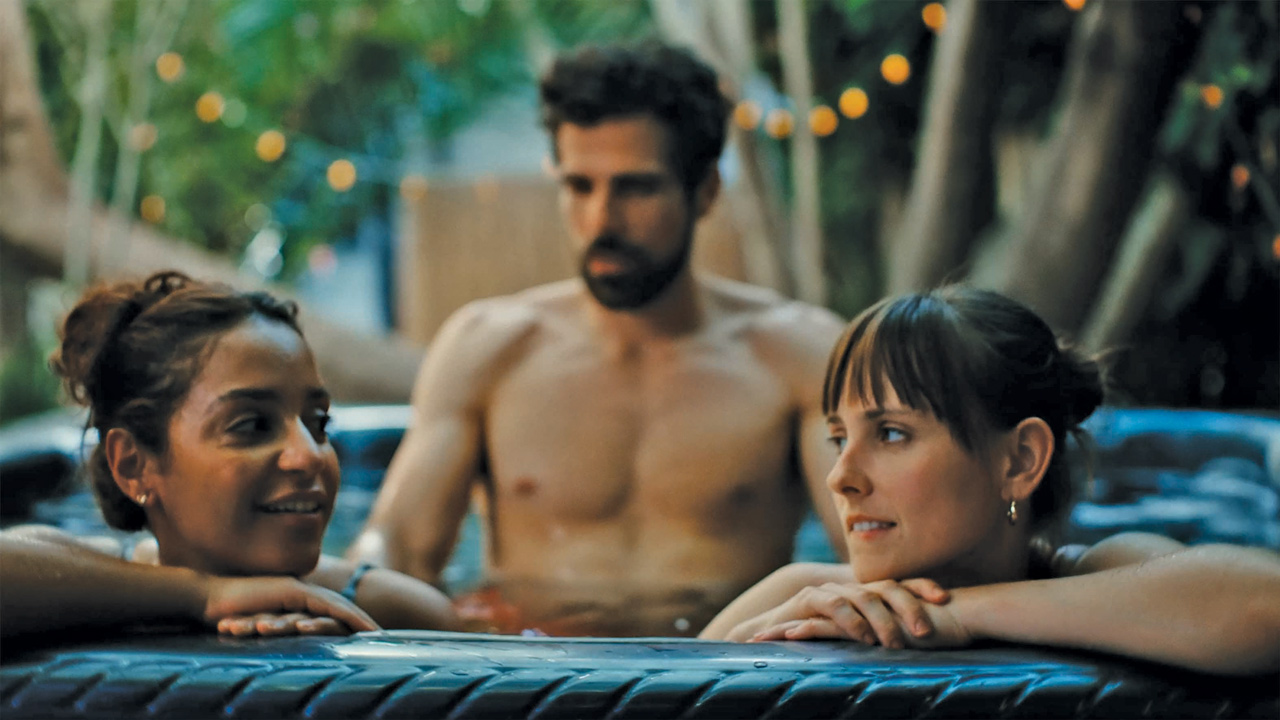
Sofya Levitsky-Weitza and Isabelle Platt meet the definition of “couple goals.” The two bisexual women began dating half a decade ago, starting their relationship in search of a male third for a threesome. Since then, they’ve adapted their lived experience, pulsing with quiet honesty and a clear vision of the queer perspective, into a TV series called Switch.








The showrunner duo just screened the first three episodes of Switch at the Tribeca Film Festival. They took a break from their busy premier schedule to chat about their sapphic story, internalized biphobia and how this series came to life.
How did this show about your own love story come to be?
Sofya Levitsky-Weitza: Yeah. We met about four years ago. I had never been in a serious relationship with another woman. I identify as bisexual, but I had mostly been in serious relationships with men. I fell hard for Isabel and pursued her hard. Once she was in, I was like, “I don’t know if I’m monogamous.” I have this big, expansive desire, which is kind of a classic issue you see within the pilot. What was really exciting was that Isabel was open to it. She said, “Let’s see what this means for us.” Let’s be honest, we’re not in a box.
We are a very open-minded couple. Fairly quickly, we started exploring the idea of finding a man to have a threesome with and began telling people stories about these absurd situations we were getting into. We thought it would be easy, but it was actually quite difficult to find the right person. Through telling these stories, we realized, “Oh, we’ve been wanting to make something together. We’re both writers. We’d love to write it and make a whole thing.” The experience could be a really fun container to get people in, and then also tell a deeper story.







Isabelle Platt: Collaborating was really, really fun. I was surprised. I’ve collaborated with people in the past, and it hasn’t been as easy or as fun. It was such a delight.
SLW: We’d only fight about really stupid stuff throughout this whole process, but we’ve never fought about the creative. We’re so aligned on it. We really admire and respect each other as writers and artists. We share a similar taste, so that part felt really seamless.


Was it cathartic jumping back into that mindset of your early dates, or maybe a little stressful?
IP: It was cathartic. Sometimes, during the process of writing it, we would be talking about our own relationship. It made it simpler to figure out what these characters needed.
SLW: Like anything good in art, it’s cathartic and embarrassing.
IP: When we started sharing it with people, I felt really embarrassed.
SLW: One of my goals in life is to get people to have more threesomes because I think they’re amazing. So I’m also like, with the show, if this pushes people (I say this half-jokingly) to have more conversations in their relationships around desire, even if they never do anything else, even if they’re just talking about their own desire or their partner’s desire, that will be a success for me. I’m willing to put my own embarrassing experience on the line if it leads to that.
How important was it to bring your identities to the screen and what it means to, you know, hopefully instill that bisexual pride in the next generation?
SLW: It’s funny. I wish we lived in a world where we didn’t have to identify ourselves, but we do. So I’m always like, I have to be that annoying bisexual person who’s talking about my identity. I grew up thinking that you could either be straight or gay. Because I liked boys, I thought, “Oh, I guess I’m straight.” I had a lot of my own internalized thoughts entering my mid-20s.
Then I realized, “Oh, actually, this is way more expansive than I ever thought.” I admire the next generation because I feel like they’re much more comfortable saying, “Oh, my ex-girlfriend this,” and then, “my ex-boyfriend that.” It feels like they have their heads in that direction. When Isabel and I started dating, I felt like people wanted to put me in a box: “Oh, you finally figured out your sexuality and you were a lesbian all along,” and so on. But I was like, “No, nothing has changed about me.” Why do I suddenly have to erase this whole other part of myself? That’s part of where it came from.
IP: Yeah, I sort of had the opposite journey. I thought I was a lesbian in my early 20s, but I still liked to have sex with men. I just didn’t want to date them. A lot of times, queer people could understand that more than straight people. It was really nice meeting Sofya because she is so expansive. There was suddenly space for me to be my full self and honor my desires.
Advice for comedy writers tapping into queer joy?
IP: [Sofya]’s so funny. I’m really glad you liked that line. I have a habit of taking jokes too far in earlier drafts, but Sofya is really good at making things more concise and dialing them in. If it doesn’t make you laugh while you’re writing it, you need to be honest with yourself. Always see if there is a way you can make it funnier, and don’t give up on it. It might not be funny at first, but just keep going until it makes you crack up.
SLW: Something we learned about the comedy, the sexuality, and the intimacy in the show is that you have to go hard on both. You can’t apologize for either one; you can’t do it halfheartedly. You have to commit to both, and that’s when it’s successful. With dialogue, if it doesn’t feel authentic, I can’t have it. What is authentic to these characters? What are they feeling? We know because we have lines that still make us laugh. After reading and seeing them a hundred times, they still feel funny and real to the situation and to who they are.
Since the actors are portraying you, what conversations did you have to capture your past selves?
IP: They’re pros. They’re really amazing. They just showed up and asked us questions until the very end, and challenged us.
SLW: This experience made us better writers because the actors were so deep in their characters. We wouldn’t argue, but would talk about why they made a certain choice while filming. They could understand that. Sometimes they were right, and we’d shift dialogue or blocking for them. They were so great together and curious. We really lucked out with them. They brought a whole new dimension to the show.


