


- Skip to main content
- Skip to navigation
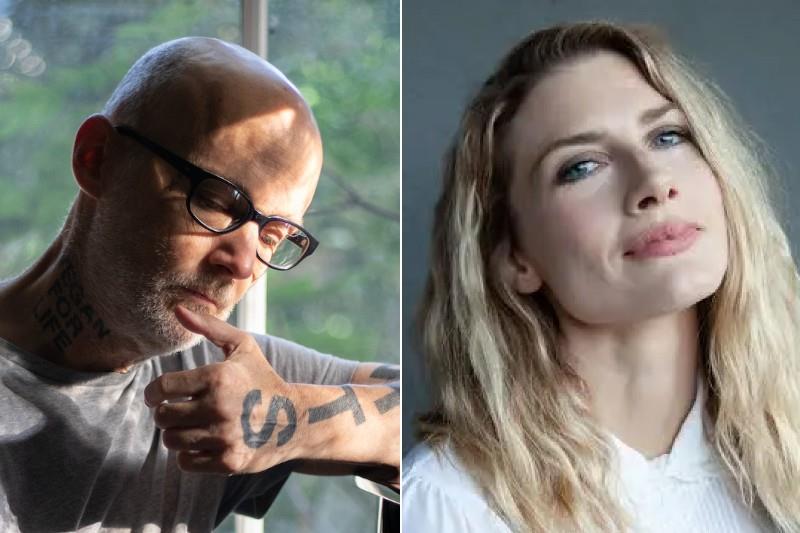
Moby and Lindsay Hicks of Little Walnut Productions
Moby and his producing partner Lindsay Hicks of Los Angeles-based Little Walnut Productions founded their company in 2020 to champion creative activism.
Little Walnut’s credits have included fully funding 2021’s Moby Doc, partially backing TIFF 2024 selection Eternal Return,and providing finishing funds for recent Cannes Midnight selection Jim Queen.
The company is now lining up an autumn shoot in Sweden for the psychological folk horror Häxan, to be directed by Tina Gharavi, based on a screenplay by Hicks and Erika Linder. Moby is composing the score.
Little Walnut also produced and co-financed Louis Paxton’s Scottish comedy The Incomer, which opens the Edinburgh International Film Festival (EIFF) on August 13.
The film stars Domhnall Gleeson as an official sent to a remote Scottish island to evict two hostile siblings. Universal Pictures International is distributing in the UK, and Sumerian Pictures will release in North America. The film premiered in Sundance.
Later this year, the partners will self-distribute Tecie, a Gen Z romance set in the animal rights community in Los Angeles based on a screenplay by Moby. The 2026 slate includes Tribeca documentary Full Circle: The First All Black Everest Ascent; and the Tribeca short film Selah. Little Walnut provided finishing funds for both.
The company also operates mobygratis, a free music licensing platform providing independent filmmakers, musicians, and creators access to music for use in creative projects.
Why did you launch the company and how did you two meet?
Moby: We met through the LA vegan mafia. I had started Little Walnut and had no idea what I was doing. The pandemic happened. Lindsay had been working with Wanda Sykes, and I begged her to run my production company with the idea of using content presumptuously to make the world a better place.
What kind of films do you make?
Hicks: We’re focused on content that moves the needle, but we’re also focused on supporting voices behind the camera that help to do that as well: a lot of first-time female makers, LGBTQ filmmakers, women, people of colour, people that have historically had a harder time finding their voice.
Moby: At first we funded documentaries like Meet The Future, and Slay, and our own Punk Rock VeganMovie. We realised very quickly that a lot of unscripted content simply wasn’t finding an audience, so we expanded our remit to broad activism, anything that moves the needle away from the status quo in a good direction. That can be comedy, something that’s didactic, or completely undidactic, so it’s this idea of broad-based, engaging storytelling and activism that drives us.
How did you get involved in The Incomer?
Hicks:We watched Louis’ short Neville Is Dead and read the feature script in 2024. It came to us with a lot of players involved and we filled the equity in partnership with Day Zero Productions, Trevor Noah’s company. The lead producers Shirley O’Connor and Emily Gotto were just grinding every single day to make everything come together.
Moby: It’s so good. It’s delightful. It’s smart, and it’s funny, and it’s one of those films that you recommend to people, regardless of the fact that we helped make it. And it has the DNA of activism. There’s issue-oriented didacticism, which sometimes is called for, but at the other end there’s The Simpsons, and 30 Rock and Father Ted using intelligence and humour to reach people. We want to make people’s lives better and make the world better.
What position did you take on the film and what are your investment parameters in film?
Moby: The Incomer was an equity investment on my part. We’re executive producers. The maximum would be in the low millions, and the minimum would be what we have in our wallet right now. One thing that we’ve been doing a lot of is fiscal sponsorship, like actually doing nonprofit sponsorship of unscripted films that are very issue-oriented.
Do you fund P&A?
Hicks: Not with The Incomer. Little Walnut comes in at any stage of a film. We fund development, we fund production. We fund post services and marketing.
Does the money you invest come from Little Walnut’s funds or do you have investors?
Moby: We’re idiots; it’s only our money. As an uptight WASP from Connecticut, I wouldn’t know how to ask anyone else for money.
What music business practice should the film industry adopt?
Moby:Musicians are involved in everything. The independent film is very siloed. The people who make the movies are rarely involved in releasing the films, whereas in music the musicians are involved in everything. I want filmmakers and writers, and actors, and directors, and producers to be involved in everything: marketing, social media, distribution. This idea of just handing a film over to someone and not being involved is kind of like being a Victorian parent. It’s not a model that seems sustainable anymore.
Lindsay, how do you feel about the independent film space?
Hicks: Independent filmmaking is the Wild West in so many ways. I worked in television before, and that is the opposite: there are lot of rules and a lot of hierarchy in television. In independent film you have such freedom […] If you can figure out the best way to tell a deeply resonant story, there will always be space for it and independent film really lends itself to that kind of ethos.
Do you prefer theatrical for your films, or are you just happy to reach the broadest possible audience?
Moby:It’s dependent upon the film. Theatrical is not that important to me. But if someone has spent years getting their film made and they want it to be on screens, far be it from me to pour cold water on their dreams.
Hicks: I love the idea of theatrical. I wish every single film could have a robust theatrical run and sell out. However, the main thing is finding your audience and if they’re going to go to theatres – great, get it out there. But if they’re elsewhere, maybe meet them where they are.
-
Edinburgh director Paul Ridd on why he would love to create a film market at the festival
