


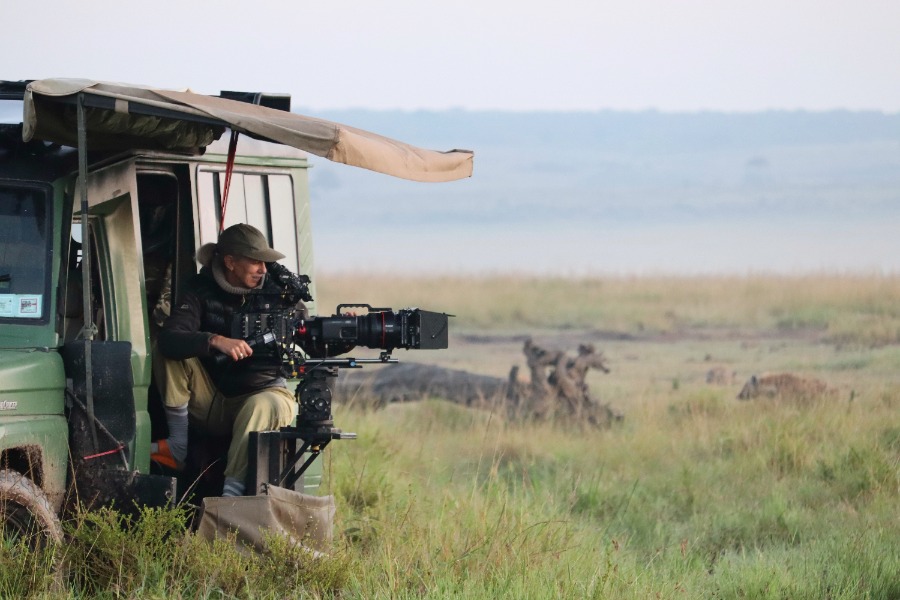
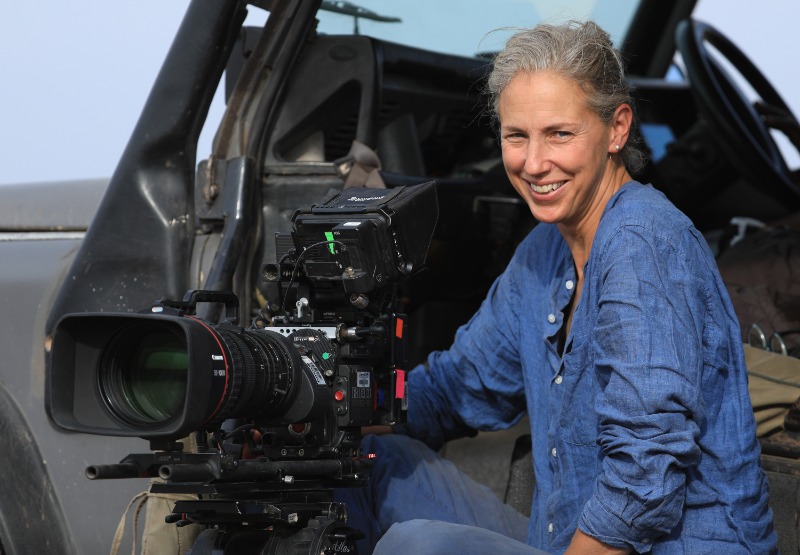
Following an extraordinary true story,National Geographic’s “Lion”follows Kio as he grows from a young cub into a powerful leader, navigating loss, exile and fierce rivals along the way.For BAFTA-winning wildlife cinematographer and Director of PhotographySophie Darlington, telling Kio’s story was a rare chance to spend four years immersed in the Maasai Mara, watching a lion grow up while capturing the relationships, challenges and moments of wonder that make the natural world so extraordinary.
Darlington brings an undeniable sense of wonder to her work, and her love of storytelling is impossible to miss. For her, technology is important, but it is always in service of something bigger: capturing the beauty of a story while staying authentic.
In a conversation with SmartBrief, Darlington reflected on what four years of filming revealed about Kio’s journey, how streaming is reshaping natural history storytelling, the technology that helped capture the magic of the Maasai Mara and why curiosity and STEM have helped shape her career.
You spent four years documenting Kio’s life. How did such a long-term production change the way you thought about storytelling in the natural world?
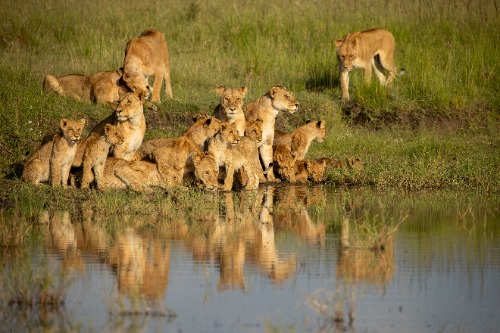
Sophie Darlington: I wish that I had the absolute luxury of telling every story like this. To have four years means you can really get stuck in and find that truth. And so that changed a huge number of things. I’ve never had the luxury of working on something for four years before.
The thing that comes out of it is that you really feel the depth of the wildlife story because you have that authentic beginning, middle and end. Nothing is manufactured. Nothing isn’t real.
The females are the heart of the pride. I’ve spent so much time with lionesses because the males reach a certain age and leave. They go. These young boys get thrown out, and they have to go their own way.
This is the story of a lion that we could have only dreamt of telling. It was beyond every dream I ever had. It’s one I’ve always wanted to tell.
Streaming has brought wildlife storytelling to audiences around the world. How has the multiple-episode format changed the way a story like Kio’s is told?
Darlington:Streaming has changed everythingbecause you can sit, as I do, and you can watch episode one, two, three and four, and get every single chapter of the book. Or you can sit back and go, “I’ll have one tonight, or I can have two tonight.”
So it’s changed everything, hasn’t it? Director Jon Favreau designed it this way, like chapters of a book, with a story unfolding in each one.
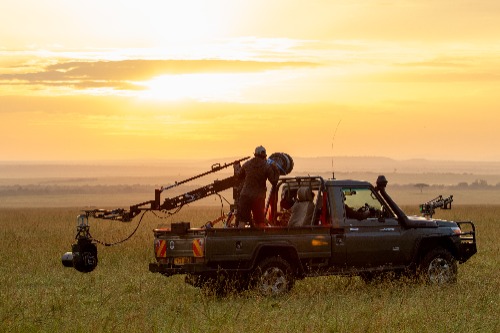
What technology or camera innovations were important to capturing Kio’s story?
Darlington: Quality. It’s about having the absolute best quality and being able to work in low light, because lions are incredibly active at dawn and dusk.
Also, havingrobust equipment. I got more bruises than the camera did, but you are bumping around with that gear. We needed stuff that was true to the color as well, and we wanted a rendition of the Maasai Mara as it is, as it feels.
The lead cameras we had, which were the ARRI Alexa for the long lens, the 35, which was beautiful with its greens and browns, and then the RED V-RAPTOR, which we used for the GSS and the Cineflex, which was fantastic for its battery life and its capacity to deal with highlights, and its compact size. You can get it into a gimbal really easily.
So we chose both of those very specifically for what they could bring to the story.
But here’s what we didn’t do: We didn’t let tech drive the story. We wanted the lion story to be front and center. Everything had to be about the drama, the story and how it was flowing.
And so, what we didn’t do was throw in gratuitous cameras that took you out of the space of the lions. We didn’t throw in loads of slow-mo. The slow-mo that’s there is to add a dreamy, magical quality to Kio coming out of his den, or Kio standing up on his mound. It’s about character and personality, or whatever you want to call it.
Everything is authentic and natural. The grade and the atmosphere are enough so you feel like you’re in the Mara. You’re not super saturated or super shiny because it’s not when you’re out there.
The safari is dusty. The air is full of flies and insects, and they’re beautiful. The atmosphere is amazing. We wanted to relish and celebrate that.
And the aspect ratio is the same, two to one, not the normal natural history aspect ratio. Often shot in 16 by nine. So this was again leaning into the drama element, making you feel like you were watching a drama, even though you’re watching a true story.
How important was curiosity in shaping your career?
Darlington: I’m sucha fan of STEM. There’s an amazingplatform called the Stemettes, a group of women bringing STEM to children and young adults. And I absolutely celebrate it.
I love getting into the nitty-gritty, and as a child, what drove me wasn’t just the natural world but light. Everything about light shapes how I feel, and when I look through a lens, I realize I can feel a particular way because of the light.
And I love playing with natural light and being around those lions and working out how we could engage with them. Obviously, they’re not very good at direction, so you’re spending a lot of time hoping they move so that the light works well. I had a team of 12 fantastic, top-notch cinematographers working with me, and this was such a team effort. I can’t stress it enough.
“Lion” premiers Aug. 19 on National Geographic. Streams next day on Disney+ & Hulu.
