

Two days after I opened ScreenWeaver’s beta to everyone, a comment landed that summed up the whole industry’s confusion in one line: “cool storyboard tool, but where’s the actual movie.”
That question is fair, and it’s also the whole point of this article. As of the open beta launched in 2026, ScreenWeaver lets anyone write a screenplay for free and generate a complete storyboard directly from that script, including character generation, camera plans, and the duration of every shot, with no production budget required. What it does not do yet is turn that storyboard into finished video. That gap between what’s free today and what’s still coming is not a marketing footnote. It is the actual state of AI filmmaking in 2026, and it tells you more about where indie filmmakers should spend their time than any highlight reel of a text-to-video model does.
What Does ScreenWeaver’s Open Beta Actually Include?
ScreenWeaver is a workspace between writing and production: a place to write a screenplay and generate the storyboard that follows from it, before a single frame of video gets produced. The open beta, live since July 2026, is built around two things:
- Screenplay writing, free for everyone. No paywall on the writing stage.
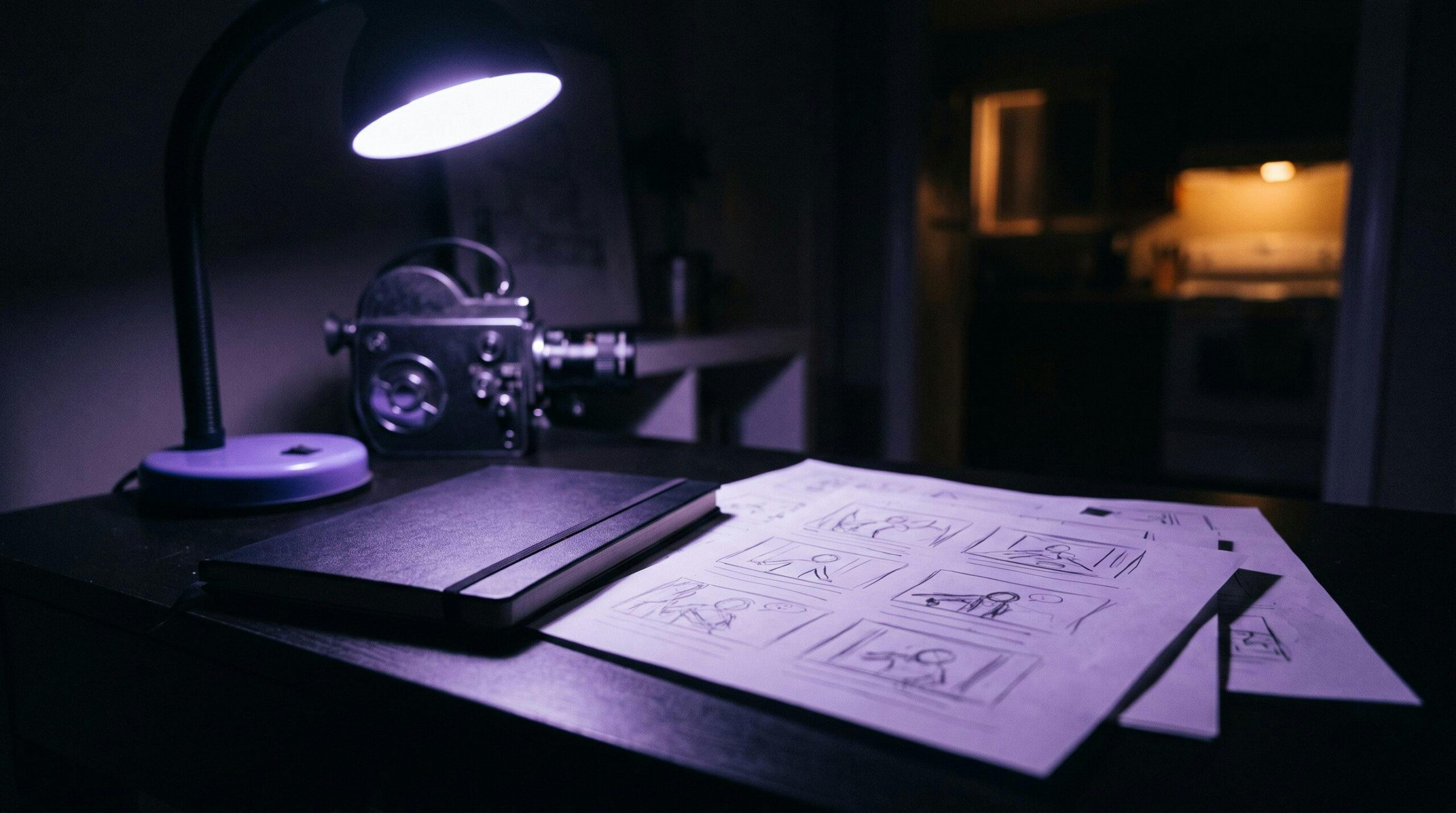
- Full storyboard generation tied to the script. The system reads the scene, then proposes actions, camera plans, character appearances, and a duration estimate for each shot, all linked back to the written script rather than floating as a separate file.
What’s not in the open beta: the production step, meaning the actual video generation workflow that turns a storyboard panel into a moving shot. That part is still in development and is roughly a month out at the time of writing. I’d rather say that plainly than let anyone assume the free tier quietly includes it.
Why Give Away the Storyboard and Not the Movie?
Here’s the part that comment kept nagging at. If the goal were to look impressive in a demo, I’d have held everything back until the flashy generate-a-scene button worked. Instead the boring half, the writing and planning half, is what shipped first and for free. That was a deliberate bet, and it’s rooted in what storyboarding actually used to cost.
According to Fiverr’s own pricing guide for storyboard artists, a mid-level board artist runs somewhere between $150 and $350 a day, and a high-level one between $450 and $700 a day. For a short film with even a modest number of boarded scenes, that adds up to real money before a single shot is filmed. On Lost Gardenen, our own anime project, boarding was one of the line items that quietly ate the most hours relative to how “just planning” it sounds on paper.
The part of indie filmmaking that used to cost the most in dollars per hour wasn’t the camera. It was the paper before the camera.
That’s the actual argument for making the writing and storyboard stage free first. It removes a cost that fell hardest on people without a production budget, not a cost that only mattered to studios. A studio can absorb a few thousand dollars in board artist fees without blinking. A solo filmmaker often can’t.
What this removes for an indie filmmaker, concretely:
- The upfront cost of hiring a storyboard artist before you even know if the scene works on the page.
- The lag between finishing a script and seeing it as a sequence of shots, which used to be days or weeks and is now closer to the length of a coffee break.
- The disconnect between the script and the board, since the storyboard here is generated from the script rather than redrawn from a separate brief.
Is AI Actually Close to Making Whole Movies for Indie Filmmakers?
This is where the honest answer gets less exciting than the marketing around AI video usually pretends. In March 2026, a SXSW panel covered by No Film School put this plainly. Gregory Jensen, Accenture’s media lead on the panel, described what he called the “15-minute wall”: current AI video models still struggle to keep a detail consistent for even that long.
“It’s hard for the model to keep the same thing straight for 15 minutes at a time… you are holding a can of Coke and it generates seven minutes later you pick up a can of Pepsi.” (Gregory Jensen, at SXSW 2026)
Lauren Oliver, co-founder of IncanterAI, put the filmmaker’s actual desire even more bluntly on the same panel: “I don’t want AI to write for me. I want AI to do my dishes so I can spend more time writing.” That is not a small distinction. It means the fantasy version of AI filmmaking, the one where you type a logline and a finished film comes out the other end, is still a fantasy in 2026, not a product. What’s real is narrower and, honestly, more useful: AI can now grind through the unglamorous first-pass boarding so a filmmaker can spend the saved hours on the decisions a model still can’t make for them.
That’s the same reason ScreenWeaver’s production/video step isn’t shipping half-finished. Shipping a shaky generate-a-scene feature to compete with the demo reels would have been easy. Being honest that it needs another month to be worth using is slower, and it’s the choice that matches what the SXSW panel described rather than what the pitch decks promise.
What This Means for Indie Filmmakers Right Now
If pre-production keeps getting cheaper and faster while production stays the hard, still-partly-manual part, the practical shift for indie filmmakers isn’t “make more movies with less effort.” It’s where the saved money and time actually go.
- Money that used to go to a board artist’s day rate can go toward better sound, a real location day, or simply more drafts of the script before locking it.
- Time saved on redrawing a scene by hand can go toward the part AI still can’t do for you: knowing whether a take actually feels true and holding a story together for ninety minutes, not fifteen.
- The gap itself, pre-production solved and free, production still requiring a filmmaker’s judgment, is a reasonable map of where craft still matters in 2026, not a temporary inconvenience to complain about until the next model update.
None of this is an argument that video generation stays stuck forever. It’s an argument that right now, in 2026, treating the writing-to-storyboard stage as solved and the production stage as still being figured out is simply accurate, and planning your indie production around that accuracy beats planning around a launch-video promise.
What ScreenWeaver Still Can’t Do Yet
To be direct about it one more time, since transparency here matters more than a clean pitch:
- The open beta does not generate finished video from your storyboard today.
- The production/video workflow is in active development and is expected in about a month from this open beta launch.
- Nothing about the current free tier promises a “type a script, get a film” outcome. It promises a script and a full storyboard, generated together, for free.
Is ScreenWeaver actually free right now?
Screenplay writing and full storyboard generation are free in the open beta launched in 2026. The production/video generation step is separate and not yet released.
Does ScreenWeaver generate video from my script today?
No. It generates the storyboard, actions, camera plans, character appearances, and shot durations from your script. Video production is coming roughly a month after the open beta launch.
Do I need filmmaking experience to use it?
No. The workspace is built to take you from a blank page to a shot-by-shot storyboard without requiring you to already know how to draw or use separate storyboarding software.
If you’ve got a script sitting in a drawer because you never had the budget to see it as a sequence of shots, that’s exactly the gap the free screenwriting and storyboard tools on ScreenWeaver were built to close. Try it on your own script and see what the board actually looks like before you spend a cent on production.
