


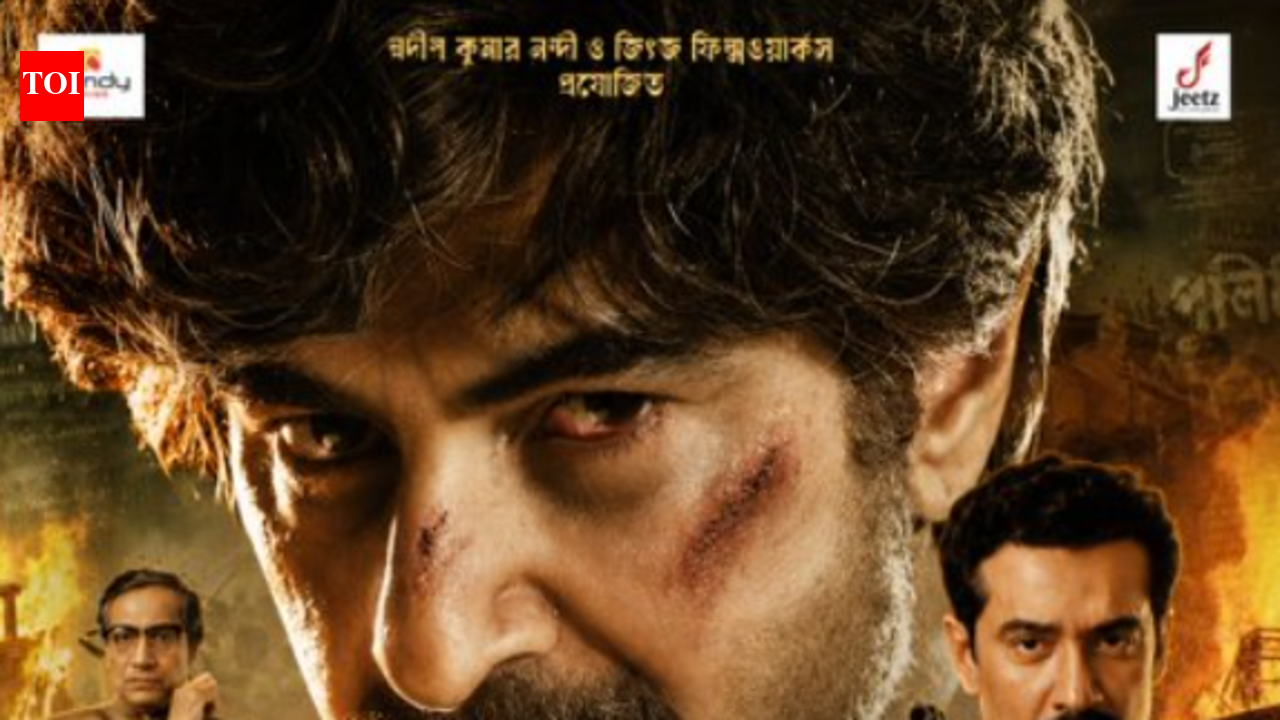
Keu Bole Biplobi, Keu Bole Dakat
UA2 hrs 24 minsReleased: 15 Aug, 2026
BengaliDrama & History

A string of daring robberies shocks 1960s Kolkata, all linked to a mysterious man called Ananta. Once a freedom fighter, he now wages his own war against corruption. As police chase him through the city, the story, inspired by real events, reveals the painful cost of a revolution that failed most of its heroes
Cast & Crew

Keu Bole Biplobi, Keu Bole Dakat Movie Review: A well-mounted, sincere tribute to the freedom movement in Bengal

Eshna Bhattacharya
TNN, Aug 16, 2026, 6:29 PM IST
There could be a version of Keu Bole Biplobi, Keu Bole Dakat that plays it safe, leans entirely on Jeet’s stardom, wraps a freedom-fighter’s life in patriotic music, and calls it a day. Pathikrit Basu doesn’t make that film. What he’s made instead is a genuine attempt to sit with an uncomfortable question and let it stay uncomfortable, and that ambition is visible in nearly every choice the film makes, from its structure to its casting to the way it refuses to hand Ananta Singh a clean verdict.Basu’s direction deserves real credit here. This is a filmmaker who clearly understands that a two-and-a-half-hour period drama lives or dies on its sense of momentum, and for most of the runtime, he keeps a firm hand on tone, never letting the production‘s scale or its starry supporting cast overwhelm the emotional throughline. His command of scale is evident in how confidently the film moves between the intimacy of Ananta’s personal convictions and the sweep of large-scale historical set pieces, without either register feeling like it’s borrowed from a different movie. Having assisted on the Jeet-starrer Awara, Basu seems to have absorbed real lessons in staging propulsive, star-driven cinema, and he applies that instinct here with more thematic ambition than that earlier film ever attempted.The writing matches that ambition. The screenplay and story, credited to Aritra Banerjee and Arpan Gupta, with Soumit Dev also contributing to the writing, show a genuine command of structure, the two timelines don’t just alternate for variety, they actively inform and complicate each other, so that a scene from Ananta’s youth recontextualises something we’ve just seen in his older years, and vice versa. The dialogue is where this writing team’s craft is most visible; there’s a precision to several key exchanges that goes well beyond what plot mechanics require, and one line in particular, likening history to a glass of water that’s simultaneously half full and half empty, lands as close to a thesis statement for the entire film. It’s writing that trusts its audience to sit with ambiguity rather than spelling out a moral, which is rare in a film timed for an Independence Day release.Structurally, the film moves between Ananta’s radicalisation during the Chittagong Armoury Raid under Master-da Surya Sen, and his later years as a fugitive being pursued through 1960s Kolkata by Inspector Durga Roy. The first half is good and tightly constructed, confidently paced, and strong enough on its own terms that it would hold up as a complete film in miniature. It doesn’t over-explain its stakes or lean on exposition; it trusts the momentum of the story itself, and that trust pays off.The second half asks more of the audience, and it’s worth being honest about where it falters. The pace slackens considerably as the two timelines converge, and there are stretches that genuinely test patience. But this isn’t simply a case of the film running out of ideas, it’s where the story commits fully to the question its title poses. What does a country actually owe the people who fought hardest for its freedom, once that freedom has been won and mostly forgotten by everyone else? Watching an aging, largely unrecognised revolutionary reduced to negotiating with the very establishment he once resisted is genuinely difficult material, handled with more seriousness than the marketing around the film might suggest. It’s just a shame the film needed as much runtime to get there.A fair criticism: the film does lean into melodrama more than it strictly needs to, particularly in a handful of second-half confrontations, where heightened music and amplified performances push scenes past the point of maximum impact. Restraint would likely have served these moments better than escalation did. It’s a recurring soft spot rather than a fatal one, but it’s noticeable enough to flag.The performances are where the film’s ambitions are most fully realised. Jeet delivers what might be the most complete performance of his career, there’s real, earned distinction between the fiery conviction of the young revolutionary and the exhaustion of the older fugitive, and it never reduces to a simple physical transformation. Tota Roy Chowdhury matches him beat for beat as Durga Roy, resisting every temptation to play the role as a stock “righteous cop,” and instead finding something more grounded and human in it. Around them, the film assembles a genuinely deep bench of Bengali acting talent- Rajatava Dutta, Kaushik Sen, and Chandan Sen among others, each finding a real moment to register even in limited screen time. The star-studded texture of the supporting cast is one of the film’s simple pleasures; there’s a small thrill in seeing familiar faces turn up scene after scene, even if once or twice a plot beat seems to bend slightly to accommodate a recognisable name rather than the reverse.Shantanu Moitra’s score, with vocals from Rupankar Bagchi, largely supports the film’s better instincts, understated where it needs to be, stepping forward only at the right moments, though it occasionally follows the screenplay into the same over-emphasis during the more sentimental second-half stretches.Taken as a whole, this is a film made with real conviction rather than assembled to fill a release date. The direction is confident and purposeful, the writing is sharper and more thoughtful than the genre typically demands, and the lead performances are genuinely among the best work either actor has done. It isn’t flawless, the second half drags, and melodrama occasionally overtakes moments that didn’t need it, but Keu Bole Biplobi, Keu Bole Dakat is a sincere, well-crafted piece of filmmaking that asks a harder question than most films in its genre are willing to, and largely earns the right to ask it.
Seen It? Where do you land?
Your rating goes straight into the readers’ number at the top.
Would you like to write a review?
*Keep discussions respectful and constructive. Offensive, abusive, or hateful comments may be removed.
Related News

Second track ‘Bhor’ from upcoming Bengali film released, explores love and sacrifice
Jago Desh sets the tone for Jeet’s historical drama on Ananta Singh
The poster of Keu Bole Biplobi Keu Bole Dakat unveiled
Photos

Latest Movie Reviews
Ohh My Dog
Drama & Thriller2h 30m
Dil Deewana Ho Gaya
Drama & Romance2h 16m
