


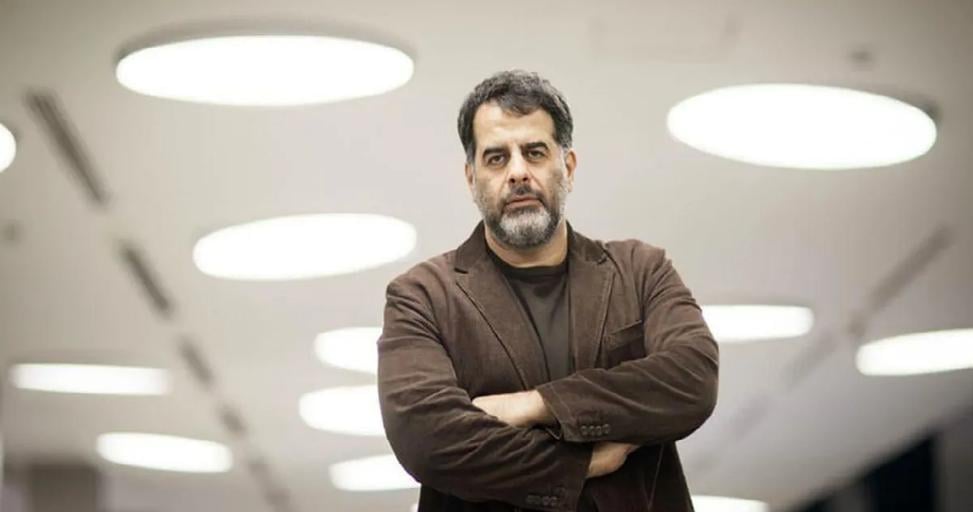
Mohsen Amiryoussefi, Vice President of the Iranian House of Cinema, responded to discussions regarding the regulation of underground Iranian cinema, asserting that the movement is the direct byproduct of years of restriction, banning, and censorship, making any attempt to supervise it entirely futile.
In an op-ed published on Sunday, August 16, in the Etemaad newspaper, Amiryoussefi wrote that underground cinema has become a vital segment of contemporary Iranian filmmaking. Born as a reaction to systemic restrictions, it represents the voice of a young generation of filmmakers who no longer accept production permits, screening licenses, or state censorship.
The Vice President of the House of Cinema emphasized that even when faced with criticism, authorities must understand the nature of this movement, stating that underground cinema is fundamentally “uncontrollable and anti-surveillance.”
Addressing the economic plight of Iranian film professionals, Amiryoussefi criticized widespread unemployment across film guilds. He noted that despite the efforts of independent filmmakers and the private sector, public red by a select, privileged group
Amiryoussefi called for the complete abolition of the state production permit (Parvaneh Sakht), expressing hope that its removal would allow filmmakers who still wish to operate within the official framework to produce films with greater freedom.
He added that over the past year, the board of directors of the House of Cinema and several film guilds have pushed to dismantle the Production Permit Council despite intense pressure and hostility. According to Amiryoussefi, this initiative aims to streamline film production in response to shifting realities within Iranian cinema and the complete failure of existing regulatory frameworks.
In recent years, Iran’s independent and underground cinema movement has emerged as one of the country’s most distinct artistic phenomena. Produced without official state permits and outside government oversight, these works are frequently smuggled abroad to be screened at international film festivals. Notable examples include Bahman Ghobadi’s No One Knows About Persian Cats, which explores Tehran’s underground music scene, as well as Jafar Panahi’s This Is Not a Film and Taxi, both produced under severe legal bans.
More recent acclaimed examples of Iranian underground cinema include My Favourite Cake, co-written and directed by Maryam Moghaddam and Behtash Sanaeeha, and The Seed of the Sacred Fig, directed by Mohammad Rasoulof.
