


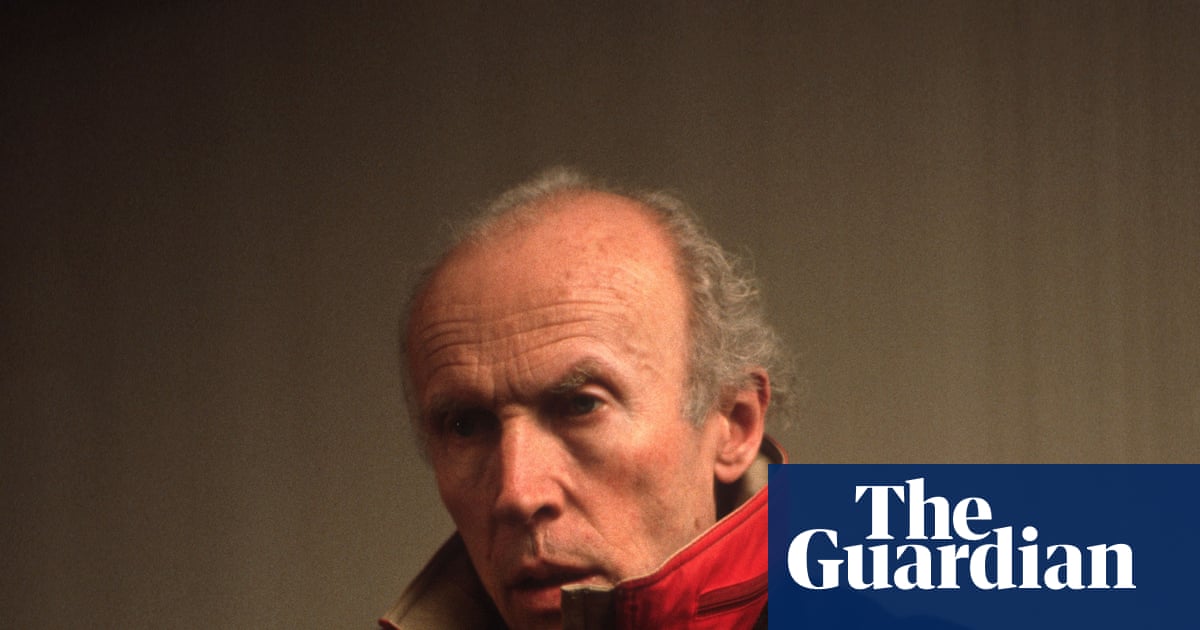
‘Embryonic’: lost novel by French film-maker Éric Rohmer is republished
English translation of Élisabeth, the New Wave director’s 1946 book about young lovers in prewar Paris, receives rave reviews as precursor to auteur’s cinematic work
In the dog days of the second world war, 24-year-old Maurice Schérer wrote a tale of young lovers in prewar small-town France. He described lazy August swims in the Marne River east of Paris. He wrote about age-gap affairs and semi-incestuous flirtations. Schérer gallantly used a nom de plume, Gilbert Cordier, to shield his Catholic family from scandal, but he needn’t have bothered as his concerns were unfounded. The finished novel, Élisabeth, barely made a ripple and quickly slipped out of print. Undeterred, Scherer adopted a second pseudonym – Éric Rohmer – and decided to try his luck as a film-maker instead.
Now – eight decades on from its first publication, 16 years on from its author’s death – Élisabeth belatedly returns from the cold. Republished in an English-language translation by Aaron Kerner, Rohmer’s book has been greeted with glowing reviews, hailed as a lost modernist classic and a crucial origin story for the award-winning director of Claire’s Knee, The Green Ray and My Night at Maud’s. “It would be a rewarding, exciting read even if the identity of its author were unfamiliar,” wrote Richard Brody in the New Yorker. The fact that it’s by Rohmer? That’s the icing on the cake.

“On the one hand, to be honest, the book is a footnote,” says the novelist André Aciman, a longtime Rohmer fan who wrote the foreword to the new edition. “But it is also embryonic and full of Rohmerian moments. It takes on all the themes that will become more developed, complex and impactful in his films.”
Rohmer was working as a freelance journalist in Nazi-occupied Paris when he wrote Élisabeth, which follows a loose-knit group of dreamers in the pregnant summer of 1939. Stung by the book’s failure, he moved on to film criticism and finally to directing, becoming an older member of a generation of French New Wave film-makers that included Claude Chabrol, Jean-Luc Godard and François Truffaut. “I didn’t believe in literature any longer,” he would later say. “I felt its time had passed [and] that cinema had supplanted it.”
Cinema, Aciman says, provided Rohmer with his natural home. Plot elements that feel formulaic in Élisabeth are more honest and lively in his films. “There is something in his work that has always captured me,” he says. “The study of human behaviour and our unpredictable natures. Two people who are dying to sleep with each other but don’t. That’s probably why I project myself on to every character in every Rohmer film. I think, ‘Oh my God, I could be this man or this woman. That’s what I’d do or say in that situation.’”
The critic Adrian Martin, an expert on New Wave cinema, says that Rohmer’s use of improvisation helped give his films a sense of freshness and freedom. “He shot with a very small crew, sometimes three or four people,” Martin says. “And what was important to him was the spontaneity of the actors and the dialogue. He didn’t like to do multiple takes. He didn’t even like to direct the actors very much. Sometimes he’d be off in the next room while the scene was being shot. He’d yell: ‘Just do it!’ and whatever the actors gave him was mostly what he wanted.”
In person, by contrast, Rohmer remained private and secretive. Sometimes he claimed that he was born in Tulle and sometimes in Nancy; sometimes that his real name was Maurice and sometimes Jean-Marie. “Basically he was always hiding his profession from his mother,” Martin says. “She would have been ashamed and seen film-making as a bit of a dirty profession. His parents thought he was a teacher and that was seen as OK and respectable. But they never knew that he was writing about films and eventually directing them. It’s mind-boggling to think of anyone doing that now. His whole adult life was a complete secret to them.”
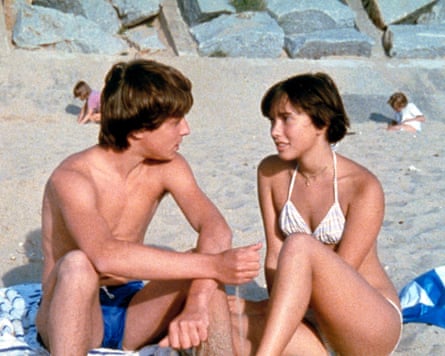
Rohmer’s best-loved works – Claire’s Knee (1970), Pauline à la Plage (1983), the Tales of the Four Seasons (1990-1998) series – chiefly focus on the missteps and confusions of footloose French youth. His people are articulate and self-questioning, invariably to a fault. “My heroes, a little like Don Quixote, take themselves for characters in a novel,” the director once said. “But perhaps there is no novel.” The republished Élisabeth at least puts that notion to bed. Filled with sparky dialogue and crisp stage directions, it is the literary ancestor of Rohmer’s arthouse filmography and as close to a screenplay as a novel can get.
“The thing about Rohmer is that he dug his own field,” Martin says. “He’s constantly telling the same story, just with these little variations. It’s always about friendship, love affairs, games of desire and flirtation. It’s never simply a matter of one person loving another person. They’re thinking: ‘Do I want to love this person – and why?’ They’re hyper-rationalising all the time. That’s the same field that Élisabeth is digging. The basic dynamic is already there.”
“I don’t think it’s a great novel,” Martin adds. “It might even be too much to call it a wellspring. But it’s still fascinating. It’s the seeds, germ and kernel of everything he went on to achieve.”
Explore more on these topicsShare
Reuse this content
