


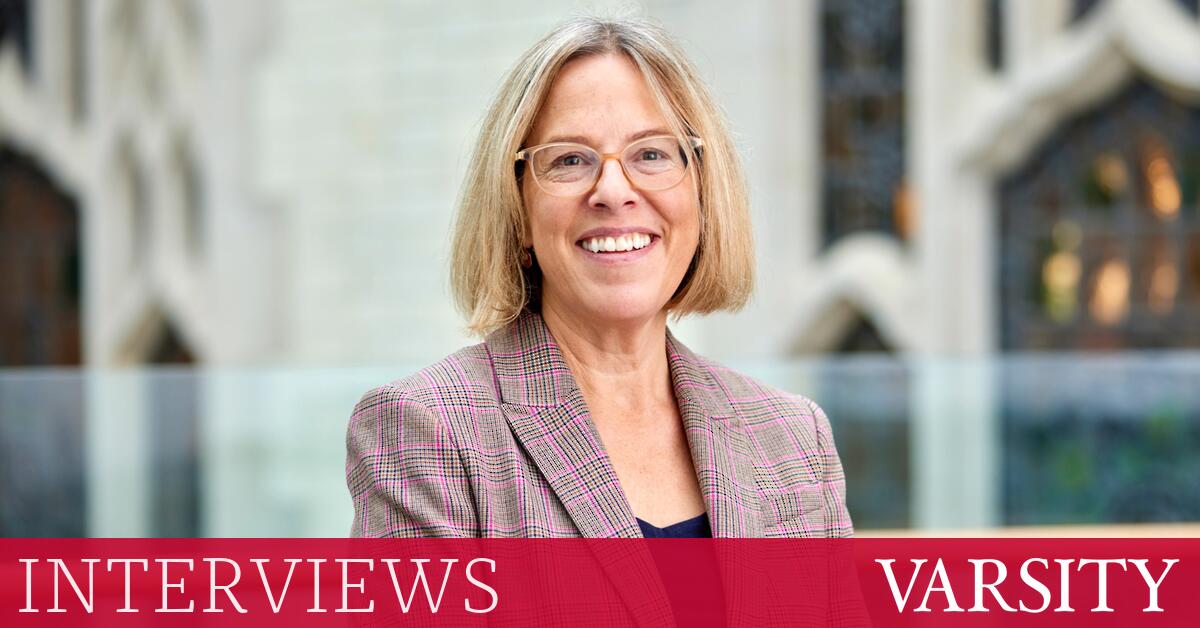
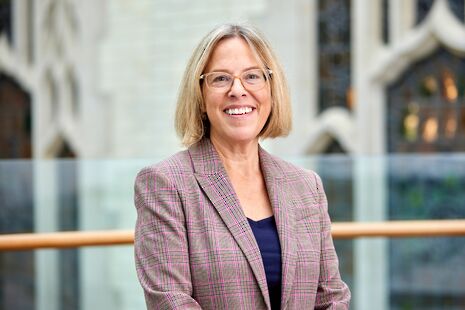
The role of Chief Executive Officer of the Supreme Court may not be familiar to everyone, but I learnt from my conversation with Vicky Fox that it is essential to upholding the rule of law in the UK. Fox has been CEO since 2020, and speaks about her job with enthusiasm and passion. From working as a government lawyer drafting secondary legislation, to working at the Electoral Commission, and then to the Independent Parliamentary Standards Authority, Fox’s career has been defined by public service.
“I haven’t had a traditional trajectory in my career, but I think it’s partly because I’ve been driven by the desire to make a difference and live by my values,” she says. Beginning any role in the middle of the pandemic was far from straightforward, let alone becoming executive of the Supreme Court. Fox muses: “It’s hard to get to know people […] I had to be very intentional about how to do that online.”
“Ultimately, the CEO has to build ‘a sense of shared purpose in supporting democracy’”
Now settled into the role, Fox’s responsibilities span all the Supreme Court’s non-judicial functions. Her main role is “to have the court working efficiently and effectively for the justices, court users, and for the public”. Transparency has been a key focus, especially at a time when public trust in the judiciary is falling. Fox’s duties run from educational outreach, diversity and inclusion, and building awareness in parliament. Ultimately, the CEO has to build “a sense of shared purpose in supporting democracy”.
Fox recounts a recent visit to the Supreme Court of Canada. While different countries have different cultures, legal systems, and practices, Fox observes that “we all care very much about public trust in the rule of law”. She tells me that she has much more in common with her counterparts than there are differences, and this extends to members of the judiciary. Fox tells me that: “They have the same challenges and opportunities […] internationally everyone is talking about AI, public trust, the rule of law, climate change litigation.”
The Supreme Court has just delivered something called the ‘Change Programme’: a campaign to modernise and digitalise the Court, promoting transparency and user experience. Crucially, court users and litigants can now pay, track their case, and get updates online.
“Fox’s duties run from educational outreach, diversity and inclusion, and building awareness in parliament”
The Judicial Committee of the Privy Council (JCPC) is the final court of appeal for UK overseas territories, crown dependencies, and several Commonwealth countries. Fox highlights “The obvious advantages for people in JCPC jurisdictions who can now interact with us during their working hours, at a time that suits them.”
What Fox seems most passionate about, however, is the Court’s Diversity & Inclusion initiatives. Of the 12 Supreme Court justices, only two are women, and there are no ethnic minorities. Fox emphasises that “we want to be part of the solution”.
She reflects: “I think what I’m most proud of is that we have taken a leadership role in saying we need to do more […] we have used our voice and status in the legal profession to say, this is not okay. There is a problem.”
Ethics and international affairs: in conversation with Joel Rosenthal
The Supreme Court runs an internship called Bridging the Bar each year. Fox beams: “At the end of the week our interns present to us […] and we’ve been very privileged that they often choose to talk about their life experiences.” She reflects that interns “talk about the impact of feeling heard, listened to, welcomed, and respected at the Supreme Court” and that “Every year I feel very moved when I hear things like that, because I think if people have confidence, they will progress.”
Fox pauses when I ask if she has any advice for our readers, then smiles. “I think if you know who you are and what your values are, you will find work that you are passionate about […] you should think about what will make you get out of bed in the morning when the alarm clock goes off.”
Varsity is the independent newspaper for the University of Cambridge, established in its current form in 1947. In order to maintain our editorial independence, our print newspaper and news website receives no funding from the University of Cambridge or its constituent Colleges.
We are therefore almost entirely reliant on advertising for funding and we expect to have a tough few months and years ahead.
In spite of this situation, we are going to look at inventive ways to look at serving our readership with digital content and of course in print too!
Therefore we are asking our readers, if they wish, to make a donation from as little as £1, to help with our running costs. Many thanks, we hope you can help!
- Most read
- Latest stories
 News /University of Cambridge cites anti-terrorism legislation as reason for changing graduation exit route21 August 2026
 Sport /On building a Blue at Cambridge 21 August 2026
 Theatre /A very Shakespearean summer 23 August 2026
 News /News in Brief: Corpus champions, cycle street closures, and Cavendish contributions23 August 2026
 Interviews /Linda Ervine on bringing Irish back to Belfast20 August 2026
 Fashion /The most stylish coping mechanism yet23 August 2026
 Science /Did rocks provide life’s first scaffolds?23 August 2026
 Interviews /Behind the scenes at the Supreme Court23 August 2026
- Theatre /A very Shakespearean summer 23 August 2026
- News /News in Brief: Corpus champions, cycle street closures, and Cavendish contributions23 August 2026
