


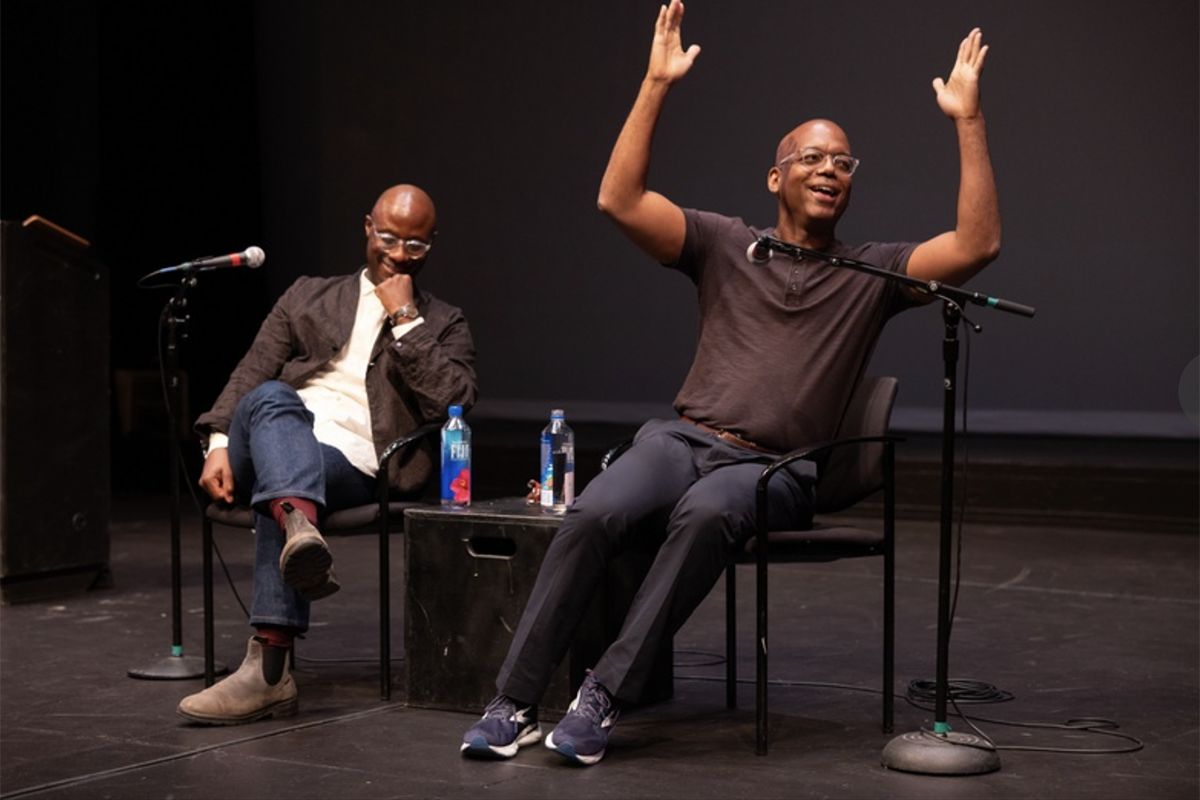
Dozens of graduate students in Emerson’s Writing for Film and Television program had the chance to learn about screenwriting from Academy Award-winning filmmaker Barry Jenkins last week as part of their bi-annual in-person residency. Jenkins is the Fall 2026 Semel Chair, a title given each semester to an acclaimed screenwriter who visits Emerson to work with students.
Jenkins’ 2016 film, Moonlight, not only won Best Picture at the 2017 Oscars, but also won Jenkins the Academy Award for Best Adapted Screenplay, in addition to winning Best Supporting Actor for Mahershala Ali. Since then, Jenkins has been nominated for a Best Adapted Screenplay Oscar for his 2018 film If Beale Street Could Talk; directed the 2024 hit film Mufasa: The Lion King, starring Beyoncé, and is about to direct a Ronnie Spector biopic starring Zendaya for A24, among other projects.
The Writing for Film and Television program is low residency, meaning most of the coursework is completed online. However, each semester in the program begins with a six-day in-person residency on Emerson’s Boston or Los Angeles campus, a highlight of which is the Semel Chair class.
Last week’s Semel Chair events began with a four-hour workshop on Thursday, August 27, where students pitched their original feature film ideas to Jenkins and his longtime manager, Jewerl Ross. In addition to founding his own management company, Silent R Management, Ross was a producer of the films Sujo (2024), How I Learned to Fly (2023), and is producing an upcoming sci-fi thriller, The Natural Order, directed by Jenkins and starring Glen Powell.
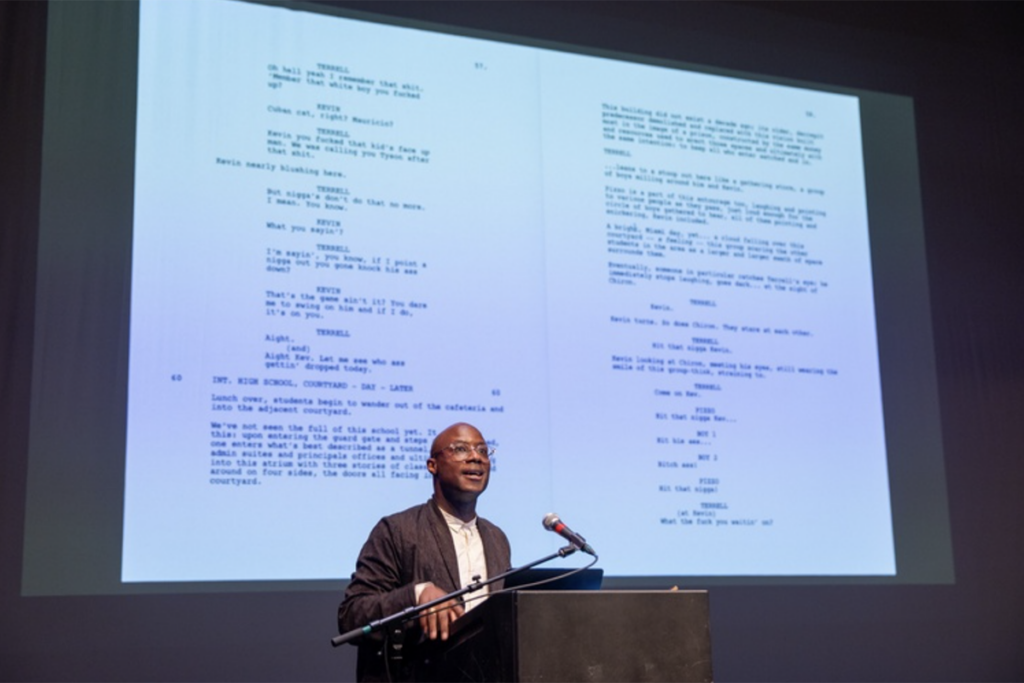
Eliana Ariyevich, MFA ‘27, who traveled to Boston from Seattle, said she loved being able to connect with her classmates and professors in person at the residency. Jenkins showed real commitment to helping the students improve their ideas, she said, and gave brutally honest feedback on their screenplays.
He also gave great advice about the practical side of screenwriting, she said, and what’s necessary to secure financing and get a film made.
“He said that the art of writing versus the commercial, business side are two very different things,” Ariyevich said, “and both are skills you need to work on, but they don’t often go together.”
Jenkins’s class was held in Emerson’s Semel Theater, and covered a range of topics related to screenwriting, including how to best open a screenplay, how to structure and write scenes effectively, and how to stay motivated to finish writing a film. His sense of humor shone through along the way, as he sprinkled in anecdotes from his own journey as a film student at Florida State University to becoming an Academy Award-winning screenwriter.
Olite in the class, because as a fellow FSU graduate, she has always looked up to Jenkins as a filmmaker. Despite the serious subject matter of his films, she said, he makes a point to highlight hope, even in sad stories, which she’s used as a guiding principle in her own writing
“I feel like he’s been sort of this totem in my life,” she said, “so, when I found out he was the Semel Chair I was like, ‘Wow, this is really where I’m supposed to be.’”
Jenkins repeatedly emphasized the importance of screenwriters setting strict short-term goals for themselves to finish the first draft of a screenplay. He said he wrote the screenplay for Moonlight in only 10 days, and he encouraged the students to try to complete at least 44 pages of their screenplays within one month of the residency.
Each of them, he repeated over and over again, should believe they could be one 100-page screenplay away from a career in film, regardless of their background or circumstances.
“You have to feel like everyone else in this room, that you are just 100 pages away,” he said, “whether they are 100 Black pages, 100 female pages, 100 queer pages, whatever, you have to feel that.”
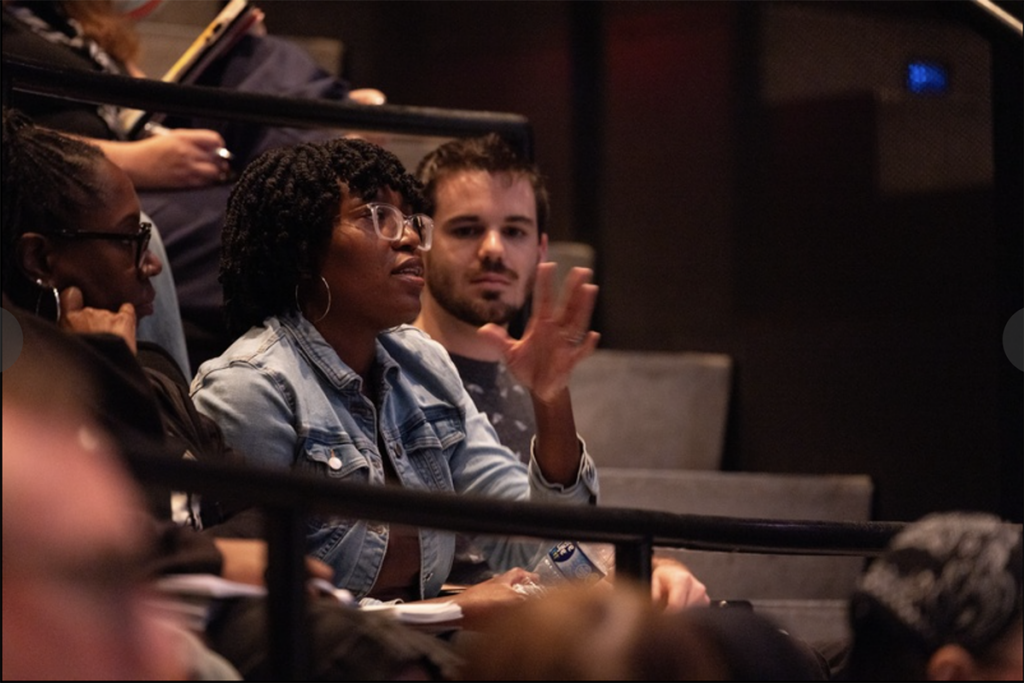
The entire session was interactive, with Jenkins often calling on the students to answer his questions or answering theirs about screenwriting. One student he called on more than once was Ashantee Augustine, MFA ‘27, who traveled to campus from Texas.
Augustine said talking to Jenkins so much in front of the class was oddly comfortable for her, because she got to spend four hours with him and pitch her feature idea the day before.
Being able to learn from such high-profile people in the entertainment industry through Emerson’s program, she said, has been surreal.
“I’ve had the opportunity to talk with the writers of Modern Family and talk with Shaka King and learn about Judas and the Black Messiah, which is insane,” she said, “I feel like I’ve developed so much as a writer, it’s just been great.”
Jenkins and Ross also covered topics like being Black filmmakers in Hollywood, finding time to write alongside responsibilities like raising children, and how to get agents to actually read an original screenplay.
Ultimately, when talking about the winding road of his own career, Jenkins emphasized the importance of students blazing their own path, and not being fixated on trying to follow a formula that’s worked for another successful screenwriter.
“I never imagined that something I would write or film would bring me across the world or into a room like this,” he said, “…And because I did it, I always have faith that any of you are just 100 pages away from doing the same thing.”
