







EDITION→
Global
•
USA
•
UK
•
AUNZ
•
CANADA
•
IRELAND
•
FRANCE
•
GERMANY
•
ASIA
•
EUROPE
•
LATAM
•
MEA
Edition : InternationalLanguage : English
HOME
NEWS
CREATIVE LIBRARY
IMMORTAL AWARDS
MEMBER COMPANIES
PEOPLE
JOBS
How LBB WorksPlans & PricingEditorial Toolkit

news
NEWS
CREATIVE LIBRARY
IMMORTAL AWARDS
MEMBER COMPANIES
PEOPLE
JOBS
Login or Register
People in association withThe Monthly Cut
The Emergence of a New Medium in Production with Brent Bonacorso

lbbonline.com
0
LIKE
ADD TO COLLECTION
18/09/2026
Share
The MiseCreative partner on storytelling in the age of AI, and why he sees a return towards prioritising creative judgement over technical execution as new technology becomes more accessible, as part of LBB’s AI Spy series
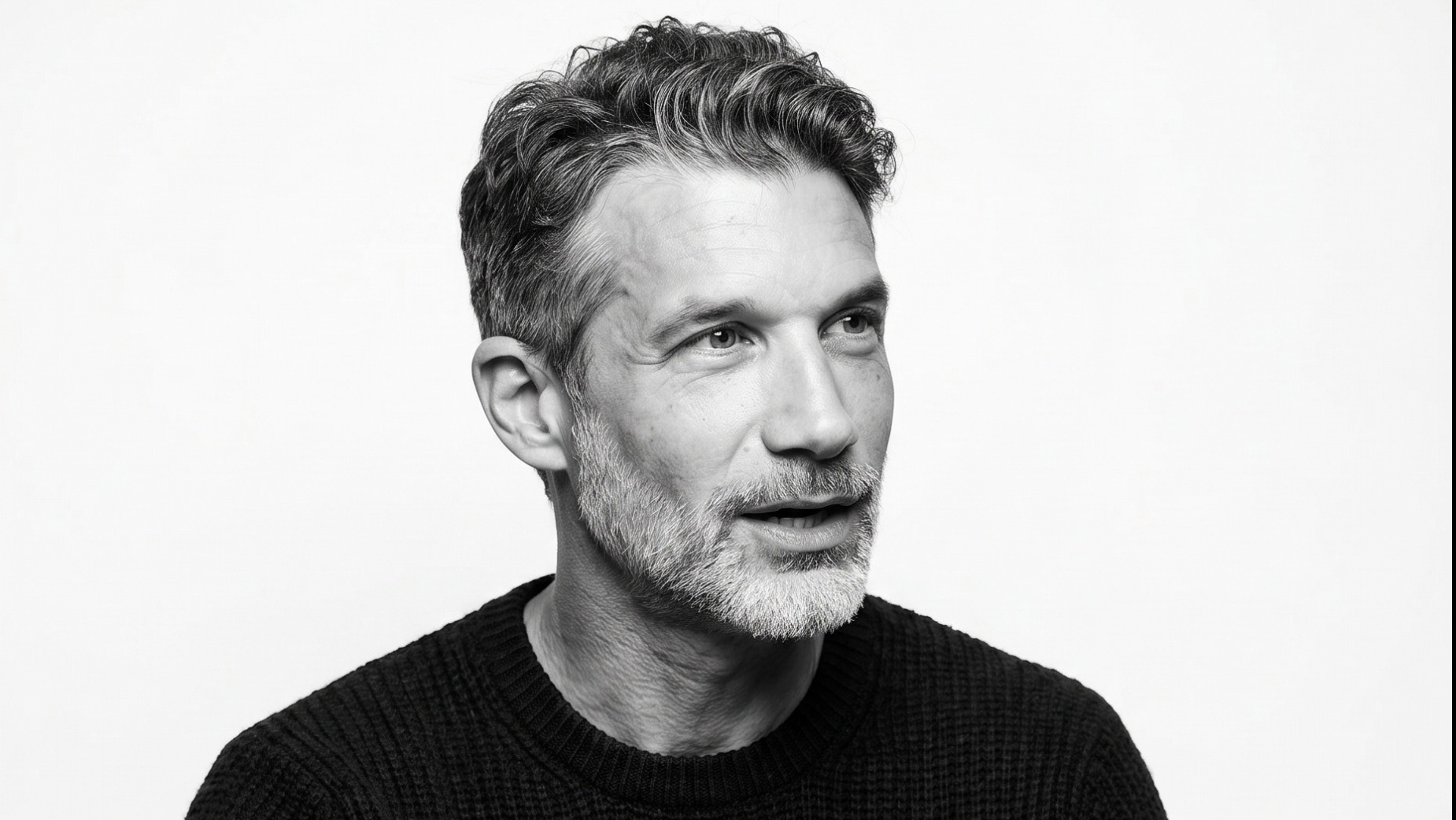
Brent Bonacorso is an award-winning filmmaker with over 25 years of experience spanning advertising, music videos, feature film and commercial campaigns for clients including Netflix, Google, HBO, Disney, HBO, Katy Perry, and Elton John.
He started at some of the world’s top ad agencies before moving behind the camera full-time, and has always embraced new technologies as tools to expand creative storytelling. AI, he believes, is the biggest yet. A longtime Los Angelite, he now lives in Madrid.
Brent sat down with LBB to discuss his optimism for the integration of AI into the filmmaking industry, and why the future will be a growing blend of AI and live-action production.
LBB> What is the most impactful, specific task or process that AI has permanently changed in your current role, and how does it drive qualitative improvements (not just efficiency) to your final output?
Brent> The most significant change is that AI has expanded the range of stories that can realistically be told.
In practical terms, that’s happening in two ways. First, some projects can now be created entirely in the box, with distributed teams working remotely around the world. Second, AI can meaningfully augment traditional live-action production in ways that were previously impossible within budget.
I came to directing through post production and visual effects animation, back when digital filmmaking felt like the Wild West. Every project was a different mix of digital video, still photography, CG, analogue processes, and whatever strange piece of technology you could get your hands on. No established workflows. It felt more like a collage than filmmaking.
I think the real value of AI isn’t efficiency; it’s creative reach. I’ve always been drawn to unusual ways of telling stories and to technologies that expand what’s creatively possible. That’s why AI immediately captured my attention. I wanted to understand what it could do well, what it couldn’t, and where it could genuinely contribute.
I recently shot an automotive campaign that illustrates this. It had ambitious creative goals, but a limited production budget. Certain scenes required locations, extras, and logistical complexity that simply weren’t achievable.
Rather than cutting those moments from the story, we created a small number of AI-generated shots that integrated seamlessly with the live-action footage. We focused production re human moments and world-building that made the story feel complete
Advertising has spent two decades under relentless budget pressure, and as budgets shrink, the ideas shrink with them. I’m old enough to remember when bold, cinematic work excited this industry. Films from directors like Jonathan Glazer and Spike Jonze. Those projects became increasingly hard to justify financially, and now they’ve nearly disappeared.
My optimistic view is that AI can help reverse that trend. The most exciting outcome isn’t making the same work faster – it’s making larger, stranger, more ambitious ideas possible again.
LBB> AI output is only as good as the input. What is the single most valuable lesson you’ve learned about prompt engineering or interaction design to get truly distinctive and high-quality creative work from an AI model?
Brent> People assume that getting great results from AI is primarily about finding the right words to type. In my experience, the far more valuable skill is understanding filmmaking and storytelling. AI can occasionally generate a beautiful image on its own, but knowing why an image works – and why another doesn’t – consistently produces distinctive creative work.
Understanding cameras, lenses, lighting, composition, atmosphere, optical imperfections, and how light actually travels through the real world – all of that allows one to guide AI toward images that feel photographed rather than generated. The same is true of storytelling. Knowing what moment belongs in a sequence, what should be omitted, how a shot creates meaning, and how colour, negative space, and framing affect emotion – those are skills that existed long before AI and are just as important today.
The best AI practitioners aren’t the people who know the most prompting tricks. Rather, they’re the people who have spent years developing their creative instincts and can recognise the difference between an image that’s merely impressive and one that actually serves the story.
LBB> What is the biggest challenge in collaborating with AI as a creative professional? Specifically, how do you work to ensure that the final work maintains a demonstrable sense of authenticity, human intuition, or your signature creative identity – and how do you personally avoid getting sucked in to dependence, ‘work slop’ mode or switching your critical brain off?
Brent> Tell stories you genuinely care about. That’s the answer, and it’s surprisingly simple.
When I’m working on an AI-driven project, I’m not really thinking about AI anymore. I’ve spent enough time with the technology and building workflows that it’s largely faded into the background. What remains is the same challenge I’ve always faced as a director and writer: how do you tell a story that means something?
The creative process is hard to describe, but the closest analogy is remembering a dream. When you’re deep into writing or developing an idea, it can feel like you’re trying to recall something that already exists somewhere in your imagination. You’re searching for the details, the moments, the emotional beats, slowly assembling them into a coherent whole. You’re not transcribing anything; you’re discovering something that feels uniquely yours and bringing it into the world.
As for avoiding dependence or switching off your critical brain – I don’t think that’s possible if you’re genuinely invested. When you’re excited about a story, your critical faculties become more active, not less. You’re constantly evaluating, refining, rejecting, and reshaping in pursuit of something better. The moment you stop doing that, you’re not creating anymore; at that point you’re just accepting outputs, and that’s not creative.
The goal has never been to use AI to replace the creative process. The goal is to use it as another tool to help bring a story from imagination to reality; it’s not anything different from using any other new technology to tell stories. The story comes first, as it always has.
LBB> Have you found that the integration of AI tools (e.g., LLMs, image generators) creates new points of friction or collaboration challenges with other creative or production partners? If so, how are you overcoming them?
Brent> At Mise, everyone on the creative team is deeply immersed in these tools. We’re constantly exploring new techniques, sharing discoveries, and pushing each other. Internally, we’re aligned on what the technology can do and how to use it. The more interesting challenge is helping clients and agencies understand what AI production actually looks like in practice.
We’ll increasingly receive a brief that says something like, ’The client wants to use AI’. The challenge is that AI isn’t a creative strategy; it’s simply a set of tools. Clients know AI exists because they’re surrounded by AI-generated imagery every day, but many haven’t yet seen how these technologies fit into a professional storytelling and production pipeline.
So, a significant part of our job is education. There isn’t a single AI workflow; some projects are fully AI-generated, while others are live-action productions augmented by AI. Each requires a different approach.
One analogy we often use: AI production resembles animation production more than traditional live-action filmmaking. You begin with storyboards, keyframes, visual development, and production design. Those assets evolve into animated sequences, then editing, sound design, visual effects, colour finishing, and delivery.
Another challenge is that AI dramatically expands the number of things that can be changed. I learned a version of this lesson years ago working in visual effects: once clients realise that almost anything can be changed (with time and money), the temptation is to keep refining and adjusting indefinitely.
Traditional live-action production benefits from constraints. Once you’ve shot a scene, there are limits to what can be changed. Those limits help everyone focus on the story rather than endlessly revisiting details. With AI, maintaining that discipline becomes increasingly important. Extraordinary creative flexibility is only valuable if you still have clear creative goals, decisive feedback, and the judgement to know when something is finished or not.
LBB> As AI rapidly changes workflows, the skillsets required are evolving. What is one new skill or capability related to AI usage that you believe is essential for people in your discipline to learn in the next year?
Brent> The technology is improving incredibly quickly. Creating good-looking images, videos, and animations is becoming easier every month. Interfaces are improving, models are becoming more capable, and technical barriers are steadily falling. That’s both exciting and potentially problematic.
The upside is obvious: more people than ever can bring ideas to life. Someone with a story to tell no longer needs a large production budget or specialised technical knowledge to begin creating. That’s genuinely democratising and an incredible force.
The downside is that lower barriers also produce an enormous amount of mediocre work. We’re already seeing a flood of AI-generated content that may be technically impressive, but lacks originality, storytelling, or artistic intent.
That’s why I believe taste and storytelling are becoming more valuable, not less.
As AI becomes more capable, the differentiator won’t be who can operate the software. It will be who can recognise what is worth making. The ability to tell a compelling story, make strong creative choices, understand visual language, and exercise genuine judgement – those are the skills that will separate memorable work from forgettable work.
I often compare this moment to the rise of desktop publishing in the ‘90s. Suddenly, anyone with a Mac could access professional design tools. For a while, the world was flooded with terrible graphic design because people assumed that access to the tools made them designers. Eventually, it settled, and it became clear that the software wasn’t the valuable part; the valuable part was the designer’s eye.
LBB> Do you think AI is currently creating entirely new forms of art or media that weren’t possible before?
Brent> Yes. And I think that’s part of why the industry is experiencing so much uncertainty around it.
For decades, live action and visual effects were largely separate disciplines. Live action was about capturing reality – people, locations, performances, moments that existed in front of a camera. Visual effects could create almost anything imaginable, but doing so was labour-intensive, expensive, and highly specialised. And it never really created realistic people or performers on its own.
AI occupies the space between those two worlds.
Think of it as a Venn diagram. AI sits in the overlap between live action and visual effects. It can do many of the things that previously required large-scale VFX pipelines, but it can also create photorealistic people, environments, and cinematic moments that resemble traditional live-action filmmaking.
At the same time, the production process doesn’t quite resemble either discipline. It isn’t live action, even though it can look remarkably photographic. It isn’t animation, although many of the creative workflows feel like animation. It isn’t traditional visual effects, even though virtually any visual effect can be incorporated into it.
That’s why I think we’re watching the emergence of a genuinely new medium. What’s most exciting is that it combines qualities that were previously separated.
We’re only just beginning to understand what this medium is capable of, and we haven’t seen where it’s all going. My hope is that it expands creative possibilities rather than narrows them – that it enables storytellers to pursue ideas that were previously impossible because of budget, scale, or technical limitations.
LBB> Thinking about your own role and discipline, what kind of specific, measurable impact do you think AI will have in the medium-term? To what extent will it change the way people in your role work?
Brent> The change? Profound. We’re in the early stages of a fundamental shift in how advertising, commercial filmmaking, and visual storytelling will be made.
On a practical level, I think we’ll see a growing blend of AI and live-action production rather than one replacing the other. I’ve already worked on projects where some portions were shot traditionally and others were created with AI. That hybrid approach is becoming increasingly common.
I studied graphic design at the moment the industry was transitioning from manual methods to computers. When I started school, we were working with pens, markers, and X-Acto knives. Within a year, everything had moved onto computers. People predicted that would dramatically reduce opportunities for designers. The opposite happened. The design industry expanded enormously because creative tools became more accessible and new forms of work emerged.
I think AI will follow a similar trajectory.
What excites me most isn’t that productions will become faster or more efficient. It’s that the boundaries around storytelling are beginning to loosen. For most of cinema’s history, we’ve been constrained by what could physically be photographed, built, or afforded. As those constraints diminish, entirely new forms of storytelling become possible.
We’re still approaching stories through frameworks developed for traditional filmmaking, because that’s what we know. But as these tools mature, I suspect we’ll see narratives, visual languages, and creative approaches that don’t fit neatly into any existing category.
That’s why, despite the disruption, I’m optimistic. I think we’re entering one of the most creatively interesting periods in visual storytelling since the arrival of digital filmmaking. The technology will change. The workflows will change. But the most important change may be that storytellers finally gain access to ideas that were previously impossible to realise. Not to get too hyperbolic, but I can see that bringing in a new golden age of creativity.
Remember those ads you just had to see? What was once impossible by cost, time, or sheer logistics can now be realised with artistry, vision, and yes, AI technology. This has the potential to bring back the grand idea – the kind of cinema that stirs wonder, that demands to be seen, that makes the impossible tangible. As a filmmaker and storyteller, I find that a very exciting prospect indeed.

People in association withThe Monthly Cut
More News from Mise Creative
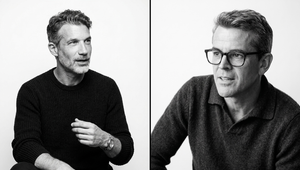
Mise Creative Wants to Revive Advertising’s Golden Age with AI24/06/2026
ALL THEIR NEWS
Work from Mise Creative

Take Your TimeGuinness
16/06/2026
ALL THEIR WORK
SUBSCRIBE TO LBB’S newsletterEnter your email
FOLLOW US
Events
DPA + SLA (+ US Add.)
MyLBB Score
About Us
Contact
Editorial Toolkit
Help & FAQ
Privacy Policy
Main Terms & Conditions
Newsletters
Create your own LBB icons
How it works
Plans & Pricing
LBB’s Global Sponsor

