



Short Film: Creating the Dramatic Concept
Justine Hart from The Script Factory with some top tips on how to structure and write a successful short film.
Co-director, The Script Factory
Published: 27 January 2026
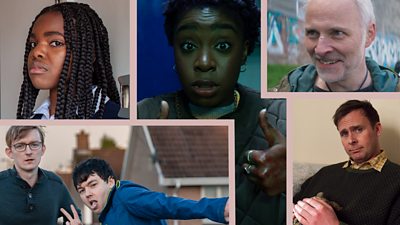
Long Story Short,seven exciting new short dramas land on BBC iPlayer and BBC Three from 1st February. All seven are written by alumni from our BBC Writers development groups. The seven scripts were selected from over 130 submitted back in autumn 2024.
As part of the process of the writers developing their ideas and writing their scripts we ran a workshop withThe Script Factorywhich offered some great advice on how to write a successful short film script. As short film is often the best way for many writers to gain their first screen credit, we’ve asked Justine Hart from The Script Factory to offer a summary of some of the content that was shared in that workshop. Check out her great advice below.
Moments that Matter
I am always staggered about how much can be achieved within a limited time frame in a great short film. How long those characters end up staying with you. How powerfully that brief time spent walking in someone else’s shoes can resonate and pack an emotional punch.
The films that best achieve this are those that capture a crunch point in a character’s life. A series of choices leading to a core-defining moment that reveals who that character truly is or will determine who they become. And whilst any ordinary situation can turn unexpectedly poignant, if you are struggling with where to start, it’s worth considering setting your story around a pivotal life-event that comes ready charged with high stakes and expectations: the first night alone in a new home in Liam White’s nail-biting thriller Housewarming or graduation day in Eros V’s comedy horror Meat Puppet.
Creating conflict for your character
As with all drama, the foundation of a short film will be the conflict that your character is facing.
- What is tricky about their current situation that they need to solve?
- What do they want to do about it?
- What makes it so hard?
- Why does it matter?
In the bid to deliver meaningful answers to those last two questions many writers overcomplicate their stories. In fact, in my experience most writers new to the short film form do this. It’s not surprising. The screen stories that we are all far more familiar with from TV and feature film have characters beset by a whole host of reasons why they can’t easily achieve what they are trying to do, ranging from internal hang-ups, complex backstory, difficult relationships, right through to a lack of necessary resources. As dramatists we are used to lining up the obstacles our characters need to overcome; we are trained to create stories with narrative stretch.
But for a short film project when there’s too much going on – too much history or relationship dynamics to explain – a ten-page script will often end up delivering a ‘situation’ rather than a story.
A ‘situation’ details a character’s conflict and what they feel about it. Whereas a story follows what they actively DO to solve that conflict.
Keep it simple, sort of…
The advice therefore given to writers embarking on a short film script is to strip it down and keep it simple. To focus on one main character dealing with one clear conflict.
But the danger with simplifying the conflict too much is that you can end up with a story that is too linear and possibly quite predictable. A little bit thin. Lacking the density that makes it feel real.
Stories with only a singular layer of conflict often don’t really have anywhere to go because there is nothing built into the story idea from which to generate a turning point and send the plot in an unexpected direction. Nothing that will interrupt the path the character has set out on to challenge them and force change.
A simple, clear concept for your film is absolutely important, but the conflict contained in that concept does needs to have more than one dimension to it.
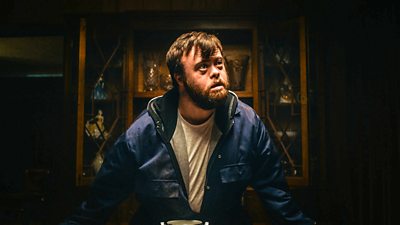
Let’s consider the BAFTA and Academy Award winning film An Irish Goodbye (watch on BBC iPlayer) by Tom Berkeley and Ross White, which tells the story of two estranged brothers dealing with the aftermath of their mother’s death.
Turlough, the eldest, wants to pack his younger sibling, Lorcan, off to live with an Aunt, sell the family farm and get quickly back to his life in London. Lorcan, who has Down’s syndrome, wants to stay in the farm he knows and loves. And wants Turlough to move back in with him. There’s clearly a highly emotive conflict to resolve here.
What gives this story its shape is the discovery of their late mother’s bucket list which Lorcan insists they need to complete in her honour.
This gives reluctant Turlough a second, complicating want. He wants to do the bucket list for his brother because not doing it would make him a heartless dick.
The tension from two incompatible wants lead to a turning point
The story establishes Turlough’s conflict by giving him TWO WANTS to simultaneously pursue. (And we’re identifying Turlough as the protagonist) He agrees to complete the bucket list on the condition that once it’s done Lorcan will go to the Aunt and he’ll be free to hot-foot it back to London. Turlough thinks he’s taking the necessary action to solve both wants.
But there’s something he doesn’t know about the list (no spoilers here!) that will make it ultimately impossible to achieve both. He will discover that he’s pursuing two incompatible wants. He can’t solve them both the way he is trying to. This brings him to a turning point in which he has to choose. Which of his wants – leaving or being a decent brother will win out? And that choice will determine the course of his life.
A turning point is only reached when a character hits a point of failure. When it becomes clear that they aren’t going to get what they want the way they hope to get it. The character must then make a new choice about which direction they now want to go. It’s often a choice that will cost them because they have to surrender something they were originally pursuing.
When a conflict is too simple, or when what a character needs to do is difficult but obvious, it’s hard to generate a turning point in the story that leads to a satisfying or surprising shift.
Some good questions to ask when creating your story concept are:
- What does my character want to do to solve their initial conflict?
- What additional pressure could complicate that decision?
- What else is at stake that gives the character a second want?
- How can that second want become incompatible with the first?
Using a second layer of conflict to generate meaning
One of the first short films I was involved in was Leash by Pillion writer/director Harry Lighton. The protagonist of this film is Kasia, the daughter of Polish immigrants and also secretly a werewolf. The film is set on the day of a full moon generating the first conflict in the film: it’s imperative Kasia gets home before sunset. However, being a werewolf is something Kasia has had to navigate her whole life, so even though there’s potentially a big life and death stake right there it’s not enough conflict to create a solid story concept. She was locked in a padded room last month and she’ll be locked in it again next month, it’s a pretty normal conflict for her that she knows how to navigate. The premise needs another complicating layer to justify why this is the particular day we are dropping into her life.
The second layer to the conflict set-up is that Kasia’s family is being harassed by a local gang of girls. Lighton’s film is set in Wales on the day the national team have made it into a huge European football match. There is a heightened nationalistic fervour in the air, which, for some, tips over into xenophobia. This becomes the day that the bullying girls go from spray painting the family shop to targeting Kasia directly. They intercept her on the way back from work and demand that she pays them a tourist tax, and when she answers back they chase her down and handcuff her to a gate preventing her from getting home before dark. This isn’t going to turn out well for anyone.
Kasia wanted/needed to get home. She also wanted/needed to speak up for herself. It is the clash of those two conflicts – the full moon and the bullies – becoming impossible to resolve at the same time that forces Kasia to change. Quite literally, in her case, into a werewolf.
But it’s also the combination of these two layers to her conflict that gives the story its meaning. Whether or not a werewolf keeps their identity secret is in itself not particularly meaningful, but combined with the xenophobic attacks the film starts to pose really interesting questions: how much abuse can an immigrant suffer before they fight back? How long should they be expected to hide under the radar?
Good questions to ask of your idea:
- What shifts my character’s conflict from being a factor of their every-day life to something urgent to resolve?
- What context can my character’s conflict play out in that increases the consequences and amplifies the meaning?
The hidden truth
Finally, sometimes the purpose of telling a story is to peel back the hidden layers of who a character really is and what drives them to do they are doing. And to do that effectively requires a second enriching layer to the concept too!
When we teach short film workshops we often start by showing the micro short film The Beginner, which you may be more familiar with as the 2022 John Lewis Christmas ad. This film centres on a middle-aged, not-very-sporty man learning to skateboard. This is the first part of his conflict. He wants to learn to skateboard but it’s undeniably hard! We watch him struggle, wobble and fall. But we also witness his determination, bravery and resilience as he practises in the skatepark after dark and rolls a board under his desk at work. It’s tough going and we feel his triumph when he finally nails it.
The very fact that he is choosing to do something so hard is in itself an indication that what he is doing matters. For some reason, it is important to him. And then we discover why.
In the final moments of the film we meet the foster child who is coming to live with them at Christmas. She arrives carrying a skateboard of her own. And that reveal is the second layer to the skateboarder’s conflict that generates the meaning and the tear-jerking comprehension of who he really is. Not a mid-life loser trying to be cool, but a man who will let himself break bones in order to create a connection with a foster daughter and make her feel welcome.
The two layers of conflict work together to deliver a fuller picture.
Maintaining focus
Any story world you create for a film will suggest many strands of conflict in the character’s life that all beg to be explored. Though those additional conflicts may be hinted at in the film as context, a satisfying story needs to avoid being distracted by those tempting details and stay focused on the most pressing parts of the problem the character is trying to solve.
Ask what does the character decide to do about their situation? Then follow the consequences of that choice and the complications and revelations that it leads to.
- Watch Long Story Short from 1st FebruaryOn BBC iPlayer
- Find out more about Long Story ShortOn the BBC Writer’s blog
- Read Short Film ScriptsIn the BBC Writer’s Script Library
Latest blog posts
Search by Tag:
- Tagged with BlogBlog
- Tagged with 20262026
- Tagged with Short FilmShort Film
