


We may receive a commission on purchases made from links.
If you want to improve your photo quality, a DSLR may seem like the next step up from a smartphone camera, but you can also try many mirrorless cameras instead. Although DSLRs can still be worth it, mirrorless models offer some very useful new features, such as exposure preview on the screen or an electronic viewfinder. This lets you experiment with adjustments before checking the result after you take the photo.
While smartphone cameras are still good enough to take everyday shots, they still lack the complexity of a device made specifically for photography. With a camera with interchangeable lenses, you can select a specific lens for portraits, landscapes or other subjects. That way, with the right lens, lighting and settings, you can get better results.
Another point is that you do not need to invest in expensive equipment to get a mirrorless camera. Many of these alternatives to DSLR cameras cost about as much as smartphones, with options for anyone looking for an entry-level device and even some more advanced models for photography enthusiasts. For that reason, we selected some models worth keeping an eye on.
Canon EOS R100
If you’re unsure whether a mirrorless camera is worth the investment, the Canon EOS R100 is a great entry-level option if you don’t want to spend much. It has a 24.1-megapixel APS-C sensor and manual controls, so you can adjust exposure, focus, and depth of field. You can get this effect by combining the lens, aperture and distance from the subject rather than relying on a smartphone’s focus.
The Dual Pixel CMOS AF autofocus system offers face and eye detection for photographing people, while the electronic viewfinder lets you compose images by bringing the camera up to your face. The kit also includes an RF-S 18-45mm lens with optical stabilization. You can find this camera for around $550 on sale, but you should also consider other useful accessories when buying it. A memory card and bag are essential for these models.
While the R100 comes with a solid entry-level kit, it makes some trade-offs to keep the price down. You get a fixed 3-inch screen without touch support, so anyone used to a smartphone may find it strange. In addition, it records in 4K at up to 24 fps, but with a crop and contrast-detection autofocus, which can be slower.
Sony a6400
Without moving up to a professional camera, this Sony model is one of the best mirrorless cameras for anyone who wants to photograph people and animals in motion without spending too much. You can find the kit with a 16-50mm lens for $999.99 at official stores. Plus, the 24.2-megapixel sensor has a focusing system with 425 phase-detection points and real-time tracking. It also shoots up to 11 frames per second, letting you capture several stages of the same action and then choose the one that came out best.
For anyone used to taking photos with a smartphone, the electronic viewfinder helps with framing under bright light, while interchangeable lenses expand the possibilities for portraits or distant subjects. However, the a6400 lacks in-body stabilization, since this support comes from the lens’s optical system. The screen also tilts up to 180 degrees, but does not rotate sideways. It also records in 4K, but at 30 fps, you need to accept an additional crop.
Canon EOS R50
For anyone looking for more features in a camera, the Canon EOS R50 is one mirrorless option to consider instead of a DSLR. It has a 24.2-megapixel APS-C sensor paired with Dual Pixel CMOS AF II autofocus, which can recognize people, animals, and vehicles. So, if you want to track children and pets in motion, it is a great option, capturing up to 15 photos per second.
It also has an articulating screen, so if you take a photo from an unfavorable angle, you can move it for a better preview, and it’s touch-sensitive. The R50 also records in 4K at 30 fps and lets you transfer images directly to your phone, so you can quickly edit and share photos with an app.
Currently, Canon advertises the camera kit with a lens for $799 on sale or $899 at the regular price. However, it lacks in-body stabilization and relies only on optical stabilization in the lens, so while it reduces shake, it doesn’t prevent blur from moving subjects.
Olympus OM-D E-M10 Mark IV
Canon isn’t the only mirrorless camera manufacturer, and the Olympus OM-D E-M10 Mark IV is a strong travel alternative. You can currently find the basic model for $799 or the kit with a 14-42mm EZ lens for $899. It also uses a 20.3-megapixel Micro Four Thirds sensor and lets you change lenses, a key difference between compact and mirrorless cameras.
One of the main advantages of this model is 5-axis in-body stabilization, which helps reduce the effects of hand shake when you shoot without a tripod. The screen is touch-sensitive and tilts up or down for selfies. It also records video in 4K at up to 30 fps and offers automatic modes for anyone still learning manual settings.
It is a portable camera, weighing only 383 grams with the battery and card, but without its own lens. The trade-off is that this portability comes with some limitations. For example, it lacks an external microphone input and weather sealing, and its contrast-detection autofocus struggles to track faces in motion. So, it is better for landscapes and portraits than for recording action video.
Nikon Z50II
For anyone willing to invest a little more in a camera, the Nikon Z50II is a more expensive mirrorless model, but it’s worth the price. Currently, the kit with a 16-50mm f/3.5-6.3 VR lens costs US$1,146.95, but it offers a 20.9-megapixel APS-C sensor and autofocus that can recognize nine categories, including people, dogs, cats, birds, and vehicles. For beginners, the automatic modes help a lot with exposure and focus, but a dedicated button also lets you experiment with different color profiles.
The higher investment makes sense for anyone who wants to take photos and produce videos with more flexibility. Besides the electronic viewfinder, one of the advantages of mirrorless cameras over DSLRs, the Z50II offers a screen that rotates sideways, making it easier to record while facing the camera. The microphone and headphone connections let you capture and monitor audio, while 4K at 60 fps provides smoother motion in video.
How we chose these mirrorless cameras
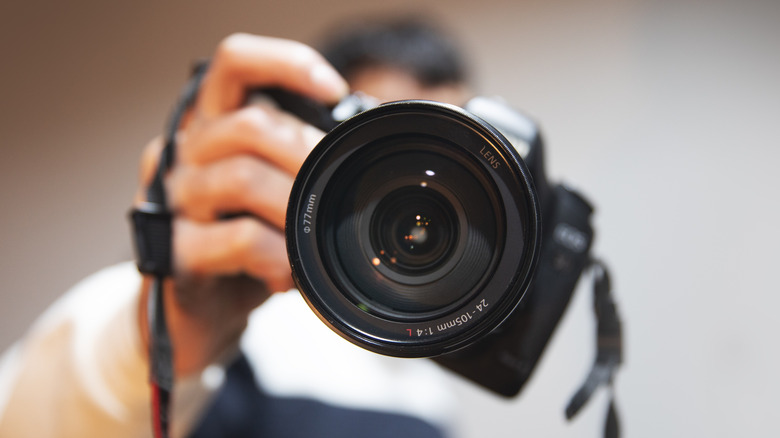
To choose these mirrorless camera models as alternatives to DSLRs, we considered models aimed at both beginners and photography enthusiasts. So, we excluded high-cost models typically used by professionals. We also checked whether the kits included a lens to offer better value for the buyer. This way, we looked at a variety of cameras at different price points for different uses, such as travel, video, or simple portraits.
The comparison also considered each model’s specifications and price, limiting us to a maximum of $1,000, with the Nikon Z50II as the only exception. So, we selected models that stood out for their sensor, autofocus, screen, or limitations worth accepting for the price. We also prioritized practical differences for anyone planning to move away from a smartphone, since it is also a common starting point for many people before moving on to dedicated cameras.
