




HOME
NEWS
FOCUS
OPINION
GBA
VIDEO
ADVANCED
ON THE PAGE
- World’s largest movie markets hit it big
Veteran researcher writes of the history of Hollywood’s influence on China’s film industry, from policy to exchange, Xu Fan reports.

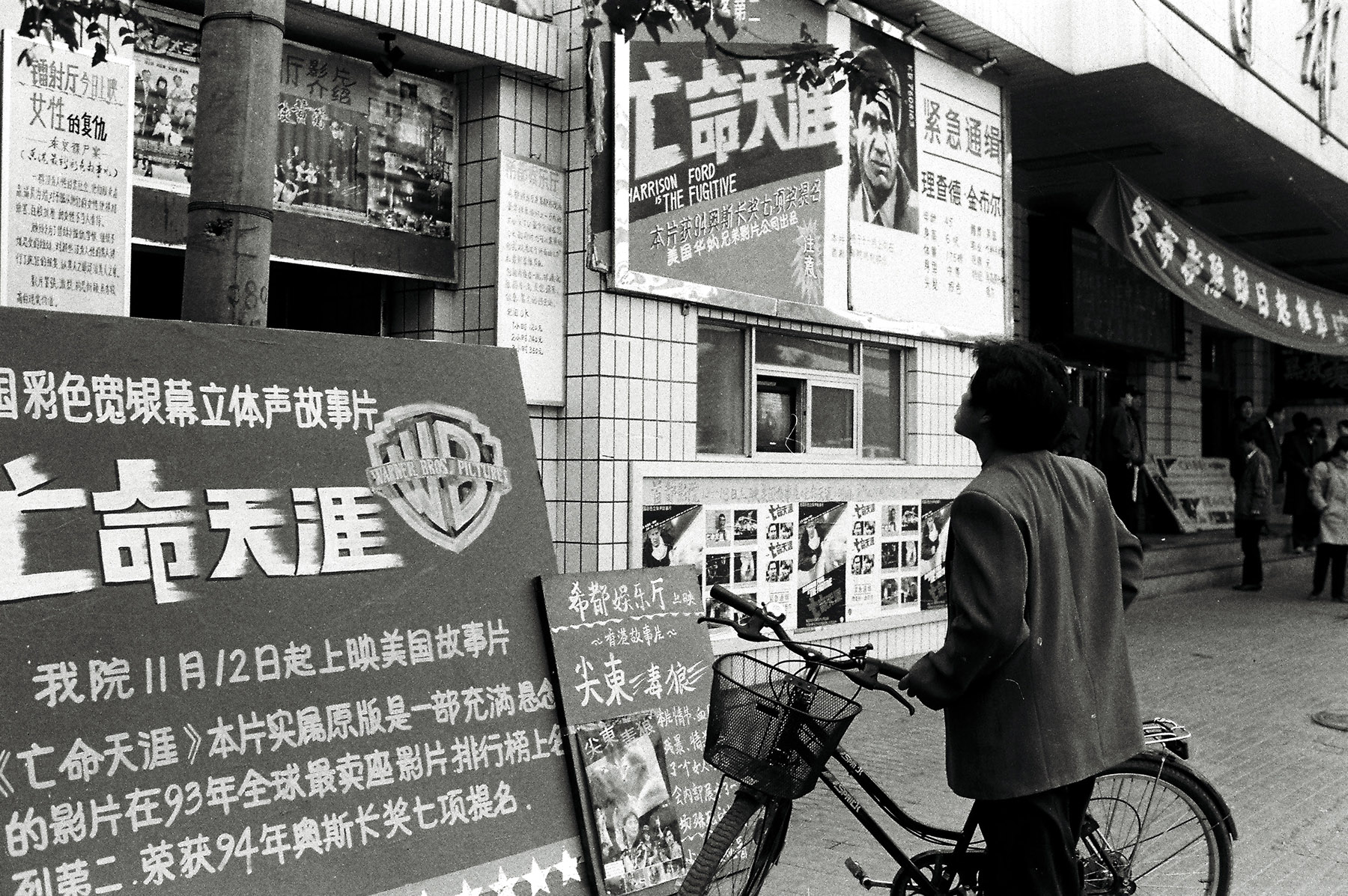
In November 1994, The Fugitive, an action-packed thriller starring Harrison Ford, arrived in Chinese cinemas, becoming the first major American feature film released on the Chinese mainland since the founding of the People’s Republic of China in 1949. It marked a new chapter in cinematic exchanges between China and the United States, now the world’s two largest movie markets.
But the story began long before The Fugitive. In 1959, Salt of the Earth, inspired by a 15-month miners’ strike in New Mexico, was actually the first American film screened in Chinese cinemas after 1949. “To some extent, the movie introduced the lives of ordinary people in the United States to Chinese audiences for the first time,” says Zhi Feina, a veteran researcher.
Zhi has revisited some of these little-known episodes in her newly published book, Exploring the Path of Film Modernization with Chinese Characteristics: Policy, Management, and Industrial Development. The book examines various aspects of China’s film industry, including the development of film-import policies, industry management and international cooperation, with China-US exchanges forming pivotal moments.
An anecdote from 1987: the China Film Administration, the country’s top film sector regulator, invited the creators of The Living Daylights, the 15th installment in the James Bond franchise, to China from Oct 2 to 11 to discuss possible cooperation on the planned sequel, Licence to Kill.
The cooperation fell through partly because Italian director Bernardo Bertolucci’s The Last Emperorhad already captured the novelty of filming in China. Still, such early discussions helped lay the foundation for later cooperation. One notable case was Steven Spielberg’s Empire of the Sun, which became the first major American feature film to receive Chinese cooperation for filming inside the country
Such exchanges remained sporadic in the early years and often faced setbacks. Systematic discussions began taking shape in the 1990s, as China’s reform and opening-up gathered momentum and Hollywood films started entering the Chinese market on a larger scale.
“China’s film market is vast and full of potential. Hollywood has long regarded it as vital,” says Zhi, also a professor at the Chinese National Academy of Arts.
“These imports have brought some of the biggest-budget blockbusters to China, exerting an enduring influence on generations of Chinese filmmakers while also boosting the development of the domestic film industry,” she adds.
Hollywood films that reached Chinese audiences in the early years included the Oscar-winning Forrest Gump and Arnold Schwarzenegger’s action-comedy True Lies. Yet, as Zhi recalls, it was James Cameron’s Titanic, a tragic romance set aboard the famous luxury passenger liner that sank in 1912, that became a nationwide phenomenon and left a particularly lasting impression on Chinese moviegoers.
Released in China in 1998,Titanic grossed 360 million yuan ($53.7 million), becoming a major commercial success. Its box office record stood for over a decade before Cameron’s sci-fi epic Avatar surpassed it in 2010 a researcher at the China Film Archive
“When Titanic entered the Chinese mainland, the domestic market had just begun importing large-scale, big-budget films in large numbers. It brought a psychological shock to many audiences, and it has since become a strong collective memory for Chinese movie fans — one that still resonates today,” says Yin Hong, vice-chairman of the China Film Association.
The growing presence of Hollywood films was closely linked to changes in China’s film-import policies. In January 1994, the China Film Administration allowed China Film Group Corporation, the country’s largest State-owned film company, to import 10 foreign films a year under a revenue-sharing model. The share foreign production companies received subsequently rose from 13 to 25 percent.
Opening expanded further after China joined the World Trade Organization in 2001, when the annual quota for imported films under the revenue-sharing model was increased to 20. In 2012, China and the US signed an agreement raising the annual quota to 34, with 14 titles required to be 3D or large-format movies.
The way those films reached Chinese audiences has also changed. American movies were previously released on the Chinese mainland several months after their US debuts, but in recent years, releases have increasingly been simultaneous, and some have even opened on the mainland a few days ahead of their US debuts, Zhi says.
“Since 2002, American films have been screened in English with Chinese subtitles, as the younger generation of Chinese moviegoers become increasingly fluent in English,” she adds.
Meanwhile, the rapid expansion of China’s film industry has transformed the domestic market. The number of Chinese films produced each year has grown from around 100 in the 1990s to more than 1,000 in recent years, with annual box office revenue rising from 860 million yuan in the 1990s to 51.8 billion yuan in 2025.
“Although Hollywood films have always been an important force in China’s film market, their appeal has somewhat declined since 2021,” Zhi says, attributing the shift in part to advances in Chinese cinema, including storytelling and visual effects.
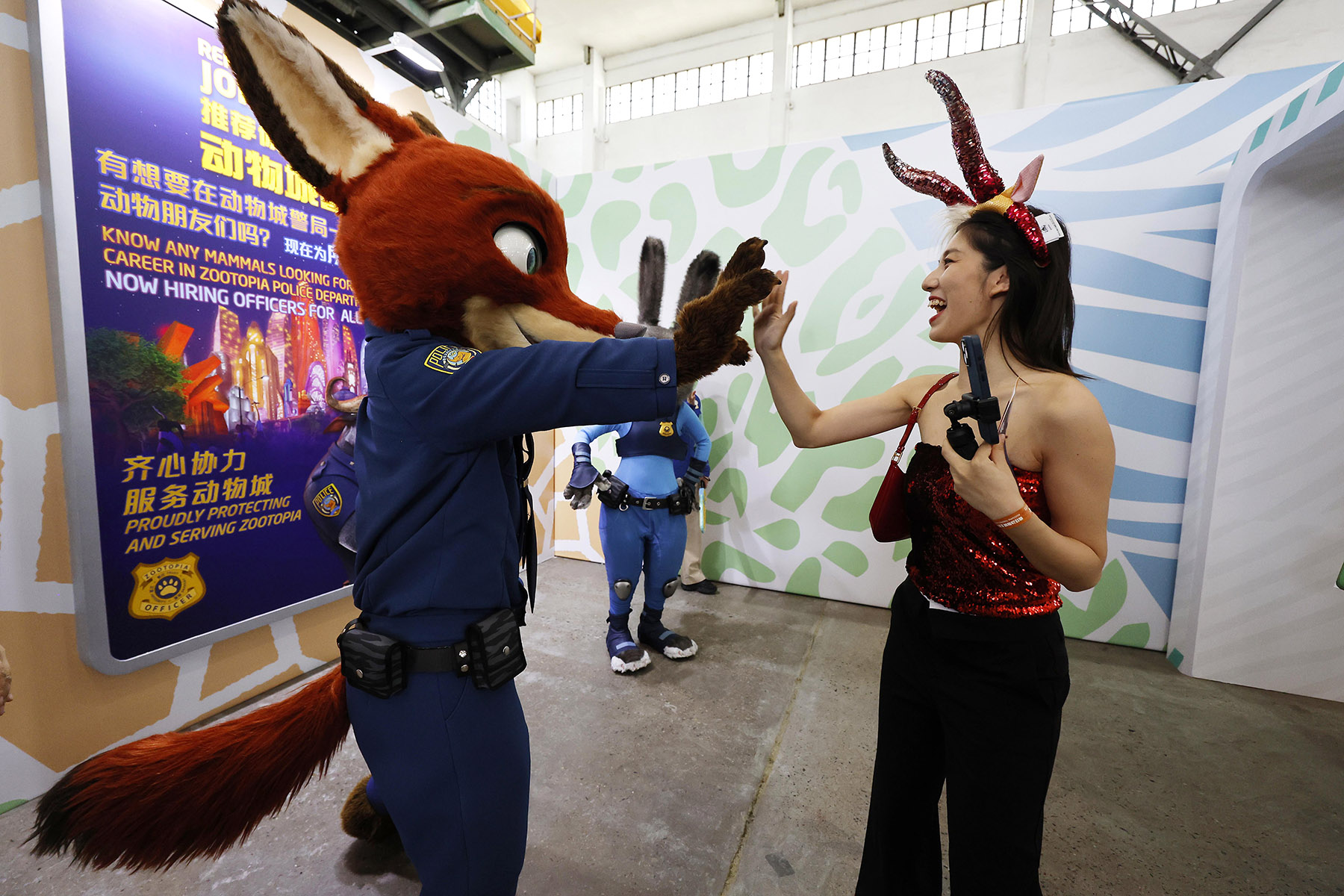
Currently, the highest-grossing American film released on the Chinese mainland is the animated hit Zootopia 2, which has earned 4.14 billion yuan, followed by the superhero film Avengers: Endgame with 4.02 billion yuan. Meanwhile, all five of the highest-grossing movies in China are homegrown features, with Ne Zha 2, which earned a stunning 15.4 billion yuan, topping the all-time charts.
For Chinese filmmakers, however, the relationship with Hollywood has never been solely based on competition. In recent decades, it has also given local filmmakers opportunities to learn from their Western counterparts, says Sha, who has served as a Beijing International Film Festival curator since 2015.
Along the way, Chinese filmmakers — nurtured by traditional culture and a distinctive concern for Chinese values — have found their own ways to attract international attention, Sha says.
Contact the writer at xufan@chinadaily.com.cn
TRENDING
1
Iranian official: US accepted some of Iran’s conditions, status of others unclear2
Saudi authorities: One dead, 11 injured in new attack on Riyadh airport3
China, Pakistan armies to conduct counterterrorism drills4
China warns Japan’s ‘neo-militarism’ threatens postwar order5
Zheng reaches China Open final first time
TOP
VISUAL NEWS
ALSO READ
More
‘Authentically Disney, Distinctly Chinese’Visitors flock to Shaanxi for its natural beautyBamboo takes root as China’s plastic alternativeRoad to recognition mapped for ancient routeA lineage beyond the riverTake me home, county roadsAcrobatics takes a leapPatek Philippe opens 7th Watch Art Grand Exhibition in Milan

NEWS
Hong Kong
Nation
Asia
World
Business
Science
Sports
FOCUS
Life & Art
In-depth China
Quirky
Photo
Graphics
Data
Culture HK
Global Weekly
Eye on Asia
Special
From PR Newswire
OPINION
Editorials
Columnists
Joephy Chan
Bill Condon
David Cottam
Grenville Cross
Richard Cullen
Dong Yu
Michael Edesess
Wilson Lee Flores
Tom Fowdy
Fu Kin-chi
Henry Ho
Ho Lok-sang
Ken Ip
Regina Ip
Tony Kwok
Lau Siu-kai
Dominic Lee
Virginia Lee
Liu Ningrong
Christine Loh
James Ockenden
Quentin Parker
Tu Haiming
Xiao Ping
Roy Ying
GBA
GBA Guide
GBA Life
GBA in Figures
GBA Pulse
VIDEO
News
Asia Featured
CDHK In-Depth
China Daily DOCS
Drone and Phone
Girl City
Peak Talk
Tech Asia
The Gold
ePaper
Hong Kong Edition
Global Weekly
More
RoundtableCampus News Awards
Newsletter
Lifestyle Premium
COMPANY
About Us
Services & Products
Advertise on Site
Contact Us
Subscriptions
Join Us
Accessibility Statement
Privacy Policy
Follow Us
Download Our App
CHINAGLOBAL EDITION
Copyright 1995 – 2026. All rights reserved. The content (including but not limited to text, photo, multimedia information, etc) published in this site belongs to China Daily. Without written authorization from China Daily, such content shall not be republished or used in any form.
