


Faouzia: It’s honestly a little bit different every time. When I’m having conversations in my day-to-day life, or sometimes when I’m driving or showering, a random idea pops into my head. Whether that’s a concept or a melody, I’ll record it and save it for later.
Sometimes I’ll circle back to it and use it when I’m in the studio. When I’m in the studio and I start writing, I normally start with melodies. My favorite way to write is to kind of curl up in a ball, zone out, and just start singing whatever comes out. When I do that, some words poke out and peek through, and they’re kind of waving their hand, telling me, “This is what you need to write about today. This is what needs to be conceptualized today.”
And if it isn’t that easy, I’ll go through my notes and see what I’ve been wanting to write about, or see any ideas that I haven’t touched on, and build around those.
Faouzia: I knew, and I didn’t know. When I wrote that song, I was as honest as I could be. I decided to have no filter, and I was thinking, “I’m just gonna lay it all out on the table. Whether people like it or not, this is me.”
When I finished the song, I knew that it was impactful to me. I thought, “I really believe this song is special, but if nothing happens, that’s all right because it was a healing moment. If it resonates, that’s even better.”
I didn’t know just how impactful it would be. When a song is written, it’s written about something, but then the second it leaves your hands, you don’t know how people will interpret it. Reading everyone’s stories and seeing how it’s been healing for them, too, has been beautiful.
Faouzia: “Don’t Ever Leave Me” was actually the hardest song to complete. The song’s skeleton and chorus were done very quickly, but I rewrote the verses multiple times. I was like, “What am I trying to say?” I didn’t know what the story was until, finally, it clicked melodically.
The vocal chops you hear in the instrumental are a mixture of me singing the repeated melody in the studio. The producer that I worked with, Arthur [Besna], chopped it up a little bit, so it sounds very hypnotic and trancey.
This song was a fun one, but it was definitely the hardest to complete and get over the finish line.
Faouzia: I was really on the floor for most of that album. After having put out an album with such heavy topics, “Birthday” was me realizing that I’m going to be all right. I’m going to pick myself back up, like, “Girl, get off the floor!”
I was hoping that people would see it as a sliver of light at the end of the tunnel. It is still delicate, it is still vulnerable — but it has a moment where my chin is up, finally, after many years.
Faouzia: I’ve been singing my entire life. I think I’ve been singing longer than I’ve been speaking. I think I was between 6 and 8 years old the moment that I realized I could sing.
I remember performing at a local talent show. Grown adults came up to me crying, and they were really impacted by the song that I had written. I remember being like, “Wait, why are they crying?” I saw that happen time and time again.
I started thinking, “Maybe I can actually sing. Maybe what I’m doing isn’t just a fun little hobby. It’s something that I can do as a career.”
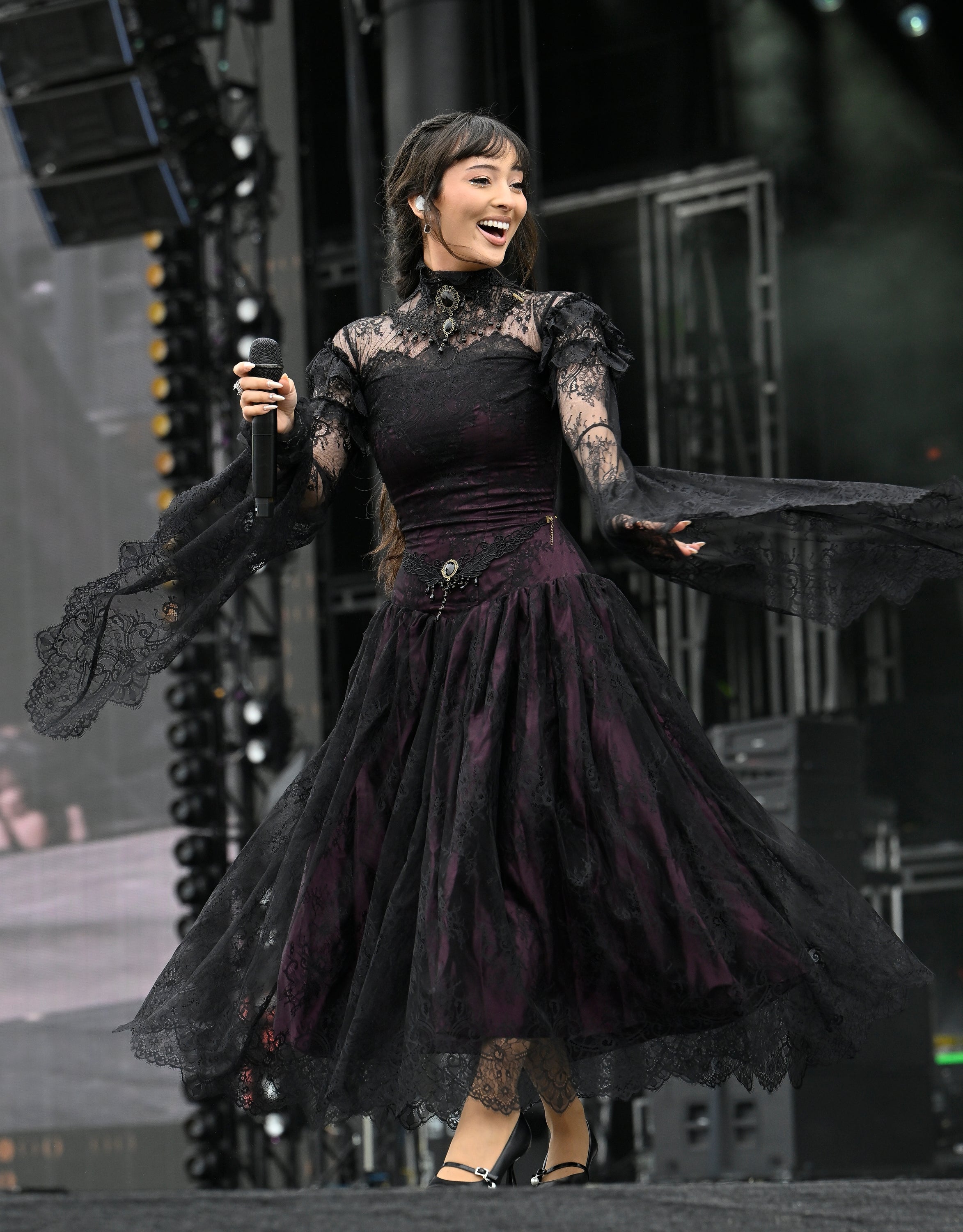
Faouzia: I think every song has its own special moment. “Ornament” feels like a fun time with the fans, where I can really connect with the crowd. “Unethical” started to shine even more while touring and seeing people connect with it in real time.
Another fun one is “Peace & Violence,” which is both a crowd moment and a vocal fave to sing and perform. Performing that song is really fun — it’s very cheeky, and the crowd gets illuminated during that song. I love getting to see all their outfits and what everybody’s wearing.
Follow Faouzia on Instagram, @faouzia, and find tickets to her upcoming Film Noir tour dates here.
Note: This interview was edited for length and clarity.
